The Most Common Equipment Mistakes New Softwash Contractors Make
New softwash contractors most often run into problems because they buy the wrong equipment, use pressure washing habits for chemical application, underestimate chemical compatibility, or fail to set up their system for safe, controlled low-pressure delivery. The result is usually wasted chemical, poor results, damaged surfaces, blocked pumps, leaks, unsafe overspray, unhappy customers and expensive downtime.
A professional softwash setup does not need to be overly complicated, but it does need to be suitable for the work you intend to carry out. Roof cleaning, render cleaning, cladding washing, biocide treatments, patios, driveways and commercial exterior cleaning all place different demands on pumps, hoses, nozzles, tanks, metering systems and safety equipment.
This guide explains the most common equipment mistakes made by new UK softwash contractors, why they happen, and how to avoid them. It is written for exterior cleaning contractors, facilities managers, property maintenance teams and serious DIY users who want to work safely, efficiently and professionally.
Why Equipment Choices Matter in Softwashing
Softwashing is not simply “pressure washing with chemicals”. It is a controlled low-pressure cleaning method that uses appropriate cleaning solutions, dwell time, surfactants, rinsing and post-treatment to remove or control organic growth such as algae, lichen, mould and moss.
Your equipment must allow you to apply the correct solution evenly, safely and at the right flow rate. Poor equipment choices can create several problems:
- Uneven chemical coverage and patchy cleaning results
- Excessive chemical use and reduced profit margins
- Premature pump, hose and seal failure
- Unsafe overspray near vehicles, gardens, windows, people or pets
- Inability to reach upper elevations without unsafe ladder work
- Cross-contamination between chemicals
- Non-compliance with COSHH, PPE and site safety expectations
If you are starting from scratch, SoftWash UK’s Knowledge Centre article on softwash equipment for beginners is a useful companion resource. It sets out the core kit a new contractor should consider before spending money on unnecessary extras.
Mistake 1: Buying Cheap Equipment That Is Not Chemical Resistant
One of the most expensive mistakes is buying pumps, hose reels, trigger guns, fittings or seals that are not suitable for softwash chemicals. Many general water pumps and pressure washing accessories are designed for clean water only. They may work for a short period, but chemical exposure can cause swelling seals, cracked diaphragms, brittle fittings and leaking connections.
In practice, this often shows up as intermittent pressure, pump cycling, chemical leaks, hose failures or inconsistent spray patterns. On a customer’s property, that can quickly become a safety issue as well as a professional embarrassment.
What to look for instead
- Chemical-resistant pumps designed for softwash use
- EPDM, Viton or other suitable seals depending on the chemical being used
- Hoses rated for the chemical concentration and pressure involved
- Secure fittings that do not corrode or become brittle quickly
- Clear labelling to prevent using the wrong line or tank
Contractors should build their setup around proper soft washing equipment rather than trying to adapt unsuitable parts from garden sprayers, pressure washer accessories or agricultural kit without checking compatibility.
Mistake 2: Thinking More Pressure Means Better Softwashing
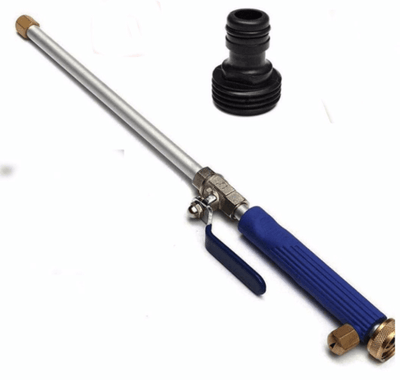
Softwashing works through chemistry, contact time and controlled application, not aggressive pressure. Many new contractors come from a pressure washing background and assume that increasing pressure will improve results. On delicate surfaces, this can cause damage.
High pressure can scar render, force water behind cladding, lift roof tiles, damage pointing, disturb asbestos-containing materials, strip paint, or drive contamination deeper into porous surfaces. It can also create more overspray, which increases risk around neighbouring properties, plants, vehicles and pedestrians.
Softwashing is about controlled low pressure
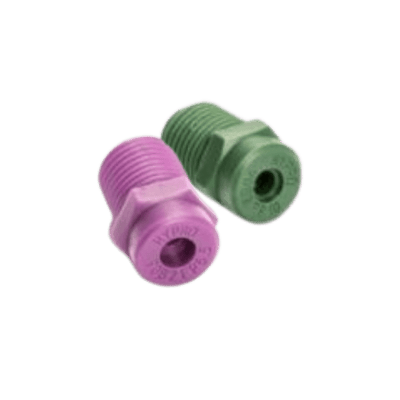
A good softwash system should deliver enough flow to coat the surface efficiently without blasting it. The correct nozzle, fan pattern and operator technique matter more than raw pressure. For many building wash-down tasks, a low-pressure fan or dedicated softwash nozzle gives better coverage and safer working than a narrow high-pressure jet.
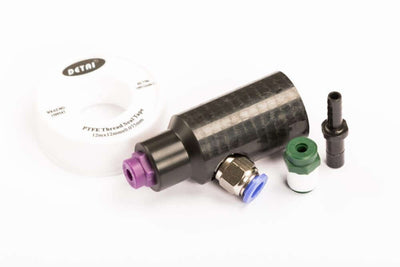
For reaching higher areas from the ground, the correct pole setup can also improve control. A purpose-designed water fed pole softwash nozzle can help contractors apply solution more accurately to elevations, fascias, soffits and cladding while reducing unnecessary overspray.
Mistake 3: Choosing the Wrong Pump for the Work
New contractors often focus on the headline litres per minute figure and ignore whether the pump is actually appropriate for their services. A small pump may be fine for occasional domestic render cleaning but frustratingly slow on larger commercial cladding jobs. A larger pump may cover ground quickly but create too much flow for small, detailed work if not set up correctly.
Common pump selection errors
- Using a pump that cannot handle the chemical used
- Choosing too little flow for roofs, large walls or commercial sites
- Choosing too much flow without the ability to control overspray
- Ignoring battery drain and electrical requirements
- Failing to carry spare fuses, connectors and basic repair parts
In the real world, downtime is costly. If a pump fails halfway through a roof clean or commercial wash-down, you may have to return to site, rebook access equipment, rearrange staff and explain the delay to the client. A professional setup should include reliable equipment and a basic contingency plan.
Mistake 4: Poor Hose and Reel Choices
Hose selection is often overlooked. New operators may buy hose that is too narrow, too stiff, too short, or unsuitable for chemical exposure. This affects flow rate, usability and safety. A hose that kinks repeatedly slows the job down. A hose that drags sharply around corners can damage itself, damage the property or create a trip hazard.
| Hose mistake | Typical consequence | Better practice |
|---|---|---|
| Using non-chemical-rated hose | Premature degradation, leaks and possible chemical exposure | Use hose rated for the chemicals and pressures involved |
| Choosing hose that is too narrow | Reduced flow and slower application | Match hose bore to pump output and working distance |
| Having insufficient hose length | Constantly moving the van or trolley system | Plan hose length around typical property layouts |
| Poor hose management | Trip hazards, kinks and surface damage | Use suitable hose reels, warning cones and tidy work zones |
Facilities managers should also pay attention to hose routes on occupied sites. Public walkways, fire exits, loading bays and entrances must remain safe. A good contractor will plan the hose route before starting, not after someone has tripped over it.
Mistake 5: Not Using Proper Chemical Metering or Dosing Equipment
Inconsistent dosing is a common reason for poor softwashing results. Some new contractors guess their dilution, mix too strong, mix too weak, or use the same approach for every surface. That is not professional softwashing.
Different surfaces, contamination levels and treatment objectives require different approaches. For example, a maintenance biocide treatment on a previously cleaned surface is not the same as treating heavy organic growth on a neglected north-facing render wall.
Why controlled dosing matters
- It improves consistency between jobs
- It helps reduce unnecessary chemical use
- It supports safer working and better environmental control
- It makes pricing more predictable
- It reduces the risk of damaging sensitive surfaces
For contractors who want more control and repeatability, proportional dosing and injection systems such as the Clever Injector Dosatron can be useful on suitable setups. The benefit is not just convenience; it is the ability to apply solutions more consistently when the system is installed, maintained and used correctly.
Mistake 6: Treating All Chemicals as If They Use the Same Equipment
Not all exterior cleaning chemicals behave the same way, and not all should be run through the same equipment without proper understanding. Sodium hypochlorite, DDAC-based biocides, surfactants, rust removers, oil stain removers and acidic or alkaline cleaners have different compatibility considerations.
Using one line, tank or sprayer for everything can create contamination, reduce product performance or cause unsafe reactions. Contractors must understand the safety data sheet, manufacturer guidance and correct application method for each product.
SoftWash UK supplies a wide range of professional soft wash chemicals, but product choice must be matched to the surface, staining type, weather conditions and site risks. No chemical should be used blindly or because “someone online said it works”.
Best practice for chemical handling equipment
- Use clearly labelled tanks, containers and lines
- Never mix incompatible products
- Flush equipment correctly after use where required
- Store chemicals securely and upright during transport
- Carry spill control equipment appropriate to the products being used
- Keep SDS information available for staff and clients when required
Where sodium hypochlorite is appropriate, contractors should treat it with respect and follow all safety guidance. Professional-grade sodium hypochlorite for soft washing should only be used by people who understand dilution control, PPE, plant protection, runoff management and surface sensitivity.
Mistake 7: Ignoring PPE and Site Safety Equipment
Equipment is not limited to pumps and hoses. PPE, signage, cones, barriers, eye wash, spill kits and first aid supplies are part of a professional softwash setup. New contractors sometimes spend heavily on delivery systems but forget the equipment that protects the operator, the public and the client’s property.
Essential safety equipment to consider
- Chemical-resistant gloves suitable for the products used
- Eye and face protection
- Appropriate protective clothing and footwear
- Respiratory protection where risk assessment identifies a need
- Cones, warning signs and barriers
- Eye wash and first aid provision
- Spill kit and absorbent materials
- Plant protection equipment such as sheeting and rinse systems
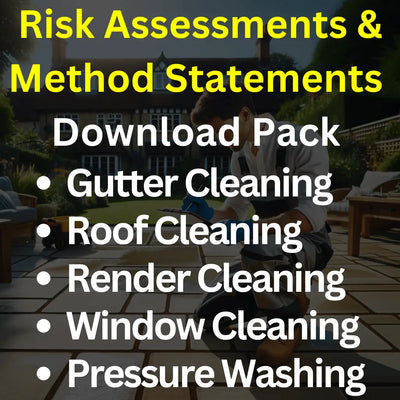
In UK commercial settings, clients increasingly expect contractors to provide RAMS, COSHH assessments and evidence of safe systems of work. The Risk Assessment and Method Statement Pack for Exterior Cleaning can help contractors put more structure around site safety, especially when working for facilities managers, housing associations, schools, retail parks or industrial clients.
Mistake 8: Forgetting About Water Supply and Rinsing Requirements
Many new contractors focus on chemical application and forget about water logistics. Some jobs require significant rinsing, pre-wetting, plant protection or equipment flushing. If you arrive without understanding the water supply, access points and flow rate, the job can quickly become inefficient.
On remote sites, farms, industrial yards, outbuildings or large commercial properties, mains water may be unavailable or too far away. On domestic work, outdoor taps may have poor flow, awkward access or incompatible fittings.
Questions to ask before the job
- Is there a working outdoor water supply?
- What is the approximate flow rate?
- Do you need to bring water on board?
- Is rinsing required, or is the treatment designed to remain on the surface?
- Are there sensitive plants, ponds, lawns or drainage points nearby?
- How will runoff be controlled?
Good contractors survey these details before quoting or at least before arriving to carry out the work. Poor planning often leads to rushed decisions, and rushed decisions are where mistakes happen.
Mistake 9: Not Calibrating Flow, Nozzles and Coverage
A softwash system should be tested and understood before being used on a customer’s property. Many beginners do not know how much solution their system applies per minute, how far it sprays, or how much area a tank will realistically cover.
This makes pricing and chemical planning guesswork. It also increases the risk of under-applying, over-applying, or running out of solution mid-job.
A simple calibration process
- Fill the system with clean water for testing.
- Run the pump through the hose and nozzle you intend to use.
- Measure the output for one minute into a suitable container.
- Record litres per minute for each nozzle or setting.
- Test spray pattern and reach in a safe area.
- Calculate approximate coverage based on your real application style.
- Repeat when changing pumps, hoses, nozzles or metering settings.
This simple exercise improves pricing, reduces waste and helps you understand your equipment properly. It is also a useful training exercise for new staff before they are trusted on live sites.
Mistake 10: Building a Van Setup Without Thinking About Weight and Storage
A professional-looking van setup can be an asset, but poor design can be dangerous. Water and chemical tanks are heavy. Equipment must be secured. Chemicals must be stored safely. Weight distribution matters, especially when carrying full tanks, hose reels, pressure washing equipment, ladders and access gear.
New contractors sometimes install tanks without considering payload limits, braking distance, ventilation, bunding, access to emergency equipment or how they will safely load and unload containers.
Practical van setup considerations
- Check the vehicle payload and axle limits
- Secure tanks, reels and equipment properly
- Keep incompatible chemicals separated
- Prevent containers from tipping during transport
- Maintain access to PPE, spill kit and SDS information
- Consider ventilation and containment
- Avoid creating awkward manual handling tasks
If you are unsure, get practical advice before committing to a permanent installation. A tidy setup is only professional if it is safe, compliant and workable day after day.
Mistake 11: Overbuying Before Understanding the Market
Some beginners buy a large system, multiple pumps, specialist nozzles, injectors, reels, tanks and every chemical they can find before they have a clear service offering. This ties up cash and can leave you with equipment that does not match your work.
For example, a contractor mainly cleaning domestic render and patios may not need the same setup as a company targeting large logistics warehouses or commercial cladding. A facilities team maintaining one estate may need a different arrangement again.
Start with the services you actually plan to sell
| Service type | Equipment priority | Common beginner mistake |
|---|---|---|
| Domestic render cleaning | Controlled low-pressure application, plant protection, accurate dosing | Using too much pressure or poor overspray control |
| Roof moss treatment | Access planning, safety systems, suitable application reach | Buying chemical kit before solving safe access |
| Commercial cladding | Flow rate, reach, water logistics, RAMS and site controls | Using a small domestic setup on large elevations |
| Ground surface cleaning | Surface assessment, rinsing, stain-specific products | Assuming one chemical treats all stains |
A measured approach often works best: buy dependable core equipment, learn how to use it properly, then expand as your services and client base develop.
Mistake 12: Skipping Training and Learning by Trial and Error
Softwashing is practical work, but it should not be learned entirely through guesswork. Trial and error on a client’s property can be costly. Mistakes with chemicals, surfaces, access equipment or runoff can cause damage and reputational harm.
Professional training helps new contractors understand equipment setup, chemical selection, surface testing, safe application, dwell time, rinsing, post-treatment and documentation. It also gives context that is often missing from short online videos.
The Soft Wash Training Course from SoftWash UK is designed to help contractors build competence and avoid common beginner errors. For ongoing industry discussion, the SoftWash UK Podcast is also a useful educational resource for exterior cleaning professionals who want to keep improving their knowledge.
A Practical Equipment Checklist for New Softwash Contractors
Before taking on paid softwashing work, run your setup through this practical checklist:
- Define your service. Are you cleaning render, roofs, cladding, driveways, patios or commercial sites?
- Choose the correct pump. Match flow, pressure and chemical compatibility to the work.
- Select suitable hose and fittings. Check chemical resistance, length, bore and usability.
- Control your application. Use appropriate nozzles, poles or dosing equipment.
- Test with clean water first. Check leaks, flow, reach and spray pattern.
- Prepare safety equipment. PPE, signage, barriers, eye wash and spill kit should be ready.
- Plan chemical storage and transport. Label everything clearly and secure containers.
- Check documentation. RAMS, COSHH and SDS information should be available where required.
- Survey the site. Look for plants, ponds, drainage, access issues, neighbours and sensitive surfaces.
- Record what works. Keep notes on dilution, coverage, dwell time, weather and results.
Common Myths About Softwash Equipment
Myth: A garden sprayer is enough for professional softwashing
Small sprayers may have limited use for spot work or testing, but they are rarely efficient or durable enough for professional exterior cleaning. They can be slow, inconsistent and unsuitable for some chemical exposure.
Myth: Any pressure washer can become a softwash system
A pressure washer is not automatically a softwash system. Softwashing requires controlled low-pressure chemical application. High-pressure equipment may still be useful for rinsing or surface cleaning, but it should not replace proper softwash delivery where delicate surfaces are involved.
Myth: Stronger chemical makes poor equipment perform better
If coverage is uneven or dwell time is poor, increasing chemical strength is not the professional answer. Correct diagnosis, surface preparation, controlled application and the right equipment are more important than simply making a solution stronger.
Myth: Training is only for complete beginners
Experienced pressure washing contractors still benefit from softwash-specific training because the risks, chemistry and working methods are different. Facilities teams can also benefit where in-house maintenance staff are expected to carry out exterior cleaning safely.
FAQ: Equipment Mistakes in Softwashing
What is the biggest equipment mistake new softwash contractors make?
The biggest mistake is buying equipment that is not chemically compatible or not suitable for low-pressure chemical application. This leads to leaks, pump failure, inconsistent results and safety risks. Start with equipment designed for softwashing rather than adapting unsuitable components.
Do I need a professional softwash system to start?
You need a safe, reliable and appropriate system for the type of work you plan to carry out. That does not always mean buying the largest setup immediately. Many contractors start with a practical core system and expand as they gain experience. The important point is that the equipment must be chemical-resistant, controllable and safe.
Can I use my pressure washer for softwashing?
A pressure washer may be useful for rinsing or cleaning certain hard surfaces, but it is not the same as a softwash system. Softwashing relies on low-pressure chemical application and dwell time. Using high pressure on render, roofs or delicate cladding can cause damage.
How often should softwash equipment be flushed and maintained?
Maintenance frequency depends on the chemicals used, the system design and manufacturer guidance. As a general rule, equipment should be checked before every job, flushed where required after use, and inspected regularly for leaks, blocked nozzles, worn seals, damaged hoses and electrical issues.
What equipment do I need for safe chemical handling?
You need suitable PPE, labelled containers, secure storage, spill control, eye wash provision, SDS information and a clear method for preventing contamination or accidental mixing. For commercial work, RAMS and COSHH documentation are often expected by clients and site managers.
Is softwash training worth it for an experienced exterior cleaner?
Yes. Experience with pressure washing, window cleaning or property maintenance is useful, but softwashing involves different chemistry, equipment and safety considerations. Training helps avoid costly surface damage, unsafe application and poor results.
Conclusion: Buy Equipment for Control, Safety and Repeatable Results
The best softwash equipment is not always the biggest, most expensive or most complicated. It is the equipment that allows you to apply the right solution safely, evenly and efficiently for the surface in front of you.
Most beginner mistakes come from rushing the setup: buying unsuitable pumps, using the wrong hoses, ignoring chemical compatibility, relying on too much pressure, failing to calibrate, or overlooking PPE and documentation. These are avoidable errors. With the right knowledge, a sensible equipment plan and a professional approach to safety, new softwash contractors can deliver better results and protect their reputation from day one.
SoftWash UK supports contractors, facilities teams and serious exterior cleaning users with professional softwashing chemicals, equipment, training and educational resources. If you are building or improving your setup, explore the SoftWash UK range, read the Knowledge Centre, and consider professional training before taking on more complex work. The right preparation will save money, reduce risk and help you deliver a more consistent service.
To continue learning, visit SoftWash UK for practical guidance, professional products and industry-focused support for safe, responsible softwashing.