How Professional Training Can Reduce Costly Errors in Exterior Cleaning
Professional training reduces costly errors by teaching exterior cleaning contractors, facilities teams and serious DIY users how to survey surfaces properly, choose the right cleaning method, use chemicals safely, protect surrounding areas, price work accurately and comply with UK health and safety expectations. In softwashing and exterior cleaning, most expensive mistakes are not caused by lack of effort; they are caused by poor diagnosis, incorrect dilution, unsuitable equipment, weak risk assessment, rushed preparation or misunderstanding how different surfaces react.
A single error can cost far more than a training course. Damaged render, stained lead flashing, etched glass, dead planting, failed insurance claims, unsafe working at height, poor customer outcomes and under-priced jobs can quickly turn a profitable project into a loss. Good training gives you a repeatable decision-making process before you arrive on site, while you are working, and after the job is complete.
This article explains where professional training saves money in real-world exterior cleaning work, the common mistakes it helps prevent, and how UK contractors and property maintenance professionals can build safer, more profitable systems.
Why Exterior Cleaning Mistakes Are So Expensive
Exterior cleaning looks straightforward from the outside: apply product, rinse, leave the surface clean. In practice, every site has variables. A courtyard with poor drainage, a sand and cement render wall, a K-rend elevation, a listed stone building, a moss-heavy roof, a block paved car park and a metal-clad commercial unit all require different thinking.
Professional training helps you recognise those variables before they become liabilities. The highest costs usually come from:
- Surface damage from pressure, unsuitable chemicals or excessive dwell time.
- Chemical misuse including incorrect dilution, poor control of run-off or unsafe mixing.
- Poor plant and property protection around lawns, borders, ponds, painted finishes, metals and glazing.
- Inadequate preparation such as failing to pre-wet, isolate drains or test an inconspicuous area.
- Under-pricing because access, water supply, treatment time and waste handling were not allowed for.
- Insurance and compliance issues caused by weak documentation, unsuitable cover or no evidence of safe systems of work.
- Reputation damage from poor results, complaints or repeated callbacks.
For contractors building a softwashing business, these mistakes can slow growth quickly. If you are at the early stage, SoftWash UK’s guide on the cost to start a softwashing business is a useful companion resource because it helps you understand proper start-up costs rather than relying on guesswork.
The Main Ways Professional Training Reduces Costly Errors
1. Better Surface Identification
One of the first things professional training improves is the ability to identify what you are cleaning. That matters because the wrong method can permanently damage the surface.
For example, heavy pressure on delicate render can cause scarring, water ingress and blown patches. Aggressive cleaning on natural stone can remove the aged face of the material. Poor treatment choice around lead, zinc, aluminium or copper can create staining or corrosion issues. Timber decking may need a very different approach from concrete paving, even if both appear green with organic growth.
Training helps you assess:
- Surface type and condition.
- Whether soiling is organic growth, atmospheric staining, oil, rust, tannin, lichen, algae or black spot.
- Whether the surface is sealed, painted, porous, friable or previously treated.
- How much pressure, if any, is appropriate.
- Whether a test patch is required before full application.
In practice, this prevents the common “one method fits all” approach. A trained contractor is more likely to choose the least aggressive method that will achieve the desired result.
2. Safer Chemical Selection and Dilution
Chemicals are a normal part of professional exterior cleaning, but they must be selected, handled and applied responsibly. Training reduces risk by teaching why products are used, how they work, what they should not be mixed with, and when a different approach is needed.
For example, sodium hypochlorite-based softwashing solutions are widely used for organic staining, but incorrect dilution, careless overspray or poor rinsing can create avoidable damage. Biocides are useful for residual control of organic growth, but they need correct application rates and safe working methods. Surfactants can improve cling and contact time, but overuse can increase rinsing time and leave residues.
SoftWash UK supplies professional soft wash chemicals, but responsible use is always essential. Training should cover label guidance, safety data sheets, COSHH considerations, personal protective equipment, storage, transport, environmental controls and emergency procedures.
3. Stronger Risk Assessments and Method Statements
A good risk assessment is not just paperwork for commercial clients. It is a practical tool that helps prevent accidents, complaints and uncontrolled site conditions.
Professional training teaches you to think through the job before it starts:
- Where will pedestrians, staff, residents or customers be during the work?
- Is there vehicle movement, public access or a shared entrance?
- Are there drains, ponds, planted beds or open watercourses nearby?
- Is work at height involved?
- What PPE is needed for the task?
- How will chemicals be transported, stored and used on site?
- What is the procedure for spills, splashes or accidental exposure?
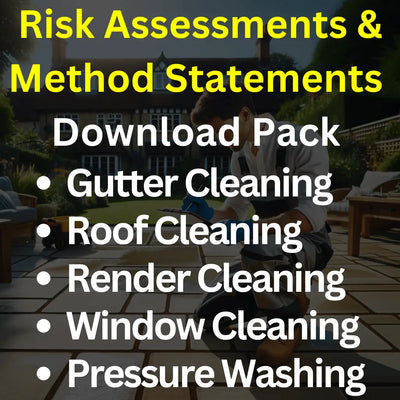
For contractors and facilities managers who need a structured starting point, the Risk Assessment and Method Statement RAMS Pack for Exterior Cleaning can support more consistent documentation. It does not replace site-specific judgement, but it helps build a professional framework for planning and communicating safe work.
4. More Accurate Pricing and Job Planning
Many exterior cleaning losses begin at the quotation stage. The job may be technically successful, but the business still loses money because labour time, access, chemical use, travel, water availability or post-treatment work was underestimated.
Training helps contractors price based on process, not optimism. A trained operator is more likely to ask:
- How many visits are needed?
- Is access straightforward or will towers, MEWPs or pole systems be required?
- Is the water supply adequate?
- Is the organic growth light surface algae or deep-rooted lichen that needs follow-up?
- Will the client accept gradual reactivation results or expect instant visual improvement?
- Are there vulnerable surfaces that require extra masking, wetting or protection?
This matters for contractors who want to grow sustainably. The SoftWash UK softwashing training and business hub contains further guidance for operators who want to build both technical competence and better business systems.
Training Versus Trial and Error: A Practical Comparison
| Area | Trial and Error Approach | Professional Training Approach |
|---|---|---|
| Surface assessment | Assumes the same method will work on most surfaces. | Identifies material, condition, risks and suitable cleaning methods before work starts. |
| Chemical use | Relies on guesswork, internet advice or stronger mixes to get faster results. | Uses appropriate product selection, measured dilution, controlled application and safe handling. |
| Safety documentation | May use generic paperwork or none at all. | Applies site-specific risk assessment, method statements, COSHH and PPE planning. |
| Pricing | Prices by square metre alone or copies competitors. | Allows for access, treatment time, risk, product use, labour, follow-up and client expectations. |
| Callbacks | Higher risk of rework because results and limitations were not explained. | Sets realistic expectations and uses the correct treatment for the contamination present. |
| Reputation | Inconsistent outcomes and higher complaint risk. | More predictable standards, safer systems and better customer confidence. |
A Step-by-Step Training-Based Workflow for Safer Exterior Cleaning
The best training does not simply teach product names. It gives you a workflow. The following process is typical of how experienced softwashing professionals reduce costly errors on both domestic and commercial sites.
Step 1: Survey the Site Properly
Start with the building, not the product. Identify surfaces, staining types, access constraints, drainage routes, nearby vegetation, public interfaces and sensitive materials. Take photos before work begins. On commercial sites, record operational constraints such as opening hours, delivery routes and pedestrian access.
Step 2: Decide Whether Softwashing, Pressure Washing or Another Method Is Suitable
Softwashing is often chosen where organic growth can be treated chemically with low-pressure application, reducing the risk of damage associated with high pressure. However, it is not the answer to every stain. Oil staining, rust staining, lead staining, efflorescence and tannin marks may require specialist products or a different process.
Training helps you understand the limits of each method. It also teaches when to walk away, seek further advice or conduct testing before giving a firm promise.
Step 3: Prepare a Site-Specific Risk Assessment
Consider slips, trips, working at height, chemical exposure, overspray, environmental protection, weather conditions and public safety. Wind speed is particularly important when spraying because drift can carry product beyond the target area. Rain can dilute treatment or increase run-off risk. Hot weather can accelerate drying and reduce dwell control.
For those wanting a deeper understanding of UK safety expectations, the HSE Soft Washing Full Collection can help contractors build knowledge around compliance, documentation and responsible practice.
Step 4: Test, Protect and Control
Before full application, test an inconspicuous area where necessary. Pre-wet vulnerable vegetation and surfaces where appropriate, protect sensitive items, manage run-off and plan rinsing. Move items such as furniture, signage, mats, loose planters and vehicles where possible.
On real sites, this is where training pays for itself. Many expensive incidents happen because the operator starts spraying before checking what is below, beside or behind the surface being cleaned.
Step 5: Apply the Correct Product at the Correct Rate
Measured application is more professional than “more chemical equals better cleaning”. Stronger mixes can increase risk, cost more money and create unnecessary environmental concerns. A trained operator understands dwell time, contact, agitation, reapplication and neutralisation or rinsing requirements where applicable.
Where equipment choice affects dosing and consistency, professional soft washing equipment can make work more controlled and repeatable. The key is knowing how to set up, maintain and use the equipment safely rather than relying on pressure or volume alone.
Step 6: Monitor the Job While Working
Do not apply product and mentally switch off. Monitor drying, colour change, run-off, wind shift, bystander movement and surface reaction. Re-wet sensitive areas if needed. Stop if conditions change. Training gives operators the confidence to pause and adjust rather than continue with a flawed plan.
Step 7: Rinse, Handover and Record
After cleaning, complete any required rinsing, check surrounding areas and document the outcome. Explain to the client what results are immediate and what may continue to improve over time, particularly with biocidal treatments. Keep records of products used, dilution, weather, photos and any client instructions.
Common Costly Mistakes That Training Helps Prevent
Using Too Much Pressure on Render and Delicate Surfaces
High pressure can be useful for certain hard surfaces, but it is often the wrong tool for delicate exterior finishes. On render, pressure damage can be visible immediately or appear later as water ingress, shadowing or surface breakdown. Training teaches contractors to understand substrate risk and use low-pressure methods where appropriate.
Assuming All Green Staining Is the Same
Green algae, moss, lichen and general atmospheric soiling do not always respond in the same way. A wall with light algae may clean quickly, while lichen on roof tiles or stone can require a longer treatment cycle. Training helps set realistic expectations and prevents overworking the surface.
Ignoring Metals, Glass and Sensitive Finishes
Lead flashing, aluminium trims, painted frames, galvanised surfaces, bronze fittings and certain glass types can be vulnerable to staining or reaction. A professional checks what is present before chemical application and knows when masking, pre-wetting, rinsing or alternative products are needed.
Failing to Understand Insurance Requirements
Insurance is not just an administrative detail. If the work falls outside your cover, or if you cannot demonstrate competent systems, a claim can become extremely difficult. Contractors should understand public liability, employers’ liability where relevant, treatment risks, work at height and any exclusions or conditions in their policy.
SoftWash UK’s Knowledge Centre article on softwash contractor insurance is a useful starting point for understanding the types of cover exterior cleaning businesses should discuss with an insurance professional.
Underestimating Public and Environmental Risk
On commercial and facilities management sites, the cleaning area may be close to staff entrances, customer walkways, loading bays or car parks. Training encourages proper exclusion zones, signage, scheduling and communication. It also reinforces responsible run-off control and protection of planted areas, drains and watercourses.
Myths About Professional Training in Softwashing
Myth 1: “I Can Learn Everything From Watching Videos”
Online videos can be helpful, but they rarely show the full decision-making process. They may not cover UK-specific safety expectations, product labels, COSHH, dilution control, insurance implications or what went wrong off camera. Structured training gives context, not just a demonstration.
Myth 2: “Training Is Only for Beginners”
Experienced contractors often benefit from training because bad habits can become expensive over time. New products, updated best practice, better equipment and changes in client expectations all make ongoing professional development worthwhile.
For those comparing different forms of learning, SoftWash UK explains the value of CPD certified softwash training and how structured training supports professional competence.
Myth 3: “Stronger Chemical Mixes Save Time”
Sometimes the correct answer is better contact time, improved surface preparation, a suitable surfactant, agitation, repeat treatment or expectation management. Stronger is not automatically better. It can increase risk, cost and damage potential.
Myth 4: “Paperwork Does Not Matter on Small Jobs”
Even small domestic jobs can involve chemical handling, slippery surfaces, fragile finishes, pets, children, neighbours, plants and public footpaths. Scaled, sensible documentation protects the customer and the contractor. It also helps you work consistently.
What Good Professional Training Should Cover
Not all training is equal. A useful softwashing or exterior cleaning course should focus on practical competence, not just product familiarity. Look for training that covers:
- Surface identification and common UK building materials.
- Organic growth, staining types and treatment selection.
- Softwashing chemistry, dilution and safe handling.
- COSHH, PPE, SDS interpretation and emergency planning.
- Risk assessment, method statements and site controls.
- Plant, metal, glass, timber and surrounding property protection.
- Equipment setup, dosing, maintenance and troubleshooting.
- Pricing, quoting, client communication and limitations.
- Insurance considerations and professional standards.
- Real-world case studies and common failure points.
The Soft Wash Training Course from SoftWash UK is designed for people who want practical, industry-specific education rather than guesswork. It is relevant for exterior cleaning contractors, facilities teams, property maintenance professionals and serious DIY users who want to work more safely and confidently.
How Facilities Managers Benefit From Trained Contractors
Facilities managers and property maintenance teams often carry the responsibility for budgets, safety, tenant satisfaction and building appearance. Choosing a trained contractor can reduce risk across all of these areas.
A trained contractor is more likely to provide:
- Clear RAMS and site-specific safety controls.
- Evidence of product knowledge and responsible chemical handling.
- Realistic programmes for large or phased works.
- Better communication around access, public safety and out-of-hours work.
- Reduced likelihood of damage to façades, signage, landscaping or drainage systems.
- Clearer reporting before and after the project.
For commercial sites, the cheapest quotation can become the most expensive option if poor methods damage assets or disrupt operations. Training supports better procurement decisions because it gives contractors the competence to explain why a method is appropriate.
How Serious DIY Users Can Avoid Expensive Mistakes
Serious DIY users may take on patio cleaning, render treatment, driveway maintenance or small softwashing projects around their own property. Training or guided learning is still valuable because mistakes are personal and often costly.
Before starting, DIY users should:
- Read product labels and safety data sheets fully.
- Wear suitable PPE for the task.
- Never mix chemicals unless the product instructions explicitly allow it.
- Test a small area first.
- Protect plants, metals, glass and adjacent surfaces.
- Keep children, pets and bystanders away from the working area.
- Avoid working in windy conditions or where run-off cannot be controlled.
- Ask for professional advice if unsure about the surface or stain.
When in doubt, the cost of advice is usually far lower than the cost of repairing a damaged surface.
Training as an Investment, Not an Expense
Professional training should be judged against the value of the errors it helps prevent. Consider the potential cost of one damaged rendered elevation, one insurance excess, one failed commercial job, one plant replacement claim, one lost client, or one week of under-priced labour.
| Potential Error | Likely Cost Impact | How Training Helps |
|---|---|---|
| Incorrect chemical dilution | Surface damage, plant damage, extra rinsing, complaints. | Teaches measured dilution, dwell control and safe application. |
| Poor access planning | Longer labour time, unsafe work, cancelled jobs. | Improves surveying, equipment planning and safer method selection. |
| Weak documentation | Lost commercial work, insurance complications, poor site control. | Builds understanding of RAMS, COSHH and client expectations. |
| Wrong cleaning method | Permanent surface damage or unsatisfactory results. | Improves diagnosis of surfaces, stains and appropriate treatment. |
| Under-pricing | Low margins, rushed work, poor profitability. | Encourages process-based quoting and realistic allowances. |
Ongoing learning also matters. Many contractors use the SoftWash UK Podcast to keep developing their business mindset, technical awareness and industry understanding while travelling between jobs.
Frequently Asked Questions
How does professional training reduce mistakes in softwashing?
Professional training reduces mistakes by teaching surface assessment, safe chemical handling, correct dilution, risk assessment, equipment setup, PPE use, client communication and realistic pricing. It gives operators a structured process rather than relying on trial and error.
Is softwashing training necessary if I already run an exterior cleaning business?
Yes, it can still be valuable. Existing contractors may already understand customer service and site work, but softwashing introduces specific issues such as chemical dosing, organic growth treatment, delicate surfaces, environmental controls and compliance documentation. Training helps refine working methods and reduce liability.
Can training help with insurance and commercial work?
Training can support insurance and commercial work by improving your ability to document safe systems, provide RAMS, understand risk and work within professional standards. It does not replace the need for suitable insurance, but it can help demonstrate competence and better site control.
What is the most common costly mistake in exterior cleaning?
One of the most common costly mistakes is choosing the wrong method for the surface. This includes using too much pressure on render, applying unsuitable chemicals to sensitive materials, or failing to protect surrounding plants, metals and drainage. These errors are often preventable with proper training and site assessment.
Is professional training useful for facilities managers?
Yes. Facilities managers benefit by understanding what competent contractors should provide, including risk assessments, method statements, safe chemical handling, realistic project planning and appropriate cleaning methods. This helps reduce property damage, disruption and compliance risk.
Does training replace experience?
No. Training and experience work together. Training gives you the correct framework, safety knowledge and best-practice methods. Experience then helps you apply that knowledge across different sites, surfaces and client requirements.
Conclusion: Training Prevents Expensive Guesswork
Professional training reduces costly errors because it replaces guesswork with a proven process. In exterior cleaning and softwashing, the biggest financial risks usually come from poor assessment, incorrect chemical use, weak preparation, unsafe working methods, under-pricing and inadequate documentation. Training helps contractors, facilities teams and serious DIY users make better decisions before problems occur.
For UK exterior cleaning businesses, competence is not just about achieving a clean surface. It is about protecting the client’s property, protecting your team, complying with best practice, pricing profitably and building a reputation for reliable results.
SoftWash UK supports the industry with professional softwashing chemicals, equipment, training and educational resources. If you want to reduce mistakes, improve safety and build more confidence in your work, explore the SoftWash UK training resources, Knowledge Centre and professional product range at SoftWash UK.