Why Roof Tiles Turn Green
Roof tiles turn green because moisture, shade and airborne biological spores create the right conditions for algae, moss, lichen and other organic growth to colonise the tile surface. In the UK, this is especially common on north-facing roof slopes, shaded properties, roofs under trees, and older concrete or clay tiles with a porous, weathered surface.
For exterior cleaning contractors, property maintenance professionals, facilities managers and serious DIY users, the important point is this: green roof tiles are not simply a cosmetic issue. They are a sign that the roof surface is retaining moisture and supporting biological growth. Left unmanaged, that growth can contribute to blocked gutters, increased roof loading, damp retention, tile staining and premature surface deterioration.
The right approach is not to blast the roof clean at high pressure. The professional approach is to correctly identify the growth, assess the roof condition, remove heavy moss where required, and apply an appropriate biocidal roof treatment using safe, compliant working methods.
What Is the Green Growth on Roof Tiles?
Green discolouration on roof tiles is usually one or more of the following:
- Algae: A thin green film often seen across wide areas of roof tiles, particularly on shaded elevations.
- Moss: Thicker green clumps or cushions that hold water and often build up between laps, edges and gutters.
- Lichen: Flat, crusty growths that may look green, white, yellow, grey or black and are more firmly attached to the tile surface.
- Cyanobacteria and biofilm: Microbial growth that can appear as staining or a slippery green surface layer.
In practice, roof tiles rarely suffer from just one type of growth. A typical UK roof may have algae staining across the main roof slope, moss growth in the tile laps and lichen spots on exposed concrete tiles. If you want a deeper explanation of moss-specific causes, SoftWash UK has further roof cleaning advice on moss on roof tiles.
Why UK Roofs Are Prone to Turning Green
The UK climate is ideal for biological growth. We have regular rainfall, high humidity, relatively mild winters and long periods where roof tiles remain damp. These conditions allow spores to germinate and spread across mineral surfaces such as concrete, clay, slate and fibre cement.
1. Moisture Retention
Moisture is the main driver. Roof tiles that stay damp for long periods are far more likely to turn green. This is why green growth is often heavier in:
- Valleys and low-flow roof areas
- Lower roof slopes where gutters overflow
- Areas shaded by trees, chimneys or neighbouring buildings
- North-facing and east-facing elevations
- Roofs with poor ventilation or reduced sunlight exposure
Once moss becomes established, it worsens the problem because it acts like a sponge. It traps water against the roof surface, increasing the time that tiles remain wet after rainfall.
2. Shade and Lack of Sunlight
Sunlight naturally dries roof surfaces and slows biological growth. Roof slopes that receive limited direct sun stay damp for longer and are more likely to support algae and moss.
Facilities managers often notice this on commercial and residential blocks where one elevation stays relatively clean while the shaded side turns green. This is not usually due to defective tiles. It is normally a microclimate issue.
3. Airborne Spores
Moss, algae and lichen reproduce through spores. These are carried by wind, birds, rain splash and nearby vegetation. A roof under trees or close to woodland will usually become recolonised faster than an exposed roof with good airflow.
This is why long-term maintenance matters. A single clean may improve appearance, but without an appropriate treatment and maintenance plan, spores will eventually return.
4. Porous or Weathered Tile Surfaces
Older concrete roof tiles are particularly prone to green growth because their surface becomes more porous as the original finish weathers. The rougher the surface, the easier it is for spores, dust and organic matter to settle.
Clay tiles, natural slate and man-made slate can also turn green, but the pattern of growth may differ. Smooth surfaces tend to shed growth more readily, while textured or weathered tiles give moss and lichen more grip.
5. Organic Debris
Leaves, twigs, pollen, bird droppings and wind-blown dust provide nutrients for biological growth. If gutters are blocked or valleys are full of debris, water flow slows down and damp organic material sits against the roof.
For contractors, this is why a roof clean should not be treated in isolation. Gutter clearing, valley checks, downpipe inspection and safe debris removal are all part of a professional assessment.
Is Green Growth on Roof Tiles a Problem?
Green roof tiles are not automatically an emergency, but they should not be ignored. The level of concern depends on the type of growth, roof condition and water drainage.
| Type of growth | Typical appearance | Main concern | Recommended action |
|---|---|---|---|
| Algae | Thin green film or staining | Cosmetic staining and slippery surfaces where accessed | Biocidal softwash treatment and monitoring |
| Moss | Thick green clumps or cushions | Water retention, blocked gutters, added weight and debris | Manual moss removal followed by appropriate roof treatment |
| Lichen | Flat crusty spots, often pale or dark | Firm attachment and long-term surface marking | Specialist treatment; allow time for weathering after application |
| Mixed biofilm | Green, black or brown discolouration | Moisture retention and poor appearance | Correct identification, treatment selection and safe application |
If the roof has heavy moss deposits, removal before treatment is often advisable. For more detail, read SoftWash UK’s professional guidance on roof moss removal.
Why Some Roofs Turn Green Faster Than Others
Two identical houses on the same street can age very differently. In real-world roof cleaning, the cause is usually a combination of exposure, material and maintenance history.
Key Factors That Accelerate Green Roof Growth
- North-facing roof slopes: Less sunlight means slower drying.
- Overhanging trees: More shade, spores and organic debris.
- Older concrete tiles: Weathered surfaces provide better anchorage for growth.
- Blocked gutters: Overflowing water keeps lower tiles damp.
- Poor airflow: Sheltered roofs dry more slowly.
- Previous incomplete cleaning: Removing visible moss without treatment can leave spores behind.
From a contractor’s perspective, this is useful during quotation. If one roof slope is heavily affected and another is relatively clean, you can explain the environmental reasons clearly to the client rather than making vague claims about “dirty tiles”.
Does Green Growth Damage Roof Tiles?
Green growth can contribute to roof problems, but the risk varies. Algae alone is usually more cosmetic than structural. Moss and lichen are more concerning because they retain water and can interfere with drainage.
Moss may lift slightly at tile laps, fill channels and shed into gutters. During freeze-thaw conditions, moisture held in moss and porous tile surfaces can increase stress on already weakened tiles. Lichen can be very firmly bonded and may leave staining or marks even after treatment.
However, poor cleaning methods can cause more damage than the growth itself. Aggressive high-pressure washing, walking carelessly on fragile tiles, or using unsuitable chemicals can lead to broken tiles, water ingress and surface erosion. SoftWash UK has a useful article answering Can Roof Cleaning Damage Roof Tiles, which is worth reading before specifying a method.
How Professionals Should Assess a Green Roof
Before any cleaning or treatment, carry out a proper assessment. This protects the roof, the operative, the client and the surrounding environment.
Step-by-Step Roof Assessment
- Identify the roof material: Concrete, clay, slate, man-made slate and coated tiles behave differently.
- Assess the growth type: Determine whether the main issue is algae, moss, lichen or mixed biological contamination.
- Check the roof condition: Look for cracked tiles, failing mortar, loose ridge tiles, damaged flashing and blocked valleys.
- Review access requirements: Consider scaffolding, MEWPs, roof ladders, edge protection and exclusion zones.
- Inspect drainage: Check gutters, downpipes, water butts, soakaways and nearby drains.
- Assess environmental risks: Identify lawns, ponds, planting, pets, public footpaths and watercourses.
- Prepare RAMS and COSHH documentation: Document your safe system of work before starting.
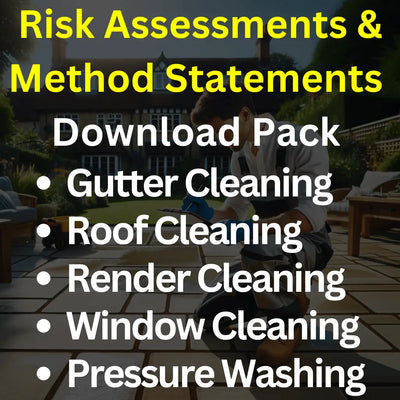
For contractors and maintenance teams, a professional Risk Assessment and Method Statement pack for exterior cleaning can help standardise the way roof cleaning risks are assessed and controlled.
Best Ways to Treat Green Roof Tiles
The correct method depends on the type of growth, roof condition, access and client expectations. In most professional situations, the preferred approach is controlled manual moss removal where required, followed by a suitable softwash or biocidal treatment.
Method 1: Manual Moss Removal Followed by Treatment
Where moss is thick, it should usually be removed before applying treatment. This reduces bulk debris, speeds up results and allows the treatment to reach the tile surface more effectively.
Typical professional practice includes:
- Using appropriate access equipment and fall protection
- Removing moss with roof-safe hand tools or specialist scraping systems
- Collecting debris rather than allowing it to block gutters and drains
- Clearing gutters and downpipes after moss removal
- Applying a suitable biocidal roof treatment to address remaining spores and biofilm
SoftWash UK supplies professional soft wash chemicals for a range of exterior cleaning tasks. Product selection should always be based on the substrate, contamination type, required dwell time, environmental controls and manufacturer guidance.
Method 2: Softwashing for Algae and Biofilm
Where the main issue is green algae or light biofilm rather than heavy moss, softwashing may be suitable without aggressive mechanical cleaning. The treatment is applied at controlled strength and allowed to work chemically, reducing the need for high-pressure cleaning.
This approach is particularly useful where roof tiles are older, delicate or unsuitable for pressure washing. It is also valuable on commercial sites where water control, overspray management and safe access planning are essential.
For broader process guidance, SoftWash UK’s Knowledge Centre includes detailed professional roof cleaning guidance.
Method 3: Biocidal Roof Treatments for Ongoing Control
Biocidal treatments are used to kill and inhibit biological growth over time. Depending on the product and conditions, results may continue improving as dead growth weathers away naturally.
For roofs where moss and algae control is the main goal, products such as Clean Guard Pro roof moss killer and cleaner may be considered as part of a planned roof maintenance approach. Always follow label instructions, apply at the appropriate dilution, use correct PPE, and comply with COSHH and environmental requirements.
Softwashing vs Pressure Washing Green Roof Tiles
Pressure washing is commonly requested by clients because it produces an immediate visual change. However, it is not always the safest or most appropriate method for roof tiles.
| Method | Advantages | Limitations | Best suited for |
|---|---|---|---|
| Softwashing | Targets biological growth, reduced mechanical damage, suitable for many roof surfaces | Results may develop over time; requires chemical knowledge and controls | Algae, biofilm, post-moss treatment and delicate roofs |
| Manual moss removal | Removes bulk moss and reduces gutter debris | Labour intensive; requires safe access | Heavy moss deposits before treatment |
| Pressure washing | Immediate visual cleaning | Can erode tile surfaces, drive water under laps and increase breakage risk | Only where roof type, condition and method make it safe and justified |
If pressure washing is considered, the roof must be suitable and the operative must understand water direction, tile laps, flow rates, nozzle choice and access safety. In many cases, especially on older concrete tiles, a softwash-based method is more appropriate.
Practical Best Practice for Contractors and Facilities Managers
Set Realistic Expectations
Clients often expect a roof to look new immediately. That is not always realistic or necessary. With biocidal treatments, green algae may fade quickly, while lichen and deeper staining can take weeks or months to weather away.
Explain this before starting. A well-informed client is less likely to misunderstand the process or pressure you into unsafe cleaning.
Protect the Site Properly
Roof treatment involves working at height and managing chemical runoff. Good site protection includes:
- Covering or pre-wetting sensitive plants where appropriate
- Disconnecting or diverting water butts when necessary
- Managing gutters and downpipes
- Preventing public access to work zones
- Using suitable PPE, including eye, hand and respiratory protection where required
- Keeping pets, children and unprotected people away from treated areas
Use Suitable Equipment
Application equipment should give controlled delivery rather than excessive overspray. Professional roof work may involve low-pressure pumps, appropriate nozzles, water-fed poles, dosing systems and safe access equipment.
SoftWash UK stocks dedicated soft washing equipment designed for controlled exterior cleaning applications. For contractors, equipment choice affects safety, productivity, chemical control and finish quality.
Invest in Training
Roof cleaning involves more than applying a chemical. You need to understand substrates, biocides, sodium hypochlorite where applicable, surfactants, dwell times, runoff control, working at height, PPE, COSHH and client communication.
For businesses building a professional roof cleaning service, the SoftWash UK Soft Wash Training Course is a sensible way to reduce costly mistakes and improve safe working practice.
Common Mistakes When Dealing with Green Roof Tiles
Myth 1: “Green roof tiles just need blasting clean”
High-pressure washing can make a roof look cleaner quickly, but it may damage the tile surface, force water beneath overlaps and fail to treat remaining spores. Cleaning should be selected around the roof, not around the desire for instant results.
Myth 2: “If the moss is gone, the roof is clean”
Removing visible moss does not automatically kill algae, lichen spores or biofilm. Without treatment, regrowth may occur sooner than expected.
Myth 3: “All green staining is moss”
Thin green staining is often algae, not moss. Lichen can also appear green at certain stages. Correct identification matters because the treatment method and expected results differ.
Myth 4: “More chemical means better results”
Over-application is unsafe, wasteful and unprofessional. Chemical use must be controlled, proportionate and compliant with product instructions, COSHH assessment and environmental best practice.
Myth 5: “DIY roof cleaning is always cheaper”
For ground-level tasks, a competent DIY user may be able to work safely with the right products and guidance. Roof work is different. Falls from height, broken tiles, chemical misuse and water ingress can cost far more than a professional clean.
Step-by-Step Guidance: What to Do When Roof Tiles Turn Green
- Inspect from the ground first: Use binoculars or a camera zoom to identify the type and extent of growth.
- Check for obvious defects: Look for slipped tiles, cracked ridges, damaged flashing and blocked gutters.
- Determine the growth type: Algae, moss and lichen need slightly different management.
- Decide whether moss removal is needed: Heavy moss should usually be removed before treatment.
- Plan safe access: Do not work from ladders in an unsafe or improvised way. Use suitable access equipment.
- Prepare site protection: Control runoff, protect plants, manage gutters and isolate the working area.
- Apply the correct treatment: Follow product instructions, dwell times, dilution guidance and safety data sheets.
- Allow time for results: Some staining and lichen will weather away gradually after treatment.
- Schedule maintenance: Periodic inspection and retreatment can prevent heavy regrowth.
How Often Should Green Roof Tiles Be Treated?
There is no single answer because every roof has a different environment. A shaded, tree-lined roof in a damp area may need more frequent attention than a south-facing roof in an open location.
As a practical guide:
- Light algae: Inspect annually and treat when staining becomes noticeable.
- Moderate moss: Consider removal and treatment, then inspect every 12 months.
- Heavy moss under trees: Plan a maintenance schedule, including gutter clearing and periodic biocidal treatment.
- Commercial or managed sites: Include roof condition and drainage checks in planned preventative maintenance.
Contractors should avoid promising a fixed number of moss-free years without understanding the site. A better approach is to explain the influencing factors and offer a realistic maintenance plan.
Safety and Compliance Notes
Roof cleaning carries significant risk. Anyone undertaking this work should consider:
- Work at Height Regulations
- COSHH assessment for chemicals
- PPE requirements
- Public and occupant safety
- Environmental protection and runoff control
- Product safety data sheets and label instructions
- Waste handling and debris disposal
Never mix chemicals unless the manufacturer specifically states it is safe to do so. Never apply products without understanding the safety data sheet. Never allow uncontrolled runoff into ponds, watercourses or sensitive areas. Professionalism in roof cleaning is not just about the final appearance; it is about controlling risk throughout the job.
Frequently Asked Questions
Why are my roof tiles green on one side only?
This is usually because one roof slope gets less sunlight and stays damp for longer. North-facing slopes, shaded elevations and areas beneath trees are much more likely to turn green than sunny, well-ventilated elevations.
Is green algae on roof tiles harmful?
Green algae is often more cosmetic than structural, but it indicates damp surface conditions. If left with moss and debris, it can contribute to moisture retention, blocked gutters and an untidy appearance. It is best managed before it becomes heavy organic growth.
Should moss be removed before treating a roof?
Heavy moss should normally be removed before treatment because thick moss can prevent the treatment reaching the tile surface properly. Light biological staining may be treated without major mechanical removal, depending on the roof condition and product used.
Can I pressure wash green roof tiles?
Pressure washing may damage some roof tiles, particularly older concrete tiles or fragile surfaces. It can also drive water under tile laps if used incorrectly. A low-pressure softwash or biocidal treatment is often a safer professional option.
How long does it take for a roof treatment to work?
Some green algae may fade relatively quickly, but lichen and deeper biological staining can take weeks or months to weather away after treatment. Results depend on the growth type, product, weather conditions and roof surface.
Will green growth come back?
Yes, eventually. Spores are naturally present in the environment. However, correct cleaning, treatment, gutter maintenance and periodic retreatment can slow regrowth significantly.
Conclusion: Green Roof Tiles Are a Moisture and Biology Problem
Roof tiles turn green because the roof surface is providing the right conditions for algae, moss, lichen and biofilm to grow. In the UK, that usually means moisture, shade, airborne spores, porous tiles and organic debris are working together.
The best solution is a professional, measured approach: identify the growth, assess the roof, remove heavy moss where needed, apply a suitable treatment, protect the surrounding environment and maintain the roof over time. Avoid aggressive cleaning methods that may cause more harm than good.
SoftWash UK supports contractors, property maintenance teams, facilities managers and serious DIY users with professional softwashing chemicals, equipment, training and educational resources. If you want to improve your roof cleaning knowledge, choose suitable products or build safer working systems, visit SoftWash UK for expert guidance and professional exterior cleaning supplies.