Using Sodium Hypochlorite Safely: Practical Guidance for UK Exterior Cleaning Professionals
Sodium hypochlorite can be used safely in exterior cleaning when it is assessed properly, diluted correctly, applied with suitable equipment, controlled on site and handled in line with UK health, safety and environmental requirements. The key is not simply knowing that sodium hypochlorite cleans organic staining well; it is understanding its hazards, how it reacts, where it should and should not be used, and how to protect people, property, plants, pets and waterways.
For UK softwashing contractors, facilities managers, property maintenance teams and serious DIY users, sodium hypochlorite is one of the most effective active ingredients for removing organic contamination such as algae, lichen, black mould, mildew and biofilm from suitable external surfaces. However, it is also a powerful oxidising chemical. Used carelessly, it can damage surfaces, harm vegetation, create dangerous gas, bleach fabrics, corrode metals and expose operators to unnecessary risk.
This guide explains how to use sodium hypochlorite responsibly in real-world exterior cleaning, including risk assessment, PPE, dilution, application, plant protection, storage, common mistakes and when to consider alternative chemistry.
What Is Sodium Hypochlorite and Why Is It Used in Softwashing?
Sodium hypochlorite is a chlorine-based oxidising chemical widely used for disinfection, water treatment and exterior cleaning. In softwashing, it is commonly used because it acts quickly on organic growth. It breaks down the biological staining that causes green, black and brown discolouration on many exterior surfaces.
In the UK exterior cleaning industry, sodium hypochlorite is commonly used on suitable surfaces such as:
- Render and painted masonry, where manufacturer guidance allows
- Concrete paths, patios and driveways
- Some roof tiles, when assessed and applied correctly
- Brickwork, block paving and stone, subject to compatibility testing
- External walls affected by algae or mould growth
- Commercial hardstanding, yards and loading areas
It is important to understand that sodium hypochlorite is not a general-purpose cleaner for every surface. It is primarily a treatment for organic contamination. It is not the right product for rust staining, oil staining, efflorescence, lead staining, tannin marks or many mineral deposits. Choosing the wrong chemical is one of the fastest ways to cause damage or deliver poor results.
Key Safety Principle: Treat Sodium Hypochlorite as a Professional Chemical
The safest mindset is to treat sodium hypochlorite as a professional chemical rather than a stronger version of household bleach. Commercial sodium hypochlorite used in softwashing is often supplied at a much higher strength than domestic products. That means the risks are different and the controls need to be more robust.
Before using it, you should have:
- A suitable COSHH assessment
- A site-specific risk assessment and method statement
- Access to the current Safety Data Sheet
- Correct PPE for the task
- Suitable chemical-resistant application equipment
- A plan for protecting plants, people, pets, surfaces and drainage
- A spill response plan
- Clear operator training and supervision
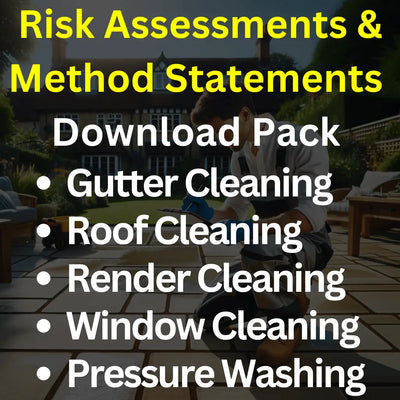
Contractors who want ready-made documentation suitable for exterior cleaning can use the Risk Assessment and Method Statement RAMS Pack for Exterior Cleaning as a practical starting point, adapting it to the site, task, products and working method being used.
Main Hazards of Sodium Hypochlorite
Sodium hypochlorite is effective because it is chemically active. That also means it presents several hazards if handled incorrectly.
| Hazard | What Can Happen | Practical Control |
|---|---|---|
| Skin and eye contact | Irritation, burns or serious eye injury, particularly with concentrated product | Wear chemical-resistant gloves, eye protection or face shield, suitable clothing and wash facilities on site |
| Inhalation of vapour or mist | Respiratory irritation, coughing or breathing difficulty | Avoid spraying into wind, use low-pressure controlled application, consider respiratory protection where required by risk assessment |
| Mixing with acids | Release of chlorine gas, which can be life-threatening | Never mix with acids, descalers, brick acid, vinegar or acidic surface cleaners |
| Mixing with ammonia or some detergents | Release of toxic chloramine gases | Only use compatible products designed for softwashing |
| Damage to plants | Leaf burn, stress, root damage or plant death | Pre-wet, cover where appropriate, control run-off and rinse thoroughly |
| Surface damage | Bleaching, streaking, corrosion or discolouration | Survey, test patch and use the weakest effective mix |
| Environmental harm | Impact on aquatic life and drainage systems | Prevent entry into ponds, streams, surface water drains and uncontrolled run-off routes |
COSHH, SDS and UK Best Practice
In commercial use, sodium hypochlorite falls under Control of Substances Hazardous to Health requirements. A COSHH assessment is not a paperwork exercise; it is the process that helps you identify the hazards, decide who could be harmed and put practical controls in place.
A good COSHH assessment for sodium hypochlorite should cover:
- The product strength and concentration being used
- How the chemical will be diluted and applied
- Who may be exposed, including operatives, clients, public, pets and other trades
- Required PPE and emergency washing arrangements
- Ventilation and weather considerations
- Spill response and first aid measures
- Storage, transport and disposal arrangements
- Surface and environmental protection measures
Keep current Safety Data Sheets available to operators, not just in an office folder. If you manage several sites or teams, the SoftWash SDS Sheets resource can help contractors keep chemical information organised and accessible for team briefings, site files and client compliance requirements.
Choosing the Right Product and Strength
Professional exterior cleaning often uses sodium hypochlorite supplied at higher concentration, then diluted into a working solution. For example, SoftWash UK supplies Sodium Hypochlorite for Soft Washing 14% to 15% for contractors who need a professional-grade source product and understand the safety controls required.
Working strength should be chosen according to the surface, contamination level, weather, dwell time and risk to surrounding materials. In practice, experienced contractors often start with the least aggressive effective solution rather than reaching for the strongest possible mix. Stronger is not always better. It can increase risk, cost, smell, plant damage and surface marking without improving the end result.
Typical Decision Factors Before Dilution
- Surface type: Render, concrete, roof tiles, natural stone and timber all respond differently.
- Contamination: Light green algae needs less chemical strength than established black organic staining.
- Access: Overspray risk increases on windy elevations and high-level work.
- Drainage: Sites with surface water drains, ponds or watercourses require tighter controls.
- Weather: Rain can dilute the product; heat and sun can dry it too quickly.
- Client sensitivity: Schools, healthcare sites, food premises and public areas need careful planning and exclusion controls.
Why Surfactants Matter
A softwash surfactant helps the cleaning solution wet the surface, cling for longer and spread more evenly. This is especially useful on vertical render, pitched roofs, textured surfaces and hydrophobic contamination.
A compatible surfactant can help reduce run-off and improve dwell time, which may allow the operator to work with a more controlled application rather than repeatedly reapplying chemical. However, surfactants must be compatible with sodium hypochlorite. Do not add washing-up liquid, unknown detergents or fragrance products unless they are designed for this purpose.
For professional softwashing, Clever Wash Surfactant is designed to be used as part of a softwashing system, helping improve cling and visibility during controlled application.
Step-by-Step: How to Use Sodium Hypochlorite More Safely
1. Survey the Site Properly
Walk the job before mixing any chemical. Identify vulnerable materials, access issues and environmental risks. Look for aluminium, copper, lead, zinc, untreated timber, painted surfaces, delicate stone, soft landscaping, ponds, water butts, open windows, vents, electrical fittings, security sensors and external sockets.
On commercial sites, speak to the facilities manager about building users, delivery times, public access, emergency routes and sensitive operations. A school entrance at 8.30am is a very different risk profile to the same entrance at 11am during a planned closure.
2. Confirm Surface Compatibility
Do not assume every surface can tolerate sodium hypochlorite. Always carry out a small test patch in an inconspicuous area and allow enough time to judge the result. This is particularly important on coloured render, painted masonry, natural stone, older brickwork, timber and powder-coated metals.
3. Prepare Your RAMS and Brief the Team
Set out the method before starting. Include exclusion zones, PPE, application method, dwell time, rinsing plan, plant protection and emergency procedures. If working near the public, use barriers, cones and clear signage. If using ladders, towers or MEWPs, include working at height controls separately.
4. Wear Suitable PPE
At a minimum, PPE should be selected from the product SDS and task risk assessment. Typical PPE may include:
- Chemical-resistant gloves
- Eye protection or face shield
- Long sleeves and chemical-resistant outerwear where splash risk exists
- Waterproof footwear
- Respiratory protection where mist or vapour exposure cannot be adequately controlled
PPE is the last line of defence, not the first. Good planning, controlled application and safe distances reduce exposure before PPE is relied upon.
5. Mix Carefully and Add Chemical to Water
Use clean, labelled containers and measure accurately. Avoid guessing or mixing “by eye”. When diluting, add sodium hypochlorite to water rather than splashing water into concentrated chemical. Work in a well-ventilated area and keep lids on containers when not in use.
Never mix sodium hypochlorite with acids, ammonia-based products, unknown detergents, vinegar, brick cleaners or toilet cleaners. This is one of the most serious safety errors in chemical cleaning and can produce toxic gas very quickly.
6. Protect Plants and Surroundings
Plant protection is part of professional softwashing, not an optional extra. In real site work, most complaints after chemical cleaning are linked to damaged plants, stained metalwork, bleached fabrics or poor run-off control.
Use suitable controls such as:
- Pre-wetting plants and soil before application
- Temporarily covering delicate planting where safe and practical
- Working in manageable sections
- Using controlled low-pressure application rather than uncontrolled spraying
- Keeping solution off lawns, borders and hedges wherever possible
- Rinsing plants thoroughly after treatment
- Diverting or containing run-off where required
7. Apply at Low Pressure and Control Overspray
Softwashing is not high-pressure washing with chemicals. Apply sodium hypochlorite solutions at low pressure using chemical-compatible equipment. Work with the wind, not against it. Avoid spraying in gusty conditions, near open windows, public walkways or parked vehicles.
For vertical elevations, start low enough to control run-off, watch how the solution tracks and avoid flooding the surface. On roofs, control overspray carefully and consider guttering, downpipes, water butts and neighbouring properties.
8. Manage Dwell Time
Dwell time is the time the solution remains active on the surface. Too little dwell time gives poor results. Too much dwell time, especially in direct sunlight, may allow chemical to dry and create streaking, residue or increased surface risk.
Keep the surface damp during the active period if required, but do not keep applying chemical simply because staining remains visible. Some biological staining lightens over time after treatment. Learn the difference between active growth, dead staining and mineral staining.
9. Rinse or Leave According to the Method and Surface
Some softwashing methods involve rinsing after dwell. Others rely on treatment and weathering. The correct approach depends on the surface, chemical, contamination, client requirements and environmental controls. High-footfall surfaces such as entrances, paths and commercial yards usually need careful rinsing to remove residue and reduce slip risk.
10. Dispose of Waste Responsibly
Do not allow uncontrolled discharge into surface water drains, ponds, rivers or streams. Plan where rinse water will go before the job starts. On higher-risk sites, you may need to block drains, divert run-off, collect waste water or seek appropriate permissions. When in doubt, take advice before starting.
Sodium Hypochlorite Compared with Other Softwashing Chemistry
Sodium hypochlorite is not the only chemical used in exterior cleaning. The best contractors understand when to use it and when a different chemistry is safer, more suitable or more commercially sensible. SoftWash UK’s guide to softwashing chemicals gives a wider overview of common active ingredients and their roles.
| Chemistry | Best Used For | Key Considerations |
|---|---|---|
| Sodium hypochlorite | Fast treatment of algae, mould, mildew and many organic stains | Requires careful dilution, PPE, plant protection and strict mixing controls |
| DDAC biocide | Longer-acting biocidal treatment on suitable exterior surfaces | Often slower visual results but useful where residual biocidal action is needed |
| Specialist stain removers | Rust, oil, tannin, lead staining or mineral marks | Choose based on stain type; sodium hypochlorite may be ineffective or damaging |
| Surfactants | Improving wetting, cling and dwell time | Must be compatible with the active chemical and intended surface |
For contractors comparing treatment approaches, SoftWash UK’s guide to DDAC explains how quaternary ammonium biocides differ from oxidising cleaners such as sodium hypochlorite.
Common Mistakes When Using Sodium Hypochlorite
Using Too Strong a Mix
Excessive strength increases risk without always improving results. It can bleach surfaces, damage plants and corrode metals. Good contractors adjust strength based on survey, testing and experience.
Ignoring the Weather
Wind creates overspray. Hot sun dries chemical too quickly. Heavy rain dilutes it and moves it into places you do not want it. Weather is a safety control, not just a scheduling inconvenience.
Failing to Pre-Wet and Rinse Plants
Plant damage is often preventable. Pre-wetting and rinsing are simple controls, but they need to be done thoroughly. A quick splash with a hose is rarely enough on sensitive borders.
Mixing Incompatible Chemicals
Never mix sodium hypochlorite with acids or unknown products. If you have used an acidic cleaner on a surface, rinse thoroughly and assess before using any chlorine-based product. Chlorine gas incidents are usually avoidable and usually caused by poor understanding.
Using Household Habits on Professional Jobs
Professional exterior cleaning needs labelled containers, measured dilution, SDS access, PPE, RAMS and environmental controls. “I’ve always done it this way” is not a defence if something goes wrong.
Myths About Sodium Hypochlorite
Myth: Sodium Hypochlorite Is Always Bad for Surfaces
Incorrect. It can be very effective and appropriate on many external surfaces when used correctly. The issue is not the chemical alone; it is concentration, dwell time, compatibility, weather, rinsing and operator competence.
Myth: Stronger Mixes Always Clean Better
Not true. Once the active contamination has been treated, more strength may only increase risk. Mechanical preparation, surfactant choice, dwell time and repeat light treatments can be more professional than one aggressive application.
Myth: If It Smells Strong, It Is Working Better
A strong chlorine smell is not a performance indicator. It may indicate poor control, excessive strength, off-gassing or unnecessary exposure. Professional cleaning is measured by controlled results, not smell.
Myth: Sodium Hypochlorite Removes Every Stain
It does not. Rust, oil, efflorescence, tannins and metal staining need different products and methods. Correct stain identification saves time and reduces damage risk.
Storage and Transport Best Practice
Sodium hypochlorite should be stored in suitable, clearly labelled containers, away from acids, metals, heat and direct sunlight. It degrades over time, especially when warm or contaminated, so stock rotation matters. Do not store it in unlabelled drums, drinks bottles or unsuitable containers.
When transporting chemicals, keep containers upright, secure and separated from incompatible substances. Carry spill control materials, clean water for emergency rinsing and relevant documentation. Commercial contractors should understand dangerous goods duties and seek competent advice where required.
When Training Makes a Real Difference
Sodium hypochlorite safety is not only about reading a label. It involves judgement on surfaces, weather, dilution, dwell time, run-off, plant protection, access and client management. That judgement is built through structured learning and supervised experience.
For contractors who want to move beyond trial and error, the SoftWash Training Course covers professional methods, safety thinking and practical decision-making for exterior cleaning businesses.
If this is an area you want to understand properly, you can start by accessing the free SoftWash UK course preview. It includes selected lessons from the full training course and is designed to help contractors see whether professional softwashing training is the right next step.
Frequently Asked Questions
Is sodium hypochlorite safe for softwashing?
Yes, sodium hypochlorite can be safe for softwashing when used by competent people with correct dilution, PPE, COSHH assessment, suitable equipment, surface testing and environmental controls. It becomes unsafe when mixed incorrectly, over-applied, sprayed in poor weather or used without considering plants, drainage and vulnerable materials.
Can I mix sodium hypochlorite with other cleaning chemicals?
Only mix it with products that are specifically compatible and intended for use with sodium hypochlorite. Never mix it with acids, vinegar, brick acid, descalers, ammonia-based cleaners or unknown detergents. Dangerous chlorine or chloramine gases can be produced.
What PPE should I wear when using sodium hypochlorite?
PPE should be selected from the Safety Data Sheet and site-specific risk assessment. It commonly includes chemical-resistant gloves, eye protection or a face shield, protective clothing and suitable footwear. Respiratory protection may be needed where mist or vapour exposure cannot be adequately controlled.
Will sodium hypochlorite kill plants?
It can damage or kill plants if allowed to contact leaves, roots or soil in sufficient concentration. Professional operators reduce risk by pre-wetting, shielding sensitive plants, controlling overspray and run-off, working in sections and rinsing thoroughly after application.
Can sodium hypochlorite be used on roofs?
It may be used on certain roof surfaces by trained operators after a proper survey and risk assessment. Roof work introduces additional risks including working at height, overspray, gutter discharge, neighbouring properties and fragile materials. It should not be approached casually.
Does sodium hypochlorite need to be rinsed off?
It depends on the surface, method, concentration, site risk and client requirements. Some treatments are rinsed after dwell, while others may be left to weather in controlled circumstances. Public walkways, commercial entrances and areas with residue or slip risk normally require careful rinsing and post-clean checks.
Conclusion: Safe Sodium Hypochlorite Use Comes Down to Control
Sodium hypochlorite is one of the most useful chemicals in professional exterior cleaning, but it must be respected. Safe use is built on proper assessment, measured dilution, compatible products, low-pressure application, suitable PPE, plant protection, run-off control and clear documentation.
The best operators do not simply ask, “Will it clean?” They ask, “Is it suitable, controlled, compliant and safe for this site?” That is the difference between casual chemical use and professional softwashing.
SoftWash UK supports contractors, facilities teams and serious users with professional softwashing chemicals, equipment, SDS resources, RAMS documentation and structured training. If you want to deepen your knowledge, explore the SoftWash UK Knowledge Centre, compare suitable products and consider formal training before taking on higher-risk chemical cleaning work.