Why Softwashing Training Matters
Softwashing training matters because a low-pressure cleaning system is only as safe and effective as the person operating it. Professional training helps you identify surfaces correctly, select suitable treatments, control chemical exposure, protect the environment and deliver realistic results without avoidable damage.
For UK exterior cleaning contractors, property maintenance teams and facilities managers, that knowledge supports better site decisions, more accurate quotations and consistent working standards. For serious DIY users, it helps establish an equally important boundary: knowing when a job needs a competent professional.
Buying a pump, a pole and a chemical does not teach you how to assess deteriorating render, protect a surface-water drain or recognise a stain that will not respond to a biocide. Those decisions are where softwashing competence makes the difference.
What Is Softwashing Training?
Softwashing training teaches the assessment, preparation, treatment and management of exterior surfaces using suitable cleaning products and controlled, low-pressure application. It should connect practical cleaning methods with chemical safety, equipment operation, environmental protection and business responsibilities.
Softwashing is commonly used to manage algae and other biological growth on suitable render, masonry, roofs and external surfaces. However, not every stain is biological, and not every material is suitable for the same treatment.
A useful training programme teaches you to answer five questions before starting:
- What is the surface, and what condition is it in?
- What is causing the discolouration or growth?
- Which cleaning method and product, if any, are appropriate?
- How will people, property, vegetation and drainage be protected?
- What result can reasonably be achieved, and over what timescale?
The SoftWash UK softwashing training and business hub provides supporting reading for contractors developing both their technical knowledge and their working procedures.
Why Low Pressure Does Not Mean Low Risk
Reducing pressure can lower the risk of mechanical damage compared with inappropriate pressure washing. It does not remove chemical, access or environmental hazards.
A fine spray can drift onto parked vehicles. Treatment can enter an open window or ventilation inlet. Run-off can reach a pond or surface-water drain. A low-pressure application can still damage an unsuitable coating or expose an operative to a hazardous substance.
Training helps contractors understand these separate risks rather than assuming that “soft” means harmless.
| Decision | Untrained assumption | Competent approach |
|---|---|---|
| Choosing a treatment | Use the same product on every dark stain. | Identify the likely contamination and check surface compatibility. |
| Setting application strength | A stronger mix will finish the job faster. | Follow the product label and assess the specified application conditions. |
| Protecting drainage | Dilution makes discharge acceptable. | Identify drainage routes and establish an appropriate containment and disposal plan. |
| Working at height | A longer pole or ladder solves the problem. | Assess reach, control, fatigue and access before choosing a safe method. |
| Promising results | Every mark should disappear immediately. | Explain the difference between biological growth, staining and material defects. |
The Practical Skills That Make Training Valuable
Surface identification and condition assessment
Render, natural stone, brickwork, painted finishes and roof coverings respond differently to cleaning. Even apparently similar surfaces may have different coatings, repairs or levels of deterioration.
On a rendered elevation, for example, green growth may sit alongside hairline cracks, failed sealant and staining from a leaking gutter. Cleaning can address suitable contamination; it cannot repair water ingress or failing render.
A competent survey records those defects before work starts. It also identifies sensitive details such as metal trims, external sockets, timber features and neighbouring finishes.
Test areas are valuable, but they are not a guarantee that an entire elevation is uniform. Training should explain both what a test can establish and what it cannot.
Understanding products rather than memorising recipes
Professional chemical handling starts with the product label, safety data sheet and a task-specific COSHH assessment. These serve different purposes: the safety data sheet describes hazards and handling information, while the COSHH assessment considers exposure and controls for the actual work.
Training should cover product suitability, application restrictions, contact time, rinsing requirements and any conditions attached to biocidal use. Contractors should check that a biocidal product can lawfully be supplied and used for its intended purpose in the relevant UK jurisdiction.
Memorising a dilution from a social media post is not a substitute. Product concentrations differ, equipment delivery can vary, and the percentage of product in a solution is not necessarily the percentage of active ingredient.
Never mix sodium hypochlorite with acids, ammonia or other cleaning products. Use only additives expressly confirmed as compatible by the relevant supplier or manufacturer. Training should make chemical incompatibility a firm operating boundary.
Equipment selection, calibration and control
A system that sprays successfully is not necessarily delivering accurately. Worn seals, blocked filters, unsuitable hoses and incorrect injector settings can affect performance or create leaks.
Useful practical training explains how to:
- Check that wetted components are compatible with the intended chemical.
- Inspect hoses, fittings, pumps and application tools before use.
- Verify delivery settings rather than relying solely on a dial position.
- Select an application pattern that limits drift and unnecessary overspray.
- Depressurise, clean and store equipment according to manufacturer instructions.
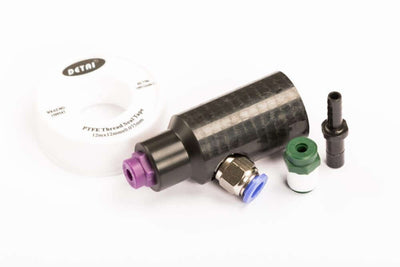
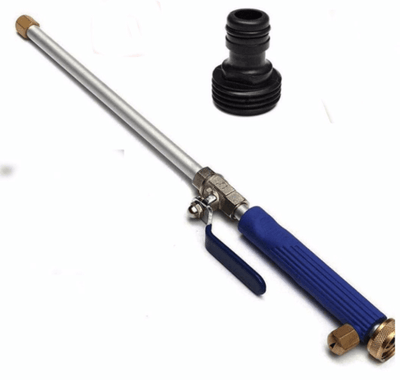
When comparing professional softwashing equipment, consider chemical compatibility, controllability, maintenance and the work you intend to undertake—not simply maximum reach or flow rate.
Safety, COSHH and Environmental Responsibilities
Risk assessment must reflect the site
A domestic driveway, a school entrance and an occupied commercial courtyard need different controls. Public access, vulnerable occupants, vehicle movements and drainage arrangements change the risk profile.
A site-specific assessment should consider chemical exposure, slips, hose routes, manual handling, weather, access and emergency arrangements. The method statement should then explain how the work will be carried out safely.
Read the SoftWash UK guidance on why softwash contractors need risk assessments for more detail on turning hazard identification into practical controls.
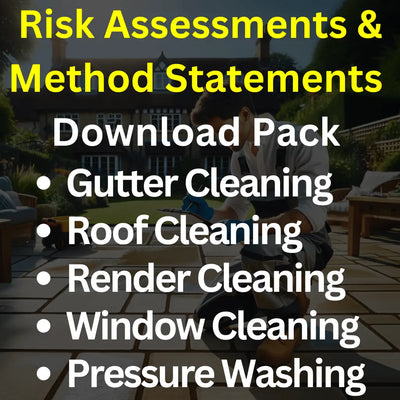
A RAMS pack for exterior cleaning can help structure documentation. However, templates must be adapted to the task and site; they do not replace competence or a suitable COSHH assessment.
PPE is one part of the control system
Personal protective equipment should follow the chemical assessment and product instructions. Depending on the task, controls may include suitable chemical-resistant gloves, protective clothing and eye or face protection.
Respiratory protective equipment, where required, must be suitable for the hazard and wearer. Tight-fitting equipment requires face-fit testing. Avoiding airborne exposure through method selection and application control remains essential.
Training should also address emergency washing arrangements, access to product information and the actions required after exposure or a spill.
Drainage protection needs planning before application
Identify gullies, downpipes, surface-water routes, ponds and nearby watercourses before treatment begins. Do not assume that a drain connects to the foul sewer or that a foul sewer connection permits chemical discharge.
Agree suitable containment, recovery and disposal arrangements where needed. Check requirements with the relevant sewerage undertaker, environmental regulator or waste specialist. Dilution alone does not make an otherwise unacceptable discharge lawful.
Pre-wetting plants may form part of a protection plan, but it does not make chemical contact harmless. Where exposure cannot be adequately controlled, change the method, postpone the work or decline the job.
A Trained Approach to a Typical Softwashing Job
Consider an occupied property with algae on a rendered wall above a planted border. A professional process might follow these stages:
- Survey the surface. Identify the finish, visible growth, defects, access limitations and sensitive neighbouring materials.
- Establish the cause. Check whether leaking gutters, poor drainage or persistent shade are contributing to the problem.
- Choose a suitable method. Confirm that the treatment is appropriate for the surface and intended use. Check relevant manufacturer guidance.
- Plan the controls. Assess occupants, pets, plants, drainage, weather, work positioning and emergency arrangements.
- Explain the expected result. Record existing defects, agree exclusions and clarify whether results are immediate or develop over time.
- Prepare and test. Establish the exclusion area, inspect equipment and complete a suitable test application where appropriate.
- Apply and monitor. Follow the product instructions and watch for drift, unexpected reactions, leaks or changes in site conditions.
- Complete and record. Follow specified rinsing or aftercare requirements, manage residues appropriately and document the work.
The most important skill is not moving through the sequence quickly. It is recognising when new information means you must stop and reassess.
How Training Improves Quoting and Customer Expectations
Inexperienced contractors often price only the visible wall area. In practice, plant protection, drainage controls, difficult access and managing an occupied site can account for a substantial part of the work.
Training helps you build quotations around the whole process rather than application time alone.
For example, two elevations of the same size may require very different resources. One has clear access and straightforward drainage. The other sits above a conservatory beside an entrance that must remain operational. Charging the same rate without considering those differences can leave too little time or budget for safe working.
Better technical knowledge also improves customer conversations. Explain that:
- Biological treatment does not repair damaged coatings or masonry.
- Different products and methods produce results over different timescales.
- Rust, mineral deposits and other non-biological stains may need separate assessment.
- Regrowth depends on moisture, shade, exposure and maintenance; permanent results should not be promised.
Contractors should also check that their softwash contractor insurance covers their actual activities, chemicals, working heights and relevant exclusions. A training certificate does not automatically establish insurance cover.
What Should You Look for in a Softwashing Course?
Choose a course for its relevance and teaching quality, not simply the certificate offered at the end.
- Clear learning outcomes: it should explain the knowledge and decisions being taught.
- UK relevance: safety, chemical and environmental guidance should reflect the operating context.
- Practical reasoning: examples should explain why a method is suitable and when it is not.
- Safety depth: look for coverage of exposure control, incompatibilities, drainage and emergency planning.
- Assessment: check how understanding is evaluated and what successful completion demonstrates.
- Honest scope: online learning, hands-on practice and supervised experience have different roles.
The guide to CPD certified softwash training explains the role of continuing professional development. CPD certification is not a statutory licence, does not establish competence for every task and does not replace site-specific judgement.
If you want to assess the teaching approach before committing, you can try selected lessons from the SoftWash UK course for free. The preview is a useful next step for deciding whether the full programme suits your learning needs.
Common Myths About Softwashing Training
“I already pressure wash, so I do not need training”
Pressure washing experience provides useful skills, including site organisation and equipment care. It does not automatically cover chemical selection, biocidal product requirements or controlling treatment run-off.
“A certificate means I can accept every job”
Competence depends on relevant knowledge, practical ability and experience. Roof access, heritage surfaces, suspected asbestos-containing materials and complex commercial sites may require additional specialists or training.
“DIY work does not need the same precautions”
Chemicals do not become less hazardous on your own property. Serious DIY users must still follow label restrictions, protect others and manage environmental risks. Products restricted to professional users are not made suitable for amateur use simply by purchasing equipment or watching demonstrations.
Frequently Asked Questions About Softwashing Training
Is softwashing training legally required in the UK?
There is no single general UK softwashing licence. However, relevant health and safety duties require suitable information, instruction, training and supervision. Specific products, equipment and activities may carry additional requirements. A certificate alone does not demonstrate compliance.
Can I learn softwashing entirely online?
Online training can provide valuable knowledge about assessment, safety and methods. Practical competence also requires familiarity with your equipment and controlled application experience. Additional hands-on instruction may be necessary, particularly for unfamiliar equipment or higher-risk work.
Does softwashing training cover working on roofs?
Check the course scope. Understanding roof treatments is not the same as being competent to access a roof. Fragile surfaces, falls, access equipment and rescue arrangements require separate assessment and appropriate competence.
How often should contractors refresh their training?
Review learning needs when products, equipment, guidance or working methods change, and after incidents, near misses or performance concerns. Employers should review competence periodically rather than treating one course as permanent proof of ability.
What should facilities managers check before appointing a contractor?
Ask for relevant experience, insurance details, site-specific RAMS, chemical information and a clear explanation of drainage protection and occupant controls. Check how the contractor will communicate restrictions and respond if conditions change.
Build Competence Before Increasing Capacity
Softwashing training matters because successful exterior cleaning depends on sound decisions before, during and after application. The right knowledge helps prevent damage, protect people and the environment, improve quotations and set honest expectations.
Training is a foundation, not a shortcut. Its value comes from applying what you learn, gaining appropriate practical experience and reviewing your methods as your work develops.
SoftWash UK supplies professional softwashing chemicals, equipment, training and educational resources. If you are starting out or reviewing existing practices, explore the SoftWash UK softwashing training course and compare its scope with the skills your work requires. Build your method around competence first, then choose the equipment and products to support it.