Softwashing Equipment Every Contractor Should Understand
The essential softwashing equipment includes a chemically compatible pump, suitable tanks, delivery hoses, application nozzles, a controlled dosing method and the equipment needed to protect people, property and drainage. A reliable setup also needs a separate rinsing provision, spill controls and appropriate personal protective equipment.
Choosing these components is not simply about achieving the greatest spray height. A professional softwash system must deliver the correct treatment consistently, at a controlled application rate, without exposing the operator or surrounding area to unnecessary risk.
For UK exterior cleaning contractors, facilities managers and property maintenance teams, understanding how the system works is more useful than buying the largest package available. Serious DIY users need the same safety principles, even when the job involves only a small garden wall.
What Makes Equipment Suitable for Softwashing?
Softwashing uses appropriate cleaning chemistry and controlled, low-pressure application to treat organic contamination such as algae on suitable exterior surfaces. Depending on the product, substrate and specification, the process may include preparation, treatment, agitation and rinsing.
Low pressure does not mean low risk. A sprayer can apply chemicals at modest pressure while still producing drift, damaging sensitive finishes or allowing contaminated water to enter a surface-water drain.
A suitable system should provide:
- Chemical compatibility: every wetted component must suit the actual product and working concentration.
- Controlled delivery: sufficient flow and reach without excessive mist or overspray.
- Consistent dosing: a repeatable method of achieving the specified application concentration.
- Safe operation: secure storage, sound electrical connections, appropriate access and effective runoff controls.
- Maintainability: accessible filters, replaceable wear parts and a clear cleaning procedure.
The SoftWash UK softwashing chemistry and equipment hub provides useful supporting guidance on the relationship between chemical selection, application equipment and cleaning performance.
Softwashing Equipment at a Glance
| Equipment | Main purpose | Key buying consideration |
|---|---|---|
| Chemical-resistant pump | Moves treatment solution to the application point | Compatibility, working flow and pressure, duty cycle and serviceability |
| Tanks and containers | Hold water, concentrate or prepared solution | Chemical suitability, secure mounting, containment and load capacity |
| Hoses, reels and fittings | Carry liquid safely around the site | Internal diameter, pressure rating and chemical resistance |
| Lance, pole and nozzles | Control application pattern and reach | Droplet characteristics, output and handling at working height |
| Batching or dosing equipment | Establishes the application concentration | Accuracy under actual operating conditions |
| Rinsing and runoff equipment | Protects adjacent areas and manages wash water | Available water, drainage layout and disposal arrangements |
| PPE and emergency equipment | Controls exposure and supports incident response | Product safety information and site-specific risk assessment |
1. Pumps: Understand Flow, Pressure and Chemical Compatibility
Common softwash pump options
Battery-powered diaphragm pumps are common in portable and vehicle-mounted systems. They offer convenient operation, but their seals, diaphragms, valves and pressure switches must be suitable for the chemicals used.
Larger diaphragm systems may suit longer operating periods or different delivery requirements. Water-driven dosing systems can introduce chemical into a water supply without a separate electric chemical pump, but still require suitable supply conditions and compatible components.
There is no universally best pump. An occasional operator treating small areas has different requirements from a contractor working through lengthy elevations.
Read performance figures correctly
Maximum pressure and maximum flow are not usually achieved simultaneously. Actual delivery changes with hose length, hose diameter, nozzle restriction, elevation and supply conditions.
A pump that appears adequate beside the van may deliver noticeably less through a long hose and an extended pole. Ask for the performance curve or working-duty information rather than comparing headline figures alone.
Rapid cycling, excessive heat or erratic output can indicate a restricted outlet, unsuitable nozzle, blocked filter, air leak or a mismatch between components. Increasing pressure without diagnosing the cause can make the problem worse.
2. Tanks, Containers and Vehicle Loading
Tanks must be approved by their manufacturer for the intended contents. Do not assume that a container suitable for water will be suitable for concentrated chemicals.
Check the tank body, lid, outlet, seals and venting arrangement. Keep chemical containers correctly labelled and do not decant into food or drink containers.
Transport deserves particular attention. Water weighs approximately 1 kg per litre, so 400 litres adds around 400 kg before accounting for the tank, frame, chemicals, equipment and occupants. Chemical solutions may be heavier than water.
- Check vehicle payload and individual axle limits.
- Use properly engineered restraints and mounting points.
- Account for liquid movement during braking and cornering.
- Keep incompatible products segregated.
- Assess ventilation, secondary containment and any applicable dangerous-goods transport requirements.
Do not rely on an apparently strong strap or a tank that fits neatly between wheel arches. Vehicle installations need to remain secure during emergency manoeuvres, not merely while parked.
3. Hoses, Reels, Valves and Seals
Small components frequently determine whether a system is dependable. A pump may be chemically suitable while a hose liner, swivel seal or trigger valve is not.
Check compatibility for the complete wetted path, including suction tubing, strainers, non-return valves, injectors and connectors. Manufacturer confirmation should cover the product, concentration, temperature and intended exposure.
Why hose diameter matters
A narrow hose can restrict flow, particularly over longer distances. Conversely, a larger hose is heavier when filled and may be harder to manage around planting, parked vehicles and pedestrian routes.
Choose hose diameter as part of the complete hydraulic system. Do not assume that replacing the pump will solve a restriction caused by undersized hose or fittings.
Reels should suit the hose and chemical being used. Inspect swivels and couplings regularly, keep connections away from vulnerable surfaces, and depressurise the line before disconnecting components.
4. Nozzles, Lances and Telescopic Poles
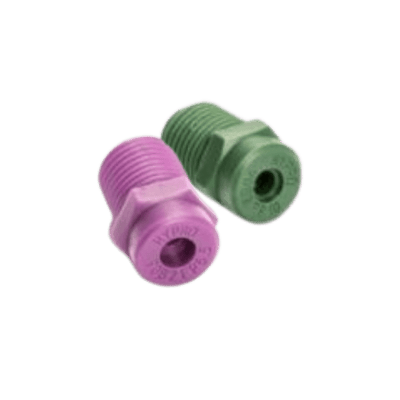
The nozzle controls where the treatment goes and how it reaches the surface. Pattern, flow and droplet size affect coverage, drift and the operator’s ability to work accurately.
Choose controlled coverage over maximum reach
A wide pattern can help on accessible wall areas, while a more directed pattern may help with controlled application higher up. Neither should create avoidable mist or expose people beyond the work area.
Spraying further is not automatically safer. Wind, turbulence around buildings and poor visibility can make a reachable surface unsuitable for treatment from the ground.
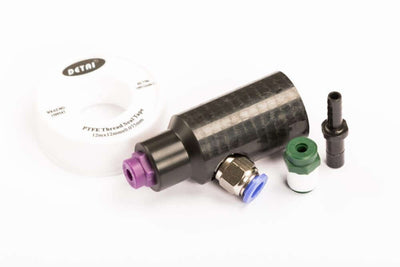
When adapting a pole, check the complete assembly rather than just the nozzle connection. A purpose-designed water-fed pole softwash nozzle may be useful, provided the pole, tubing, fittings and operating arrangement are suitable for the chemical and task.
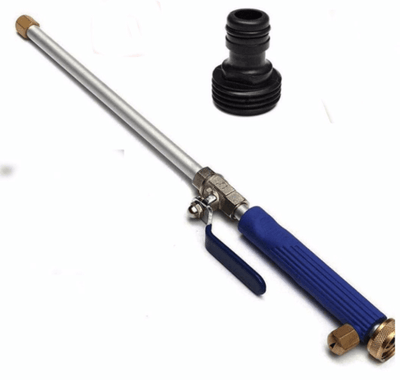
An extended pole creates leverage and fatigue. Assess overhead cables, nearby electrical equipment, falling debris and exclusion zones. If safe coverage cannot be achieved from the ground, select an appropriate access method rather than improvising with ladders.
5. Batch Mixing and Proportioning Systems
A dosing system must produce the required application concentration under real working conditions. An adjustment dial is not, by itself, proof of accuracy.
| Method | Useful characteristics | Points to check |
|---|---|---|
| Batch mixing | A known quantity is prepared before application | Accurate measurement, correct source strength and management of leftovers |
| Water-driven proportional dosing | Introduces concentrate according to water flow within its operating range | Supply pressure, flow range, compatibility and calibration |
| Venturi or downstream injection | Draws chemical into a flowing water stream | Actual draw rate, back pressure and outlet configuration |
Calibrate the complete setup
Hose length, nozzle selection, restrictions and supply changes can affect delivery or chemical draw, depending on the system. Verify performance using the manufacturer’s calibration procedure and a safe test arrangement before chemical application.
Confirm whether a quoted ratio describes concentrate to water or concentrate to total solution. These are not interchangeable.
Follow the product label for dilution and application. Where using sodium hypochlorite, remember that storage conditions and age can reduce strength, so a calculation based on an assumed original concentration may be misleading.
Never mix hypochlorite with acids, ammonia-containing products or other incompatible chemicals. Use only additives confirmed as compatible by the relevant manufacturer.
6. Chemical Selection Affects Equipment Performance
Equipment selection starts with the treatment specification, not the other way round. Different chemicals can require different seals, application methods, contact times and rinsing procedures.
A softwash surfactant can alter wetting and help solution spread across a suitable surface. However, excessive foaming can complicate tank filling, obscure coverage and affect some dosing arrangements.
More additive does not necessarily mean better cleaning. Follow the specified dosage and confirm compatibility with both the treatment chemical and equipment.
Where products are supplied for biocidal use, check that their supply and intended use comply with the applicable UK requirements. Equipment capability does not override product restrictions or label instructions.
7. Rinsing, Backflow Protection and Runoff Control
A separate clean-water provision supports controlled rinsing, adjacent-surface protection and emergency response. Chemical application equipment should not be your only means of accessing clean water.
When connecting equipment to a mains supply, prevent contamination through backflow. The required protection depends on the arrangement and fluid risk under the applicable water fittings regulations or byelaws. Seek competent advice; do not assume a basic non-return valve is sufficient.
Plan drainage before spraying
Identify gullies, surface-water drains, ponds, watercourses and neighbouring property before work begins. Suitable equipment may include drain covers, temporary bunds, wet-recovery equipment and compatible collection containers.
These measures need a disposal plan. Blocking a drain only to release contaminated liquid later is not effective pollution prevention. Do not discharge treatment solution or contaminated wash water to surface-water drains, soil or watercourses. Obtain any required permissions before disposal to a foul sewer.
On a commercial frontage, pedestrian segregation and wash-water recovery may require more preparation than the application system itself.
8. PPE, Electrical Safety and Documentation
Select PPE using the product label, safety data sheet and COSHH assessment. Depending on the task, this may include chemically resistant gloves, protective clothing, suitable footwear and eye or face protection.
Respiratory protective equipment is not a substitute for preventing spray exposure. Where required by the assessment, it must be appropriate for the hazard; tight-fitting equipment also requires suitable face-fit testing.
Battery-powered systems need correctly rated cables, suitable fusing, protected terminals and secure mounting. Follow battery-specific charging and ventilation instructions. Mains-powered equipment needs suitable electrical protection and connections appropriate for wet outdoor conditions.
For contractors preparing job paperwork, SoftWash UK’s exterior cleaning RAMS pack can support documentation. Any template still needs adapting to the actual site, products, access equipment and emergency arrangements.
A Step-by-Step Equipment Check Before Each Job
- Inspect the substrate: identify coatings, damage, sensitive finishes and areas requiring a discreet test.
- Confirm the treatment: check product suitability, instructions, concentration and compatibility.
- Assess the site: review weather, public access, drainage, vegetation, electrical hazards and access requirements.
- Inspect the system: check tanks, mountings, filters, hoses, seals, wiring and connections.
- Test with clean water: look for leaks and confirm delivery using the intended hose and nozzle arrangement.
- Verify dosing: follow the manufacturer’s calibration procedure and record relevant settings.
- Establish controls: install exclusion zones and runoff protection, and make emergency equipment accessible.
- Treat a small area first: confirm substrate response before progressing.
- Close down correctly: follow flushing instructions, manage residual liquid and inspect for developing faults.
Flush water is also potentially contaminated and needs appropriate collection and disposal. Never allow a tank to run dry unless the pump manufacturer expressly permits it.
Common Equipment Mistakes and Myths
- “Any garden sprayer will do.” Seals, pressure controls and materials may be unsuitable. Use a sprayer explicitly approved for the intended product.
- “More pressure means better softwashing.” It can increase drift and damage without improving the chemical treatment.
- “The dosing dial guarantees the mixture.” Settings need verification within the system’s operating conditions.
- “One hose can handle every chemical.” Residues can create hazardous reactions or contaminate subsequent treatments. Use dedicated equipment where necessary.
- “Low pressure makes roof work safe.” Fragile surfaces, falls, electrical hazards and access risks remain.
- “Maintenance can wait until something fails.” A leaking coupling over painted metal or beside a pond can turn a minor fault into a serious incident.
How to Choose Your First Setup or Plan an Upgrade
Start with the work you can carry out safely and competently. Small, accessible areas may suit a chemical-rated portable system. Repeated large elevations may justify greater capacity, engineered vehicle mounting and more efficient hose management.
Before comparing prices, specify the required working flow, hose length, application height, chemical compatibility and daily workload. Include rinsing, containment, spares and maintenance costs in the budget.
When exploring professional softwashing equipment from SoftWash UK, ask how the components work together. A matched, maintainable system is generally more useful than a powerful pump surrounded by unsuitable fittings.
If you want to understand the professional approach before committing to full training, you can try selected lessons from the SoftWash UK course for free. The preview provides a straightforward way to explore the teaching style and course structure before deciding on further training.
Frequently Asked Questions
Can I softwash with a pressure washer?
Some pressure washers can support suitable low-pressure chemical application arrangements. However, injector compatibility, chemical draw, nozzle selection and manufacturer restrictions must be checked. Do not put aggressive chemicals through a pressure washer pump unless its manufacturer explicitly approves that use.
What size softwash pump do I need?
Choose according to the flow required at the nozzle after accounting for hose length, elevation and restrictions. Also consider chemical compatibility and duty cycle. Maximum pressure alone is not a useful sizing method.
Do I need a dedicated chemical hose?
Often, yes. Dedicated, clearly identified hoses help prevent incompatible residues mixing and reduce cross-contamination. Any shared equipment needs a validated cleaning procedure and confirmed compatibility.
Can one setup apply both hypochlorite and other biocides?
Possibly, but only where every component is compatible and the changeover procedure prevents hazardous mixing or unwanted residues. Dedicated wetted components may be the safer and more practical option. Follow manufacturer guidance.
How often should softwashing equipment be serviced?
Follow the manufacturer’s schedule and inspect before each use. Chemical exposure, working hours and storage conditions affect wear. Keep service records and remove leaking, damaged or unreliable components from use immediately.
Build a System You Can Control, Maintain and Use Safely
The best softwashing setup is one that delivers the specified treatment reliably while protecting the operator, substrate and surrounding environment. Pump capacity matters, but so do accurate dosing, compatible seals, secure tanks, controlled application and responsible wash-water management.
SoftWash UK supplies professional softwashing chemicals, equipment and training to help contractors make informed choices. Before your next purchase, define the work you need to undertake, identify gaps in your existing setup and seek guidance on compatibility and safe operation.
For a more structured understanding of methods, equipment and working practices, explore the SoftWash UK softwash training course. Invest in understanding the system as carefully as you invest in the equipment itself.