How to Price Softwashing Jobs: A Practical Guide for UK Contractors
To price a softwashing job, calculate the full cost of delivering it safely, add an allowance for foreseeable uncertainty, then apply your target profit margin. Use the surface area to check the resulting price per square metre, rather than relying on a square-metre rate alone.
A reliable calculation is: selling price excluding VAT = total estimated job cost ÷ (1 − target profit margin). For example, a job costing £420 to deliver needs a selling price of £600 to achieve a 30% margin.
The challenge is estimating that £420 correctly. Labour, travel, chemical consumption, access, protection, drainage management and business overheads all matter. A straightforward render treatment and a restricted-access commercial elevation may cover the same area but require very different prices.
This guide explains how UK exterior cleaning contractors can build defensible quotations. It also helps property maintenance teams and facilities managers compare proposals, and serious DIY users understand the true cost of doing the work themselves.
Why There Is No Universal Softwashing Price per Square Metre
A square-metre rate is useful when the surface, access, contamination and treatment method are reasonably consistent. It becomes unreliable when those conditions change.
Consider two rendered walls measuring 100 m². One is accessible from a clear driveway. The other sits above a conservatory, beside established planting, with pedestrian access beneath it. The second wall needs more planning, protection and potentially specialist access, even though the measured area is identical.
| Pricing factor | Lower-cost conditions | Conditions that increase cost |
|---|---|---|
| Access | Clear working area with suitable ground-based access | Restricted passageways, fragile roofs or hired access equipment |
| Surface condition | Sound substrate with light biological growth | Heavy growth, loose coatings or uncertain previous treatments |
| Protection | Few sensitive neighbouring materials | Planting, ponds, vulnerable finishes or occupied public areas |
| Drainage | Understood drainage and an agreed lawful control method | Unclear connections, nearby watercourses or recovery requirements |
| Delivery | Flexible daytime appointment | Out-of-hours working, permits or tightly controlled access windows |
Build your own pricing history from completed jobs. Another contractor’s advertised rate does not reveal their costs, scope, equipment, profit margin or exclusions.
Step 1: Survey the Property and Define the Result
Measure the actual treatment area
For straightforward elevations, measure width multiplied by height, then account consistently for significant openings. Record whether your measurement is gross elevation area or net treatment area.
Photographs help with initial estimates, but can hide access restrictions, cracks, drainage routes and changes in substrate. Use a site visit where uncertainty could materially affect safety, cost or the promised result.
For roofs, do not confuse the building’s footprint with the sloping roof area. Pitch, valleys, dormers and access arrangements affect both measurement and working time.
Identify what the staining actually is
Biological growth, rust staining, mineral deposits and failing paint are different problems. A treatment intended for algae will not repair defective render or necessarily remove unrelated staining.
Where appropriate, price a small test area before committing to a full treatment. A test can help establish material compatibility, likely appearance and realistic productivity, although it cannot guarantee identical results across an entire building.
Agree what “finished” means
Some treatments produce a noticeable result during the visit. Others rely on gradual weathering after application. The quotation should explain the intended process, expected timescale and whether a follow-up inspection or return visit is included.
Avoid promising that a surface will look “like new”. Existing repairs, coating defects and permanent discolouration may remain visible after biological growth has been treated.
Step 2: Estimate the Full Working Time
Do not price only the time spent applying product. Build a realistic programme covering:
- Travel, loading and unloading.
- Site induction, risk assessment and customer handover.
- Setting up equipment and managing access.
- Protecting sensitive materials and establishing drainage controls.
- Preparation, application, dwell time and any specified rinsing.
- Inspection, packing away, waste management and final documentation.
Two operatives on site for four hours represent eight labour-hours, before any additional travel or preparation. A second person may be needed for access control or safe delivery even when one person could physically apply the treatment.
Dwell time is not automatically free time. If the team must remain on site to monitor conditions or protect the work area, that time belongs in the estimate.
Set a loaded labour cost
Your labour cost should reflect more than take-home pay. For employees, allow for relevant employer costs, paid leave, pension contributions, training and non-productive time. Owner-operators should also include a realistic allowance for their own work.
Keep that labour allowance separate from business profit. Otherwise, a job can appear profitable only because the owner has effectively worked without pay.
Step 3: Calculate Chemicals, Equipment and Site Costs
Estimate chemical use from the treatment plan
Calculate product consumption using the measured area, the product’s permitted application instructions and realistic site conditions. Surface texture, absorbency, growth and repeat applications can all affect consumption.
Do not assume a claimed maximum coverage will be achieved on every property. Record actual usage so future estimates become more accurate.
When comparing professional softwashing chemicals, consider the cost of the suitable treatment in use, not simply the container price. Selection must follow the intended use, product label, safety data sheet and applicable authorisation requirements.
Charge for equipment ownership as well as hire
Pumps, hoses, poles and application equipment need maintenance and eventual replacement. Allocate a realistic equipment cost to each job, even when the equipment is already paid for.
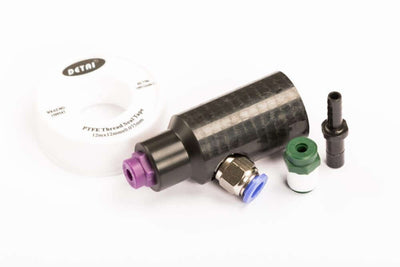
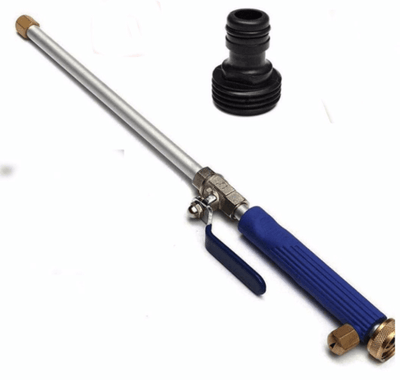
Reviewing suitable softwashing equipment can help you assess working methods and replacement budgets. However, never assume a new system will deliver a particular output until you have tested it under comparable conditions.
Include access hire, delivery, collection, fuel, parking, consumables and waste handling where relevant. Check whether hire charges continue across weekends or weather delays.
Step 4: Recover Your Business Overheads
Insurance, accounting, marketing, vehicle costs, storage, software and professional development must be recovered through your selling prices.
One practical method is to divide annual overheads by realistic chargeable days. For example, £18,000 of annual overheads divided by 150 chargeable days creates a £120 daily overhead recovery requirement.
Do not divide by every weekday in the year. Holidays, maintenance, quoting, administration, weather disruption and gaps between bookings reduce your saleable capacity.
Allocate overheads consistently and avoid double-counting expenses already included elsewhere. A review of your softwash contractor insurance is also worthwhile: your policy needs to match the activities you actually undertake, including relevant chemical use and working-height restrictions.
Step 5: Add Profit Using the Correct Formula
Profit margin and markup are not interchangeable:
- Markup is profit expressed as a percentage of cost.
- Margin is profit expressed as a percentage of selling price.
If a job costs £420 and you add 30%, the price is £546. The £126 difference represents a margin of approximately 23.1%, not 30%.
To achieve a 30% margin, calculate £420 ÷ 0.70 = £600. The difference between revenue and the estimated job cost is then £180.
Your target margin should suit your business, capacity and exposure to risk. The percentages here illustrate the calculation; they are not recommended industry-wide rates.
Worked example: a 150 m² render treatment
The following figures are hypothetical, not a UK market price guide. Assume two operatives each spend six hours on the job, including allocated travel, preparation and completion time, with no specialist access hire required.
| Cost item | Illustrative allowance |
|---|---|
| Labour: 12 person-hours at £20 loaded cost | £240 |
| Chemicals and consumables | £35 |
| Vehicle and travel costs, excluding labour | £30 |
| Equipment, protection and waste-handling allowance | £35 |
| Allocated business overheads | £50 |
| Allowance for foreseeable uncertainty | £30 |
| Total estimated cost | £420 |
| Selling price at a 30% target margin | £600 excluding VAT |
| Equivalent area rate | £4 per m² excluding VAT |
The £4 per m² rate is the outcome of this estimate, not a rate to copy onto unrelated properties. Actual profit will change if the job takes longer or uses more resources than planned.
Choose the Right Pricing Model
| Model | Useful for | Main precaution |
|---|---|---|
| Fixed project price | Clearly surveyed work with an agreed scope | Define exclusions and how variations are authorised |
| Price per square metre | Repeatable work on comparable surfaces | Adjust for access, preparation and minimum attendance costs |
| Day or hourly rate | Investigation or work with uncertain quantities | Agree team size, chargeable time and additional expenses |
| Maintenance agreement | Planned inspections and repeat treatment | Separate initial restoration from ongoing maintenance |
Set a minimum job charge
A small wall may take little application time but still require travel, unloading, protection and administration. Set a minimum charge using those unavoidable costs.
For example, a minimum attendance costing £105 needs a selling price of £150 to achieve a 30% margin. Again, this is an arithmetic example, not a suggested local market rate.
For facilities managers, separating mobilisation costs from treatment quantities can make comparisons between quotations more meaningful.
Price Safety and Compliance Before Offering a Discount
Safety measures are part of delivering the service, not optional extras to remove during negotiation. Complete a site-specific assessment and allow for the controls it identifies.
A proper softwash risk assessment can reveal costs that photographs alone miss: pedestrian segregation, chemical exposure controls, unsuitable ground, access restrictions and nearby sensitive receptors.
- Assess hazardous substances under COSHH; a safety data sheet alone is not a COSHH assessment.
- Follow product instructions and never mix incompatible chemicals.
- Plan work at height using the hierarchy of controls, avoiding it where reasonably practicable.
- Identify drains, watercourses, ponds and sensitive planting before treatment.
- Do not assume wash water or treatment residues may enter surface-water or foul drains; establish the lawful disposal route and obtain permissions where required.
- Include suitable PPE, access controls and emergency arrangements.
The Risk Assessment and Method Statement pack for exterior cleaning can support documentation preparation, but templates must be adapted to the property, method and substances involved.
If safe delivery makes the price uncompetitive, change the scope or decline the work. A contingency allowance cannot make an unsafe method acceptable.
Write a Quotation That Prevents Disputes
A professional softwashing quotation should state:
- The areas included and the agreed treatment method.
- Preparation, protection and access arrangements.
- Expected results, limitations and any gradual weathering period.
- Whether rinsing, follow-up inspection or repeat treatment is included.
- Who provides water, power, parking and access.
- Exclusions, including repairs and unrelated staining.
- Weather dependencies and the quotation’s validity period.
- Payment terms, VAT treatment and variation approval arrangements.
Show the amount payable clearly. Consumer-facing prices should include VAT where applicable; commercial quotations should make the VAT position explicit. Only add VAT if registered and required to charge it.
If defects or additional work emerge, stop and agree any revised scope and price before proceeding. Do not silently absorb substantial extras or surprise the customer afterwards.
Common Softwashing Pricing Mistakes
“Chemicals are cheap, so the job should be cheap”
The chemical is only one input. Customers are also paying for assessment, controlled application, equipment, protection and an accountable result.
“I can copy the cheapest local competitor”
You do not know whether their price covers the same work or makes a sustainable profit. Compare scope and standards before comparing totals.
“I should guarantee how long the surface stays clean”
Regrowth varies with shade, moisture, vegetation, exposure and building condition. Avoid unsupported guarantees and distinguish a workmanship commitment from a promise about future biological growth.
“A busy diary proves the pricing works”
Record estimated versus actual labour, consumption and costs after every job. A full diary can conceal weak margins, excessive travel and unpaid return visits.
The SoftWash UK softwashing training and business hub provides supporting education for contractors developing their technical knowledge alongside their business systems.
Frequently Asked Questions
How much should I charge per square metre for softwashing?
Calculate the complete job price first, then divide it by the treatment area. There is no dependable universal rate because surface condition, access, protection and delivery requirements vary substantially.
Should roof cleaning and render cleaning use the same rate?
Not automatically. Roof work may involve different access arrangements, moss removal, debris management and treatment methods. Build separate estimates and production records for each service.
Should I charge for a softwashing survey?
A straightforward quotation visit may be absorbed into overheads. Detailed surveys, test treatments or specialist access can justify a separate agreed charge. Explain any fee before attending.
How should I price repeat maintenance?
Assess the current condition and the tasks required. Maintenance may need less preparation than an initial treatment, but travel, protection and safe application still cost money. Do not promise an automatic discount without checking the scope.
Is DIY softwashing always cheaper?
No. Include equipment purchase or hire, suitable products, protection, lawful waste management and your time. Difficult access or uncertain materials can make professional assessment better value. DIY work still requires safe methods and compliance with product restrictions.
How can I become more confident when quoting?
Combine job-cost records with practical education. Training can help you recognise unsuitable methods, understand site controls and estimate the work more consistently.
If you want to see how that learning is structured before committing to a full programme, you can try selected lessons from the SoftWash UK course for free. The preview offers a low-pressure introduction to the teaching style and professional approach.
Build Prices Around the Job, Not Guesswork
Profitable softwashing pricing starts with a clear scope, realistic labour allowance and a safe delivery plan. Add materials, equipment, overheads and foreseeable uncertainty, then apply your intended margin correctly.
Use square-metre rates as a check, minimum charges to protect small-job viability and completed-job records to improve your estimates. A defensible quotation explains both the price and what the customer receives.
SoftWash UK supplies professional softwashing chemicals, equipment and training. If you want to strengthen the technical judgement behind your quotations, explore the SoftWash UK softwashing training course and develop a more informed approach to assessing, planning and pricing exterior cleaning work.