How to Build Confidence as a New Softwash Contractor
To build confidence as a new softwash contractor, develop a repeatable process: learn how surfaces and cleaning products behave, practise on suitable low-risk areas, assess every site, and only accept work within your competence. Confidence should come from knowing why a method is appropriate, not simply from owning professional equipment.
Feeling cautious before your first paid exterior cleaning job is normal. You are making decisions about someone else’s property, chemical application, environmental protection and the standard of finish you can realistically deliver.
The answer is not to remove all doubt. It is to replace uncertainty with checks, evidence and clear limits. Whether you are starting an exterior cleaning business, adding softwashing to property maintenance, or managing cleaning in-house, the following approach will help you make better decisions.
What Does Professional Softwashing Confidence Look Like?
Softwashing uses suitable cleaning chemistry and controlled, low-pressure application to treat contamination on exterior surfaces. Depending on the substrate, product and specification, the process may also involve preparation, agitation or rinsing.
Low pressure does not automatically mean low risk. An unsuitable chemical can damage a finish even when applied gently. Equally, a suitable product can cause problems through overspray, poor containment or incorrect application.
A confident contractor can explain:
- What the surface is and whether its condition affects cleaning suitability.
- Whether the discolouration is biological growth, dirt, staining or a building defect.
- Why the proposed treatment is appropriate.
- How people, neighbouring property, vegetation and drainage will be protected.
- What result is realistic and when it should become visible.
- When work must stop or specialist advice is needed.
For someone responsible for a commercial site, these points matter more than a contractor sounding certain about everything. A professional answer can be: “I need to identify that coating before specifying the treatment.”
Build Technical Knowledge Before Chasing Bigger Jobs
Learn to distinguish contamination from damage
A green deposit on sound render presents a different problem from rust staining, failed paint or water ingress. Treating every mark as algae is a common beginner’s mistake.
During a survey, inspect the whole elevation rather than only the dirtiest patch. Check cracks, flaking finishes, previous repairs, sealants, exposed metalwork and areas beneath gutters or overflow pipes. Persistent dampness may explain recurring growth, but cleaning will not repair its cause.
Do not identify a substrate by colour alone. Render systems, painted masonry and natural stone can look similar from a distance but respond differently to moisture and cleaning products. If identification remains uncertain, consult the owner’s records, manufacturer or a suitable specialist.
Understand products rather than memorising recipes
There is no universal softwash mix suitable for every surface and stain. Product selection depends on the substrate, contamination, application method, surrounding risks and permitted use.
Read the label, technical guidance and current safety data sheet. Understand the specified dilution, application conditions, contact time, rinsing requirements and protective measures. A safety data sheet informs your assessment; it does not replace a task-specific COSHH assessment.
Never mix products unless the manufacturer expressly specifies that combination. In particular, sodium hypochlorite must not be mixed with acids or ammonia-containing products because hazardous gases can be released.
Use structured training to connect theory with decisions
Good training should help you assess a surface, choose a method, manage risks and recognise unsuitable work. It should develop judgement, not just demonstrate how to spray a wall.
The Knowledge Centre guide to CPD certified softwash training explains the role of structured learning and continuing development. A certificate is useful evidence of learning, but it is not a substitute for practical competence, insurance or site-specific assessment.
SoftWash UK’s Soft Wash Training Course is a relevant option for contractors seeking a more structured foundation before expanding their services.
Practise Through a Controlled Progression
Your first practice session should not involve a roof, delicate historic stonework or a busy public entrance. Start with a small, accessible area that you have permission to treat, where the substrate is identified and the risks can be controlled.
Practice is still chemical work. It requires the same attention to product instructions, personal protection, access control and run-off as a paid job.
| Stage | Useful activity | Evidence of progress |
|---|---|---|
| Equipment familiarisation | Where permitted by the equipment manufacturer, practise operation with clean water. | You can control the spray, manage hoses, identify leaks and shut down promptly. |
| Small test area | Assess an appropriate treatment on a representative, discreet section. | You can recognise the intended response and check for adverse effects after drying. |
| Controlled full task | Complete a straightforward, ground-access job with manageable surroundings. | You can follow the planned method without improvising around foreseeable problems. |
| Repeatable delivery | Complete similar work and compare records. | You can estimate time, explain limitations and consistently apply the required controls. |
| Broader scope | Add more complex work after further learning and assessment. | You understand the additional risks and have suitable competence, equipment and cover. |
For example, a small ground-floor rendered wall may be a sensible learning project if its coating is suitable and drainage can be managed. A tall elevation beside parked vehicles and an open public footpath introduces several additional risks, even if the staining looks identical.
Use a Repeatable Pre-Job Process
A written routine reduces the pressure of remembering everything on site. Adapt it to each property rather than treating it as a box-ticking exercise.
- Survey and photograph. Record the substrate, contamination, existing damage, access restrictions and sensitive surroundings. Obtain permission before using photographs for marketing.
- Confirm suitability. Check relevant manufacturer guidance and identify uncertainties before choosing products or equipment.
- Assess the risks. Consider chemical exposure, slips, access, work at height, electricity, occupants, pets, vehicles and nearby properties.
- Plan environmental protection. Identify drains, ponds, planting and possible run-off routes. Establish appropriate containment, collection and lawful disposal arrangements.
- Test the method. Complete a representative test patch and allow enough time to assess the result, including after drying where relevant.
- Agree the scope. Explain the expected outcome, exclusions, timing, access arrangements and any required follow-up.
- Check conditions before starting. Reassess wind, rain, temperature, site activity and equipment condition against the proposed method and product guidance.
- Inspect and record afterwards. Check surrounding areas, document the outcome and provide appropriate aftercare advice.
The guide to softwash risk assessment explains why this preparation matters. If you need a starting structure, the RAMS Pack for Exterior Cleaning can support documentation, but any template must be adapted to the actual site, task and controls.
Make the test patch answer a question
A test patch is not simply a demonstration that a surface becomes cleaner. Use it to assess compatibility, cleaning response, application control and the likely finish.
Choose an area that represents the proposed work. A sheltered patch beneath an overhang may not represent a weathered elevation. One successful patch also does not prove that every repair, coating or material on the building will behave the same way.
Make Safety Part of Your Confidence
Safe systems make work more predictable. They also give you a clear reason to pause when conditions change.
- Assess chemical exposure. Complete suitable COSHH assessments and choose controls and PPE from the assessment and product information. Respiratory protection, where required, needs correct selection and any necessary face-fit testing.
- Check biocide compliance. Where using a biocidal product, verify that it is legally supplied for the relevant UK market and permitted for the intended use. Follow its label conditions.
- Control access. Keep occupants, visitors, pets and members of the public away from treatment areas and contaminated equipment.
- Protect drainage and water. Do not allow chemical washwater to enter surface water drains or watercourses. Confirm applicable discharge and disposal requirements rather than assuming dilution makes discharge acceptable.
- Plan access properly. Avoid work at height where reasonably practicable. Where it is necessary, use suitable access equipment and competent operators; a ladder is not the default working platform.
- Prepare for incidents. Know the product-specific first-aid measures and have suitable arrangements for spills, emergency washing and contacting assistance.
Do not rely on smell to judge chemical exposure. Fragrances and masking agents do not make an atmosphere safe.
Serious DIY users should apply the same caution. Products restricted to professional use are not suitable merely because they can be purchased, and uncertain access or chemical risks are reasons to seek competent help.
Choose Equipment You Can Control and Maintain
A large system does not automatically make a new contractor more capable. Equipment should suit the intended application, chemical compatibility requirements, working conditions and your ability to operate it safely.
Before each job, check hoses, seals, connections, valves and spray components. Know how to stop application immediately and deal with a blockage or leak without exposing yourself or others.
If you use an injector or proportioning system, verify its output according to the manufacturer’s instructions. Do not assume a dial setting proves the concentration being delivered.
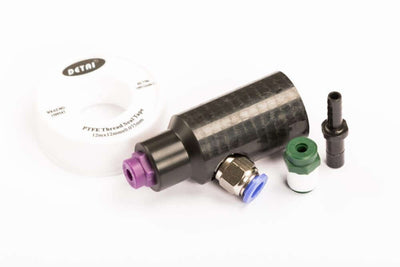
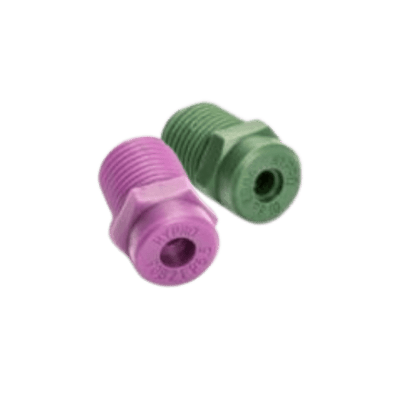
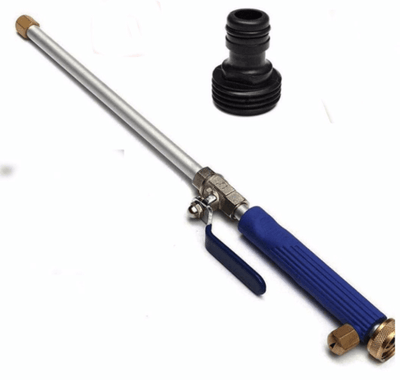
When exploring professional softwashing equipment, prioritise controllability, compatibility, maintenance support and dependable operation over maximum reach or output. Ground-based equipment can reduce some access risks, but increased reach also brings concerns about spray drift and nearby overhead services.
Quote Clearly and Manage Customer Expectations
Price the complete job
New contractors often price only the time spent applying treatment. The actual job also includes surveying, preparing the site, protecting surroundings, setting up, managing waste, cleaning down and recording the result.
Build your quotation around:
- Surface area, condition and accessibility.
- Preparation, protection and access-control requirements.
- Labour, products, equipment and waste handling.
- Travel, overheads and an appropriate profit margin.
- Any specified inspection or return visit.
Record estimated and actual time after each job. Several comparable records are a stronger basis for pricing than copying a competitor’s square-metre rate.
Describe outcomes without guaranteeing perfection
Explain what the treatment targets and what it cannot repair. Biological growth may be treatable, while faded paint, damaged render or embedded staining may remain visible.
Some approved treatment methods produce gradual changes rather than an immediate finished appearance. Explain the expected timescale for the specified system and agree when the result will be reviewed.
Before accepting work, check your softwash contractor insurance. Ask the insurer or broker to confirm cover for your actual activities, including chemical application, treatment damage, height limits and any relevant exclusions. A general business policy should not be assumed to cover every exterior cleaning task.
Common Mistakes That Undermine Confidence
Accepting every enquiry
A new business does not need to offer every service immediately. Specialist stone, roof access, suspected asbestos-containing materials and fragile coatings may require additional competence or specialist input.
Declining or referring unsuitable work protects both the customer and your business.
Copying an online chemical recipe
A video rarely shows every relevant detail: the exact product, substrate specification, site controls or manufacturer’s restrictions. Copying a dilution without that context is not a reliable method.
Increasing strength when the result is disappointing
A poor response may indicate the wrong diagnosis, unsuitable conditions or a stain that needs a different approach. Stop and reassess rather than automatically applying a stronger solution or extending contact time beyond instructions.
Relying on before-and-after photographs alone
Photographs are useful, but wet surfaces, lighting and camera angles can disguise differences. Record dry results where appropriate and include notes on the method, conditions and limitations.
Believing confidence means never asking for help
Asking a supplier, trainer or substrate manufacturer a precise question is professional. Continuing despite an unexplained reaction is not.
Keep a Learning Record and Develop Gradually
After each job, note the surface, product, application method, conditions, time taken, outcome and anything you would change. Keep records securely and include relevant customer communications.
Review patterns. Are estimates consistently too short? Are certain coatings difficult to identify? Does your hose layout create avoidable trip hazards? These observations show where practice, equipment changes or further training will help.
The softwashing training and business hub provides a useful route into further learning as your technical and business questions develop.
If you want to see how structured learning could support your next steps, you can try selected lessons from the SoftWash UK course for free. The preview lets you explore the teaching style and professional approach before deciding whether to enrol in the full programme.
Frequently Asked Questions
How long does it take to become confident at softwashing?
There is no fixed timescale. Confidence develops through training, controlled practice and repeated successful work on comparable surfaces. Measure progress by whether you can assess, plan, deliver and review a job safely—not by how many weeks you have owned equipment.
Should I start with domestic or commercial softwashing?
Choose by complexity rather than customer type. A small commercial wall with controlled access may be more manageable than a domestic property beside a pond or fragile garden. Start with work whose substrate, access, surroundings and expected outcome you can assess confidently.
Can I learn softwashing entirely from online videos?
Videos can introduce useful concepts, but short demonstrations rarely cover every relevant safety and compatibility issue. Combine structured learning with manufacturer guidance, supervised practice where available, and careful assessment of your own competence.
What should I do if a surface reacts unexpectedly?
Stop application, prevent further exposure and follow the product’s incident guidance. Do not improvise by adding another chemical. Record what happened, inform the responsible person and seek advice from the supplier or relevant surface specialist before continuing.
How can a facilities manager assess a new softwash contractor?
Ask for evidence of relevant training, confirmed insurance, site-specific risk assessments and a clear method statement. Check that the contractor has considered occupants, drainage, sensitive materials and realistic outcomes. A professional should explain limitations as clearly as benefits.
Should I offer a guarantee against regrowth?
Avoid blanket guarantees. Regrowth depends on moisture, shade, surrounding vegetation, substrate condition and maintenance. Explain the factors affecting durability and only offer commitments you can support under clearly defined conditions.
Build Confidence Through a Method You Can Explain
The strongest foundation for a new softwash contractor is a clear process: identify the surface, understand the contamination, select an appropriate method, control the risks and document the outcome.
Start with manageable work. Review every job. Expand your services when your knowledge and practical ability justify it—not simply because an enquiry arrives.
SoftWash UK supplies professional softwashing chemicals, equipment, training and educational resources. Explore the relevant guidance and training before your next unfamiliar job, and use supplier support to resolve product or equipment questions before arriving on site. That preparation turns confidence into something reliable: competent, responsible decision-making.