How to Improve Productivity With Better Equipment
Improving productivity with better equipment means completing more work safely, consistently and profitably without simply working longer hours. For exterior cleaning contractors, property maintenance teams, facilities managers and serious DIY users, the right equipment reduces set-up time, improves chemical control, cuts unnecessary manual handling, and helps produce a more reliable finish on roofs, render, cladding, paving, gutters and commercial building exteriors.
In practical terms, productivity is rarely improved by buying the biggest machine or the most expensive kit. It is improved by choosing equipment that matches the work you actually do, the surfaces you clean, the access you face, the chemicals you apply, and the standard you need to achieve. A well-planned softwashing or exterior cleaning set-up should help you move efficiently from survey to preparation, application, dwell time, rinsing, clean-down and documentation.
This guide explains how better equipment improves productivity in real exterior cleaning work, where contractors often lose time, what to upgrade first, and how to avoid expensive mistakes when investing in softwashing equipment, chemical application systems and site safety resources.
What Productivity Really Means in Exterior Cleaning
Productivity is not just about speed. In exterior cleaning, productivity means producing a safe, compliant and effective result with the least waste of labour, chemical, water, time and rework.
A productive exterior cleaning operation usually has:
- Fast and controlled site set-up.
- Equipment that is reliable and easy to maintain.
- Correct chemical dosing for the surface and contamination.
- Reduced manual handling and fewer unnecessary trips back to the van.
- Safe access methods that avoid overreaching and poor working positions.
- Clear process flow from preparation through to final inspection.
- Good documentation, including risk assessments, method statements and COSHH information.
For example, a contractor cleaning a large rendered commercial elevation may lose more time walking back and forth to adjust valves, refill small containers or untangle hoses than they spend actually applying solution. Better equipment does not just clean faster; it removes bottlenecks from the job.
Where Time Is Commonly Lost on Exterior Cleaning Jobs
Before upgrading equipment, it helps to identify where productivity is being lost. On real sites, the same issues appear repeatedly.
1. Slow Set-Up and Pack-Down
If every job starts with lifting loose containers, assembling hoses, hunting for fittings and priming pumps, productivity suffers before cleaning begins. A tidy van layout, labelled equipment and fixed chemical application system can save significant time over a working week.
2. Poor Chemical Control
Overapplying chemical wastes product and increases rinsing, neutralisation or plant protection work. Underapplying chemical causes poor results, repeat visits and longer dwell times. Good equipment helps apply the right solution strength evenly and safely.
If you are still building your knowledge around chemical selection and application, SoftWash UK’s softwashing chemistry and equipment hub is a useful educational resource for understanding how equipment and chemistry work together in professional softwashing.
3. Inefficient Access
Using ladders where pole systems, low-pressure application equipment or MEWPs would be safer and more efficient can slow the job and increase risk. Conversely, using a large access platform for small, simple areas can also be overkill. Productivity comes from matching access to the task.
4. Excessive Manual Handling
Heavy drums, awkward pressure washers, loose hose coils and poorly positioned tanks create fatigue. Fatigue leads to slower work, mistakes and injuries. Equipment layout matters as much as equipment choice.
5. Rework Due to Poor Application
Patchy softwash application, blocked nozzles, inconsistent pressure or using the wrong tool for the substrate can lead to call-backs. Rework is one of the biggest hidden productivity killers because it removes capacity from future jobs.
Better Equipment Starts With the Right System, Not Just Individual Tools
A common mistake is to buy individual pieces of kit without thinking about the full workflow. A powerful pump will not improve productivity if the hose is too restrictive, the reel is awkward, the nozzle selection is poor or the chemical process is unclear.
Think in systems:
- Survey and quoting system: measuring, photos, substrate identification and contamination assessment.
- Transport system: van layout, racking, spill containment and secure storage.
- Water and chemical system: tanks, pumps, injectors, hoses, reels and valves.
- Application system: poles, nozzles, lances, fan patterns and flow control.
- Safety system: PPE, signage, exclusion zones, RAMS, COSHH and emergency wash-down provisions.
- Aftercare system: rinsing, post-treatment checks, customer handover and documentation.
When these parts work together, you reduce friction on site. When they do not, even experienced operatives waste time improvising.
Equipment Upgrades That Usually Improve Productivity First
Not every business needs to invest in everything at once. The best first upgrade depends on the type of work you carry out. However, there are several equipment areas that commonly deliver strong productivity gains.
1. Hose Reels and Hose Management
Good hose management is one of the most underrated productivity improvements. Tangled hoses, poor-quality fittings and awkward manual coiling waste time and create trip hazards.
Look for:
- Hose reels suited to the length and diameter of hose you actually use.
- Chemical-resistant hose where softwash solution is being applied.
- Clear separation between water-fed pole hose, pressure washing hose and chemical hose.
- Quality connectors that seal properly and do not need constant attention.
- A layout that allows quick deployment without dragging equipment across delicate lawns, gravel or planting.
On commercial sites, hose routes should also be considered in your method statement. Think about pedestrian routes, doorways, vehicle movement and emergency access.
2. Pumps, Flow Rate and Pressure Control
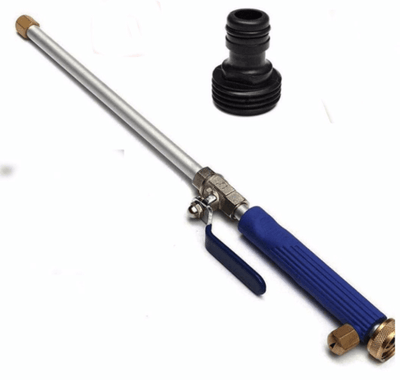
Exterior cleaning productivity is not just about high pressure. In softwashing especially, controlled low-pressure application is often more important than force. The right pump should provide suitable flow for even coverage without excessive overspray or waste.
When choosing a pump or application system, consider:
- The type of chemical being used and material compatibility.
- Required flow rate for roofs, render, cladding or hard surfaces.
- Battery capacity or power supply.
- Ease of flushing and maintenance.
- Availability of spare parts and service knowledge.
For contractors developing or upgrading a professional set-up, the SoftWash UK soft washing equipment range is a helpful starting point for comparing equipment designed for low-pressure chemical application rather than adapting unsuitable tools.
3. Chemical Injection and Dosing Equipment
Accurate dosing improves productivity because it reduces guesswork. If operators are repeatedly batch-mixing by eye, stopping to adjust solution strength, or struggling with inconsistent results, a better dosing system can save both time and chemical.
Proportioning and injection equipment can be particularly useful for contractors working regularly with biocides, softwash solutions and larger commercial areas. A system such as the Clever Injector Dosatron can help with controlled dosing where the application method and chemical compatibility are suitable.
This does not remove the need for training or correct decision-making. Operators still need to understand substrate sensitivity, contamination levels, dwell time, weather conditions, run-off control and rinse requirements.
4. Poles, Nozzles and Application Heads
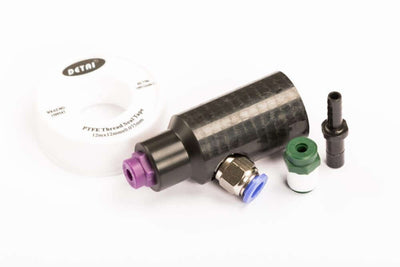
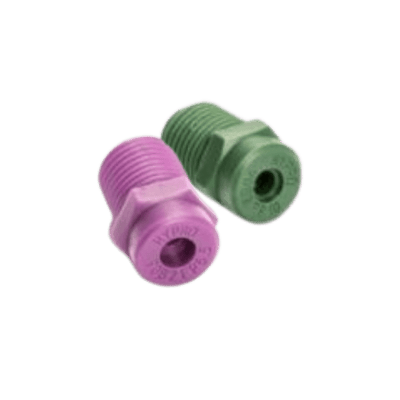
The wrong nozzle can make a simple job slow and patchy. Nozzle choice affects spray pattern, reach, drift, coverage rate and operator fatigue. For water-fed pole or low-pressure application work, a suitable application nozzle can reduce ladder use and help provide more consistent coverage.
For example, a water fed pole softwash nozzle can be useful where controlled application from ground level is appropriate, helping contractors apply solution more efficiently to higher areas without unnecessary repositioning.
Always assess wind direction, overspray risk, nearby surfaces, vegetation and public access before application. Better reach is useful only when it is used responsibly.
5. Tanks, Containers and Van Layout
A productive exterior cleaning van should function like a small mobile workshop. Operators should know exactly where everything is and be able to access equipment without unloading half the vehicle.
Good van layout can improve productivity by:
- Reducing loading and unloading time.
- Keeping chemicals upright, secure and segregated where required.
- Reducing manual handling.
- Protecting pumps and fittings from damage.
- Making emergency spill response equipment accessible.
- Keeping PPE clean and separate from contaminated tools.
Consider weight distribution and payload carefully. Overloading a van is unsafe, illegal and damaging to the vehicle. Water is heavy, and chemical stock, reels, pressure washing equipment and access tools quickly add up.
Comparison: Cheap Equipment Versus Professional Equipment
There is nothing wrong with controlling costs, but buying on price alone often reduces productivity over time. The cheapest kit may be suitable for occasional DIY work, but contractors need equipment that can cope with regular use, chemical exposure and site demands.
| Area | Low-Cost or Improvised Equipment | Professional, Purpose-Matched Equipment |
|---|---|---|
| Reliability | More prone to leaks, blockages, breakdowns and inconsistent output. | Designed for regular use with better parts availability and maintenance options. |
| Chemical compatibility | May degrade quickly if used with unsuitable chemicals. | Selected for compatibility with softwash chemicals and correct application methods. |
| Application quality | Often patchy, wasteful or difficult to control. | More consistent flow, coverage and spray pattern. |
| Operator efficiency | Requires more stops, adjustments and manual work. | Reduces repetitive handling and improves workflow. |
| Long-term cost | Can become expensive through failures, waste and rework. | Usually delivers better value through time savings and reduced downtime. |
How Chemical Knowledge Improves Equipment Productivity
Equipment and chemistry cannot be separated in professional softwashing. Better equipment improves productivity only when the operator understands what is being applied, why it is being applied and how the surface should respond.
For example, sodium hypochlorite is commonly used in softwashing because it is effective on organic growth when used correctly. However, productivity gains come from correct dilution, suitable dwell time, proper surfactant use, safe plant protection and responsible rinse-down where needed. Simply increasing strength is not a professional shortcut and can create damage, safety issues and unnecessary cost.
A softwash surfactant can also improve practical productivity by helping solution cling to vertical or pitched surfaces, improving wetting and reducing run-off. That can mean better dwell time and more even results, especially on render, roof tiles and cladding. The key is to select the right product for the application and follow label guidance, safety data sheets and professional best practice.
For biocidal cleaning and longer-acting treatments, contractors may also encounter products based on DDAC. Understanding the difference between immediate cleaning action and residual biocidal treatment helps operators choose the right method rather than relying on one chemical for every job.
Step-by-Step: How to Improve Productivity With Better Equipment
The following process is a practical way to assess your current set-up and decide what to improve first.
Step 1: Audit Your Current Workflow
Write down the stages of a typical job from arrival to departure. Include unloading, set-up, safety preparation, chemical mixing, application, dwell time, rinsing, clean-down and customer handover.
Ask:
- Where do we repeatedly lose time?
- Which tasks create the most fatigue?
- Where do leaks, blockages or breakdowns happen?
- Which jobs lead to rework or inconsistent results?
- Which equipment is used on nearly every job?
Step 2: Prioritise Bottlenecks, Not Gadgets
If hose deployment wastes 20 minutes on every job, a hose reel may be a better investment than a new machine. If dosing is inconsistent, an injector or better mixing process may improve results more than a larger tank. Productivity improvements should be based on evidence from your work, not what looks impressive online.
Step 3: Match Equipment to Your Core Services
A roof cleaning contractor, a facilities team maintaining retail parks and a domestic driveway cleaner all need different equipment priorities.
| Type of Work | Productivity-Focused Equipment Priorities |
|---|---|
| Render and cladding cleaning | Low-pressure softwash system, suitable nozzles, controlled dosing, long hose runs, overspray management. |
| Roof cleaning and treatment | Access planning, softwash application equipment, moss removal tools, biocide application control, safety documentation. |
| Commercial maintenance | Reliable van-mounted systems, fast deployment, signage, RAMS, COSHH documentation, repeatable site procedures. |
| Driveways and hard surfaces | Surface cleaner, pressure washer matched to flow, stain removers, water management and efficient rinse-down tools. |
| Serious DIY property care | Smaller controlled application tools, PPE, correct chemical knowledge and avoidance of unsuitable high-pressure methods. |
Step 4: Standardise Your Set-Up
Standardisation is a major productivity advantage. If every operator mixes differently, stores tools differently or sets up the site differently, quality becomes inconsistent.
Create standard procedures for:
- Pre-start equipment checks.
- Chemical dilution and labelling.
- Hose deployment and exclusion zones.
- Plant and surface protection.
- PPE requirements.
- Flushing and cleaning equipment after use.
- End-of-job inspection and photographs.
Step 5: Train the Operator, Not Just the Kit
Equipment only improves productivity when the user understands the method. A trained operator can usually achieve better results with a sensible set-up than an untrained operator using expensive equipment poorly.
Professional training helps contractors understand chemical selection, surface identification, application control, risk assessment, pricing considerations and safe working practice. The SoftWash UK training course is designed for contractors who want a structured approach to softwashing rather than learning through trial and costly error.
Safety and Compliance: Productivity Must Not Come at the Expense of Control
Trying to work faster by cutting safety steps is false productivity. It increases the chance of accidents, chemical damage, enforcement problems and insurance issues.
UK exterior cleaning contractors should consider:
- COSHH: understand hazards, exposure routes, PPE, storage and emergency measures.
- RAMS: prepare relevant risk assessments and method statements for the work being done.
- PUWER: ensure work equipment is suitable, maintained and used by competent people.
- Working at height: avoid unnecessary ladder work and use suitable access methods.
- Environmental controls: manage run-off, protect plants and prevent uncontrolled discharge.
- Public safety: use signage, barriers and exclusion zones where required.
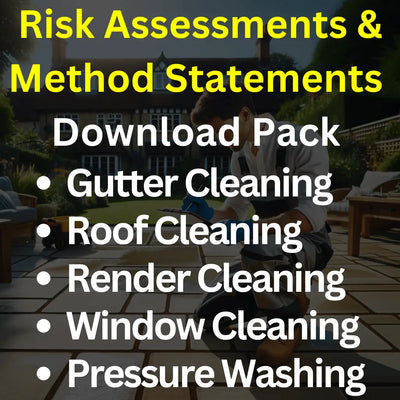
Where documentation is a weak point, a resource such as the Risk Assessment and Method Statement Pack for Exterior Cleaning can help contractors build a more professional and consistent approach to planning work safely.
Common Mistakes When Buying Equipment to Improve Productivity
Buying the Biggest Machine Instead of the Right Machine
More pressure, more flow or more capacity is not always better. High pressure can damage render, roof tiles, pointing, timber and delicate coatings. Softwashing often relies on chemistry, dwell time and controlled low-pressure application rather than force.
Ignoring Chemical Compatibility
Not all pumps, seals, hoses and fittings are suitable for softwash chemicals. Using incompatible equipment can cause premature failure, leaks and safety concerns. Always check material compatibility and flush systems correctly after use.
Underestimating Maintenance
Productive equipment is maintained equipment. Blocked filters, worn seals, flat batteries and damaged hoses cause avoidable downtime. A simple weekly inspection routine can prevent many failures.
Failing to Protect the Site
Rushing application without wetting plants, controlling run-off or considering overspray can lead to damage and complaints. Good equipment helps productivity only when paired with careful site preparation.
Buying Before Measuring the Work
Many contractors buy equipment based on aspiration rather than workload. Before investing, review your last 20 jobs. What surfaces did you clean? What access did you need? What slowed you down? What would have saved time on most of those jobs?
Practical Productivity Tips From Real Exterior Cleaning Work
- Use checklists: a van checklist prevents forgotten fittings, PPE or nozzles that can ruin a day’s schedule.
- Keep duplicate small parts: spare O-rings, connectors, nozzles, filters and clips take little space but prevent downtime.
- Label hoses and valves: this reduces mistakes when multiple systems are fitted in one vehicle.
- Flush equipment properly: especially after chemical application, to protect seals, pumps and fittings.
- Photograph site conditions: before and after photos speed up customer communication and protect against disputes.
- Batch similar jobs: grouping render cleans, roof treatments or maintenance visits reduces equipment changes.
- Review every awkward job: if a task felt slow or difficult, identify whether equipment, planning or training was the issue.
When Better Equipment Pays for Itself
Equipment pays for itself when it saves enough time, reduces chemical waste, improves quality or allows you to take on more suitable work. A simple way to assess return on investment is to calculate your real labour cost per hour and the amount of time saved per job.
For example, if a hose reel, injector or pole nozzle saves 30 minutes on three jobs per week, that could save around six hours per month. If it also reduces chemical waste and improves consistency, the payback can be faster than it first appears.
However, do not measure ROI only by speed. Also consider:
- Reduced rework.
- Fewer breakdowns.
- Improved staff morale.
- Safer work methods.
- Better customer confidence.
- More professional presentation on commercial sites.
Want To Preview Professional Softwashing Training?
For contractors who want to build their knowledge before investing in full training, SoftWash UK offers a free course preview with selected lessons from the full training programme. It gives you a practical look at the teaching style, structure and professional approach used inside the course.
Frequently Asked Questions
What equipment improves exterior cleaning productivity the most?
The biggest productivity gains usually come from better hose management, reliable pumps, suitable nozzles, controlled chemical dosing, efficient van layout and clear safety documentation. The best upgrade depends on where your current workflow loses the most time.
Is softwashing equipment more productive than pressure washing equipment?
It depends on the surface and contamination. Softwashing can be more productive on organic growth, render, roofs and delicate surfaces because it uses controlled chemical action rather than high pressure. Pressure washing is still useful for many hard surfaces, but it is not always the safest or most efficient method.
Should I buy professional equipment when starting out?
You do not need the largest set-up immediately, but you should avoid equipment that is unsafe, chemically incompatible or unreliable. Start with a practical system matched to your core services, then upgrade based on real job data and recurring bottlenecks.
How does training improve productivity?
Training reduces costly mistakes. It helps operators choose the right chemical, dilution, dwell time, access method and equipment for the surface. This improves results, reduces rework and supports safer, more professional working practices.
How often should exterior cleaning equipment be maintained?
Basic checks should be carried out before each job, including hoses, fittings, filters, batteries, pumps and PPE. More detailed maintenance should be scheduled weekly or monthly depending on usage. Chemical application systems should be flushed according to product and equipment guidance.
Can better equipment reduce chemical use?
Yes, when it improves dosing accuracy and application control. Better nozzles, pumps, injectors and surfactant use can help apply the right amount of solution more evenly, reducing waste and improving results.
Conclusion: Productivity Comes From Better Systems, Not Just More Kit
Improving productivity with better equipment is about building an exterior cleaning system that is safer, faster, more consistent and easier to operate. The most productive contractors are not simply the ones with the most equipment. They are the ones who understand their workflow, choose tools that match the job, maintain their kit properly and train their operators to use equipment responsibly.
If you work in softwashing, roof cleaning, render cleaning, cladding maintenance, facilities management or serious property care, start by identifying your biggest site bottlenecks. Then invest in equipment, training and documentation that remove those problems in a controlled and compliant way.
SoftWash UK supplies professional softwashing chemicals, equipment, training and educational resources for contractors who want to improve standards and work more efficiently. To explore suitable equipment and support for your next stage of growth, visit SoftWash UK and use the Knowledge Centre resources to make informed, practical decisions before investing.