Using Sodium Hypochlorite Safely: A Practical Guide for UK Exterior Cleaning Professionals
Sodium hypochlorite can be used safely for exterior cleaning when it is handled, diluted, applied and stored correctly. The key is to treat it as a professional chemical, not a casual shortcut. That means carrying out a COSHH assessment, wearing suitable PPE, using compatible equipment, controlling run-off, protecting people, plants and property, and never mixing it with incompatible chemicals such as acids or ammonia-based products.
For UK exterior cleaning contractors, facilities managers, property maintenance teams and serious DIY users, sodium hypochlorite is one of the most effective cleaning agents for organic staining such as algae, lichen, black staining and biofilm on suitable hard surfaces. Used incorrectly, however, it can damage materials, harm vegetation, create dangerous gases or expose operatives and the public to unnecessary risk.
This guide explains how to use sodium hypochlorite safely in real-world exterior cleaning work, including dilution, application, PPE, storage, surface suitability, common mistakes and best practice. It is written from a practical softwashing perspective, where safety, method and judgement matter just as much as the chemical itself.
What Is Sodium Hypochlorite?
Sodium hypochlorite is a liquid oxidising cleaning agent commonly used in exterior cleaning and softwashing to break down organic contamination. In the UK exterior cleaning industry it is often referred to as SH, hypo or sodium hypo.
Contractors typically buy it in stronger commercial concentrations and then dilute it with water to achieve a suitable working strength for the surface and type of contamination. The strength required for a rendered wall is not necessarily the same as for a heavily colonised roof tile or a lightly stained patio.
In softwashing, sodium hypochlorite is usually used alongside water and, where appropriate, a softwash surfactant. The surfactant helps the solution cling to vertical or textured surfaces, improves wetting and can reduce waste by keeping the solution where it is needed.
Why Sodium Hypochlorite Is Used in Exterior Cleaning
Sodium hypochlorite is popular because it works quickly on organic growth. On the right surface, with the correct dilution and dwell time, it can clean more effectively than pressure alone and can reduce the need for aggressive mechanical cleaning.
Common exterior cleaning applications include:
- Algae and green staining on render, walls, paving and cladding
- Black organic staining on suitable hard surfaces
- Biofilm on patios, paths, drives and masonry
- Pre-treatment before low-pressure rinsing
- Softwashing of selected roofs, walls and external building surfaces
It is important to understand that sodium hypochlorite is not a universal cleaner. It is not the correct answer for every stain. Rust, oil, tannin, mortar staining, efflorescence and some mineral deposits often require different chemistry. A professional approach starts with identifying the contamination before selecting the chemical.
If you are comparing different softwashing chemicals, it helps to understand what each product is designed to do. Sodium hypochlorite is excellent for oxidising organic matter, but it should not be treated as a one-product solution for every exterior cleaning problem.
Safety First: Main Hazards of Sodium Hypochlorite
Sodium hypochlorite can be used safely, but it has real hazards that must be managed. The main risks are chemical burns, eye injury, respiratory irritation, material damage and dangerous reactions with incompatible chemicals.
Health and exposure risks
- Skin contact: Can irritate or burn skin, especially at higher concentrations.
- Eye contact: Can cause serious eye damage. Eye protection is essential.
- Inhalation: Mist, vapour or chlorine gas from incorrect mixing can irritate the respiratory system.
- Ingestion: Dangerous and must be prevented through proper storage and labelling.
Property and environmental risks
- Can bleach fabrics, carpets, painted surfaces and some plastics.
- Can stain or corrode certain metals, including aluminium, copper, brass and some fixings.
- Can damage plants, lawns and aquatic environments if run-off is not controlled.
- Can affect some natural stone, timber finishes and delicate coatings.
The most important rule: never mix chemicals blindly
Never mix sodium hypochlorite with acids, acidic cleaners, descalers, brick acid, vinegar, ammonia-based cleaners or unknown chemicals. Mixing sodium hypochlorite with acids can release chlorine gas. Mixing with ammonia can form chloramine gases. Both are dangerous and avoidable.
On site, this means checking what has already been applied to the surface. If a client has previously used patio cleaner, brick acid, moss killer or household cleaning products, do not assume the surface is chemically safe. Rinse thoroughly, assess the risk and avoid creating chemical reactions.
Suitable PPE for Sodium Hypochlorite Work
PPE should be selected from the product Safety Data Sheet and your COSHH assessment. In practical exterior cleaning work, the minimum PPE for handling and applying sodium hypochlorite will usually include:
- Chemical-resistant gloves, such as suitable nitrile or neoprene gloves
- Safety goggles or a face shield where splashing is possible
- Chemical-resistant coveralls or waterproof workwear
- Safety boots or wellingtons resistant to chemical splash
- Respiratory protection where mist, spray drift or poor ventilation creates inhalation risk
Do not rely on ordinary work gloves, sunglasses or casual clothing. When transferring concentrate, changing containers, mixing solutions or working overhead, eye and face protection become especially important. Most serious incidents happen during handling and mixing, not during the easy part of applying a low-pressure solution to a wall.
Choosing the Right Strength: Stronger Is Not Always Better
One of the most common mistakes in softwashing is using sodium hypochlorite too strong. This increases risk, wastes chemical and can damage surfaces without improving the final result.
The correct strength depends on:
- The type and level of organic growth
- The surface material and its condition
- Ambient temperature and sunlight
- Whether a surfactant is being used
- Dwell time and rinse method
- Nearby risks such as plants, metals, watercourses and public access
| Application type | Typical approach | Key safety notes |
|---|---|---|
| Light algae on render or cladding | Lower-strength solution, controlled application, short dwell and rinse where required | Protect windows, frames, vents, plants and metal trims. Always test first. |
| Patios, paths and paving with organic staining | Moderate solution strength depending on surface and contamination | Control run-off, pre-wet vegetation and avoid contact with ponds or drainage leading to watercourses. |
| Heavy roof organic growth on suitable surfaces | Professional assessment required; may need staged treatment rather than excessive strength | Consider working at height controls, overspray, gutters, downpipes, landscaping and fragile materials. |
| Sensitive or painted surfaces | Test patch and use the weakest effective solution or alternative chemistry | Risk of bleaching, coating damage or uneven finish. Manufacturer guidance may be needed. |
SoftWash UK supplies professional-grade sodium hypochlorite for soft washing, but the important point is not just buying the right product. Contractors must also understand concentration, dilution, dwell time, surface suitability and safe handling.
How to Dilute Sodium Hypochlorite Safely
Always read the product label and Safety Data Sheet before dilution. Sodium hypochlorite concentration can vary, and it degrades over time, especially when stored warm or in direct sunlight.
Basic dilution principles
- Use clean, chemical-compatible containers.
- Add water to the mixing container first, then add sodium hypochlorite carefully.
- Work in a ventilated area and avoid breathing vapour or mist.
- Wear full PPE during measuring, pouring and mixing.
- Label mixed solutions clearly with contents, concentration and date.
- Do not mix more solution than you need for the job.
Simple dilution example
If you have a 15% sodium hypochlorite concentrate and you want approximately 3% available sodium hypochlorite in your working solution, you would use around one part 15% sodium hypochlorite to four parts water. This is a simplified example and assumes the concentrate is fresh and accurately labelled.
In professional work, many contractors use proportioning systems or dedicated mixing records to reduce guesswork. If you are using injectors or dosing equipment, calibrate properly rather than assuming the dial setting is accurate. Different viscosities, hose lengths, flow rates and plumbing arrangements can affect the actual draw rate.
Step-by-Step: Safe Sodium Hypochlorite Application on Site
The safest softwashing jobs are planned before any chemical is opened. A clear method helps prevent over-application, overspray, plant damage and rushed decisions.
1. Survey the surface and surrounding area
Identify the surface material, condition, contamination type and sensitive areas. Look for oxidised paint, damaged render, open joints, unsealed timber, lead flashing, aluminium trims, air vents, wildlife, ponds, lawns and neighbouring property.
2. Complete a risk assessment and COSHH assessment
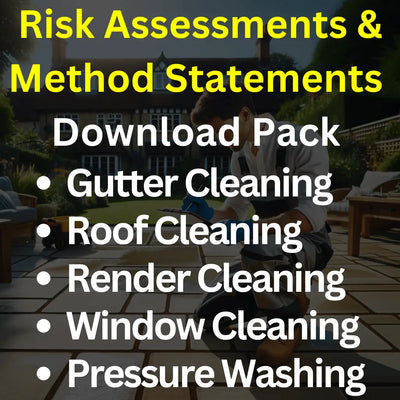
For commercial work, facilities management and professional contracting, documentation matters. A suitable risk assessment and method statement should cover chemical handling, public safety, working at height, run-off control, PPE, first aid, spill response and emergency procedures.
SoftWash UK offers a practical Risk Assessment and Method Statement pack for exterior cleaning, which can help contractors structure their documentation rather than starting from a blank page.
3. Protect people, pets and the public
Set up exclusion zones where necessary. Keep residents, staff, visitors, pets and the general public away from application areas. Use signage, cones, barriers or spotters where there is a risk of public access or wind drift.
4. Protect plants and sensitive materials
Pre-wet vegetation thoroughly before application, keep the chemical off plants where possible, and rinse again afterwards. Covering plants can help in some situations, but covers can also trap vapour and heat, so use care. Divert downpipes where appropriate and prevent concentrated run-off from entering ponds or sensitive drainage.
5. Apply at low pressure
Sodium hypochlorite solutions should usually be applied at low pressure, not blasted into the surface. Avoid aerosolising the chemical unnecessarily. Low-pressure application gives better control, reduces drift and helps the solution dwell on the contamination.
For professional set-ups, chemical-compatible pumps, hoses, nozzles and proportioning systems are important. The SoftWash UK range of soft washing equipment includes equipment designed for chemical application rather than pressure washing systems that may not tolerate sodium hypochlorite.
6. Allow controlled dwell time
Dwell time is the period the solution remains active on the surface. Do not let the surface dry out in hot sun or wind. Drying can increase staining risk and reduce cleaning performance. Reapply lightly if needed, rather than flooding the area.
7. Rinse, neutralise or leave according to the method
Some surfaces require rinsing after treatment. Others may be treated and left where appropriate, depending on the method, product, environment and client expectations. Always follow the product guidance and your method statement.
8. Final inspection and aftercare
Check for missed areas, streaking, plant stress, residues on glass or metal, and any run-off issues. Communicate clearly with the client about what will improve over time and what may need a second visit. Not every organic stain disappears instantly, especially where deep colonisation or weathering is present.
Using Surfactants with Sodium Hypochlorite
A surfactant can make sodium hypochlorite safer and more effective when used correctly because it improves contact time and helps reduce unnecessary run-off. It is particularly useful on vertical surfaces, textured render, roofs and areas where fast run-off would waste solution.
However, more surfactant is not always better. Too much foam can be difficult to rinse, may increase slip risk and can carry chemical into unwanted areas. Choose products designed for softwashing and follow the recommended dose.
For example, Clever Wash Surfactant is designed for professional softwashing applications where cling, wetting and controlled application are important. The practical purpose is to help the cleaning solution work efficiently, not to make a job look more dramatic with excessive foam.
Surface Compatibility: Where Sodium Hypochlorite Needs Extra Care
Before applying sodium hypochlorite, always test an inconspicuous area and consider the surface manufacturer’s guidance where available. Older buildings, heritage materials and coated surfaces need particular caution.
| Surface or material | Risk level | Best-practice note |
|---|---|---|
| UPVC, many hard plastics | Generally manageable | Use controlled strength, avoid drying and rinse residues from frames and seals. |
| Painted timber or painted metal | Medium to high | Risk of bleaching, dulling or coating damage. Test carefully and consider alternatives. |
| Aluminium, copper, brass and lead | High | Can stain or corrode. Avoid contact or protect and rinse immediately if exposed. |
| Natural stone | Variable | Depends on stone type, finish and contamination. Test first and avoid over-strength solutions. |
| Render | Variable | Check condition, coating type, cracks and absorbency. Softwashing can be effective but must be carefully controlled. |
| Vegetation and lawns | High | Pre-wet, shield where practical, control run-off and rinse thoroughly after exposure risk. |
Sodium Hypochlorite vs DDAC: When Might You Use Each?
Sodium hypochlorite and DDAC are not the same. Sodium hypochlorite is a fast-acting oxidising cleaner. DDAC, or didecyldimethylammonium chloride, is a quaternary ammonium compound used in some biocidal cleaning and surface treatment contexts. You can learn more in SoftWash UK’s guide to DDAC.
| Factor | Sodium hypochlorite | DDAC-based products |
|---|---|---|
| Main role | Fast oxidation of organic staining | Biocidal surface treatment depending on product approval and label use |
| Visible cleaning speed | Often rapid | Usually slower visual change |
| Material sensitivity | Higher risk on metals, fabrics, coatings and plants | Different risks; still requires COSHH and label compliance |
| Best use | Removing visible organic staining on suitable surfaces | Longer-term treatment strategies where appropriate and compliant |
The right choice depends on the surface, the client’s objective, the contamination and the legal status and label instructions of the product being used. Professional contractors should avoid making unsupported treatment claims and should always use products in line with the supplier’s instructions and current UK requirements.
Storage, Transport and Shelf Life
Sodium hypochlorite degrades over time. Heat, sunlight, contamination and age all reduce strength. Old product may clean poorly, which can tempt operators to apply too much. Good stock management improves both safety and results.
Storage best practice
- Store in original, clearly labelled, vented chemical-compatible containers.
- Keep upright, secure and away from direct sunlight and heat.
- Store separately from acids, ammonia products and incompatible chemicals.
- Keep away from children, pets, food, drink and public access.
- Use secondary containment where appropriate to manage leaks.
- Do not store in metal containers or unsuitable drums.
Transport considerations
When transporting sodium hypochlorite, secure containers to prevent tipping, leaking or impact damage. Keep Safety Data Sheets available and carry spill control materials suitable for the quantities you transport. Contractors should understand their obligations around chemical transport, storage and emergency response rather than treating chemical drums like ordinary tools.
Common Mistakes and Myths About Sodium Hypochlorite
Myth 1: “If a little works, stronger will work better”
Stronger solutions can increase damage, risk and cost. Correct dilution, dwell time and application technique are usually more important than brute strength.
Myth 2: “It is just bleach, so normal household precautions are enough”
Commercial sodium hypochlorite used in exterior cleaning can be far stronger than household bleach. It requires professional handling, PPE, COSHH assessment and proper storage.
Myth 3: “Pressure washing and sodium hypochlorite solve every stain”
Organic staining may respond well. Rust, oil, tannin, efflorescence and mineral stains do not all respond to sodium hypochlorite and may need specialist chemistry.
Myth 4: “You do not need training if you can read the label”
Labels and Safety Data Sheets are essential, but site judgement comes from understanding surfaces, weather, run-off, public safety, equipment behaviour and chemical compatibility. Training reduces avoidable mistakes.
Myth 5: “Plant damage is unavoidable”
Plant damage usually comes from poor preparation, excessive strength, careless overspray or uncontrolled run-off. Pre-wetting, shielding, controlled application, rinsing and sensible dilution greatly reduce risk.
Compliance and Documentation for UK Contractors
Professional exterior cleaning contractors should be able to show that they understand and manage the risks associated with sodium hypochlorite. This is particularly important for commercial property, schools, healthcare sites, local authority work and facilities management contracts.
Relevant documentation may include:
- Safety Data Sheets for all chemicals carried and used
- COSHH assessments
- Risk assessments and method statements
- PPE records and training records
- Emergency spill and first aid procedures
- Public protection plans for higher-risk sites
- Environmental controls for drainage, run-off and nearby watercourses
Contractors who want a deeper overview of chemical safety, equipment selection and professional methods can explore the SoftWash UK softwashing chemistry and equipment hub. It brings together supporting educational content for people who want to understand the system, not just the product.
Practical Site Checklist Before Using Sodium Hypochlorite
Before opening a drum or mixing a solution, run through a simple site checklist. This helps prevent most avoidable incidents.
- Have you identified the surface and type of staining?
- Have you checked nearby plants, metals, coatings, vents, ponds and drains?
- Have you read the product label and Safety Data Sheet?
- Have you completed a COSHH assessment and method statement where required?
- Is your PPE suitable and in good condition?
- Is your equipment compatible with sodium hypochlorite?
- Have you selected the weakest effective working strength?
- Have you planned run-off control and plant protection?
- Is the weather suitable, with manageable wind and temperature?
- Have you communicated access restrictions to the client or site manager?
If this is an area you want to understand properly, you can start by accessing the free SoftWash UK course preview. It includes selected lessons from the full training course and is designed to help contractors see whether professional softwashing training is the right next step.
When Not to Use Sodium Hypochlorite
Good contractors know when to walk away from sodium hypochlorite or choose another method. Do not use it where the risks outweigh the benefits.
Avoid or reconsider sodium hypochlorite when:
- The surface is highly sensitive, unstable or historically significant.
- There is a high risk of run-off into ponds, streams or uncontrolled drainage.
- Wind conditions make spray drift difficult to control.
- The client cannot provide safe access or exclusion from the work area.
- Previous unknown chemicals may still be present on the surface.
- The staining is not organic and requires different chemistry.
- You do not have the correct PPE, equipment or documentation.
In some cases, alternative products, staged cleaning, manual removal, steam cleaning, specialist stain removers or DDAC-based treatments may be more suitable. The professional decision is not “What is the strongest chemical I can use?” but “What is the safest effective method for this site?”
Frequently Asked Questions
Is sodium hypochlorite safe for softwashing?
Yes, sodium hypochlorite can be used safely for softwashing when it is properly diluted, applied at low pressure, kept away from incompatible chemicals, and managed under a suitable risk assessment and COSHH process. It becomes unsafe when users ignore PPE, over-strength solutions, poor weather conditions, run-off control or surface compatibility.
What PPE should I wear when using sodium hypochlorite?
You should wear chemical-resistant gloves, eye protection, suitable workwear or coveralls, chemical-resistant footwear and respiratory protection where mist or vapour could be inhaled. The exact PPE should be based on the product Safety Data Sheet, concentration, application method and site risk assessment.
Can sodium hypochlorite damage plants?
Yes. Sodium hypochlorite can damage leaves, lawns and roots if applied directly or allowed to run off in concentrated form. Pre-wet plants, avoid overspray, control run-off and rinse vegetation thoroughly after the work. On sensitive sites, consider whether another method is safer.
Can I mix sodium hypochlorite with other cleaners?
Do not mix sodium hypochlorite with acids, ammonia-based cleaners or unknown chemicals. Dangerous gases can be released. Only use compatible additives specifically intended for sodium hypochlorite-based softwashing, and always follow supplier guidance.
Does sodium hypochlorite remove black spots from patios?
It can help with some black organic staining, including lichen-related marks, but results depend on the surface, depth of staining, dwell time, dilution and previous treatments. Some patios may require staged treatment and careful rinsing. Always test first and avoid using excessive strength in an attempt to force instant results.
How should sodium hypochlorite be stored?
Store it in a cool, shaded, secure and ventilated area, in suitable labelled containers, away from acids, metals, heat and direct sunlight. Keep it out of reach of children, pets and unauthorised people. Take account of shelf life, as the product loses strength over time.
Do I need training to use sodium hypochlorite professionally?
Training is strongly recommended for professional use. Sodium hypochlorite is not difficult to understand, but safe professional application involves dilution, COSHH, PPE, surface knowledge, equipment compatibility, run-off control and client communication. Proper training helps reduce damage, complaints and safety incidents.
Conclusion: Sodium Hypochlorite Is Effective, But Method Matters
Sodium hypochlorite is one of the most useful chemicals in exterior cleaning when used responsibly. It can deliver excellent results on organic staining, reduce unnecessary pressure washing and form part of a professional softwashing system. But it must be treated with respect.
Safe use depends on correct dilution, suitable PPE, chemical-compatible equipment, good site assessment, careful application and proper documentation. The best contractors do not simply apply stronger solutions; they understand the surface, the contamination, the weather, the risks and the client’s expectations.
SoftWash UK supports contractors, property professionals and serious DIY users with professional softwashing chemicals, equipment, training and educational resources. If you are using sodium hypochlorite regularly, take time to build your knowledge, improve your documentation and use products designed for the job. For further guidance, explore the wider resources and professional supplies available from SoftWash UK.