Can You Learn Softwashing Online?
Yes, you can learn a significant amount of softwashing online, especially the theory, safety principles, chemical awareness, surface identification, pricing basics and business processes. However, online learning should not be treated as a complete substitute for practical training, supervised practice and real-world experience. Softwashing involves chemicals, live work sites, building materials, public safety, environmental controls and legal responsibilities, so competent contractors need both knowledge and hands-on application.
For UK exterior cleaning contractors, property maintenance professionals, facilities managers and serious DIY users, online softwash training can be an excellent starting point. It can help you understand how softwashing works, when it is appropriate, what equipment is required, how to manage risk, and how to avoid expensive mistakes. The best results usually come from combining online education with structured training, practical demonstrations, product guidance, written procedures and site-based experience.
This article explains what you can realistically learn online, what still needs practical instruction, how to choose a credible softwashing course, and how to build competence safely and professionally.
What Does “Learning Softwashing Online” Actually Mean?
Softwashing is not simply spraying a chemical onto a wall or roof and hoping the organic growth disappears. A competent softwash process involves assessment, product selection, dilution control, dwell time, safe application, rinsing decisions, environmental protection and documentation.
Online softwashing education may include:
- Video lessons explaining softwash chemistry and application methods.
- Downloadable guidance on risk assessment, method statements and site set-up.
- Surface-specific advice for render, roofs, patios, cladding, timber and commercial buildings.
- Business guidance for contractors entering the exterior cleaning industry.
- Knowledge checks or assessments to confirm understanding.
- Product training for biocides, surfactants, sodium hypochlorite-based solutions and specialist stain removers.
Good online training should not encourage shortcuts. It should make clear where judgement, PPE, COSHH awareness, dilution accuracy, runoff control and safe working practices are essential.
Can Online Softwash Training Make You Competent?
Online training can contribute strongly towards competence, but competence is not gained from watching videos alone. In practice, competence means you can carry out a task safely, consistently and legally in real site conditions.
A contractor may understand a softwash process online, but still need practice with:
- controlling spray drift in wind;
- protecting plants, painted surfaces, metalwork and adjacent property;
- identifying when a surface is too fragile or unsuitable;
- setting up hose runs safely around public access areas;
- working at height or near fragile roof structures;
- deciding whether to rinse, neutralise, re-treat or leave a biocide to work over time;
- communicating site risks to clients, staff and other trades.
In the UK, the Health and Safety Executive expects employers and self-employed contractors to be competent for the tasks they carry out. That competence may come from training, experience, supervision and knowledge. Online learning can support this, but contractors should still build practical experience before taking on higher-risk work such as roofs, commercial sites, schools, healthcare premises or public-facing properties.
What You Can Learn Well Online
1. Softwashing Theory and Cleaning Science
Online learning is particularly useful for understanding why softwashing works. Contractors need to understand the difference between pressure washing, steam cleaning, biocidal treatment and chemical cleaning. For example, algae staining on render may not need aggressive pressure. Lichen on stone may require different dwell times. Black organic staining on roof tiles may improve gradually after treatment rather than immediately.
Online lessons can explain key concepts such as:
- organic growth versus inorganic staining;
- biocidal action and residual control;
- dwell time and contact time;
- surface porosity and absorption;
- the role of surfactants in cling and wetting;
- why low-pressure application is often safer than high-pressure blasting.
SoftWash UK’s educational resources, including the softwashing training and business hub, are useful for contractors who want to understand both the cleaning process and the wider business responsibilities of professional softwashing.
2. Chemical Awareness and Product Selection
Softwashing contractors must understand the chemicals they use. This includes what the product is designed for, where it should not be used, what PPE is required, how it should be stored, and how to respond to spills or accidental exposure.
Online training can provide a strong foundation in:
- COSHH principles;
- Safety Data Sheets and product labels;
- safe dilution and measuring methods;
- differences between biocides, surfactants and stain removers;
- plant and property protection;
- transport, storage and disposal considerations.
For example, a contractor using professional softwash chemicals should know why a surfactant may be used to improve adhesion on vertical render, why a biocide may be selected for ongoing organic growth control, and why specialist stain removers are different from general softwash solutions.
3. Risk Assessment and Method Statements
Online learning is well suited to paperwork and planning. Many softwashing problems occur before the pump is even switched on: poor site assessment, lack of exclusion zones, no protection for planting, unclear access arrangements, or no plan for pedestrians and pets.
A good risk assessment should consider:
- chemical exposure to operatives, occupants and the public;
- slips, trips and hose management;
- working at height;
- overspray and wind direction;
- water runoff and drainage;
- nearby vehicles, windows, metals, lawns and ponds;
- emergency arrangements and first aid.
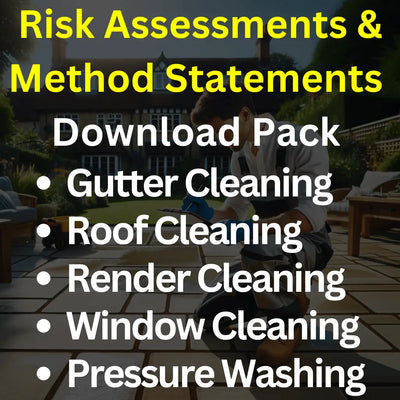
For contractors who need a professional starting point, the Risk Assessment and Method Statement pack for exterior cleaning can help structure documentation and improve consistency across jobs. It should still be adapted to each site rather than copied blindly.
4. Business Set-Up and Professional Standards
Many people searching “can you learn softwashing online?” are not only asking about technique. They are also wondering whether they can start a side business, add softwashing to window cleaning or pressure washing services, or train an in-house maintenance team.
Online resources can help with:
- pricing and quoting;
- customer expectations;
- insurance considerations;
- equipment budgeting;
- job sequencing;
- before-and-after photography;
- aftercare advice and retreatment cycles.
If you are planning to become a softwash contractor, online training is a sensible first step, but you should also consider insurance, compliance, product handling, practical competence and how you will manage higher-risk sites.
What You Cannot Fully Learn Online
There are parts of softwashing that only become clear when you are on site. The way a surface absorbs solution, how wind affects spray control, how a customer reacts to temporary odour, or how quickly a solution dries on a warm south-facing elevation cannot be fully understood from a screen.
| Skill Area | Can It Be Learnt Online? | Practical Training Needed? |
|---|---|---|
| Softwash chemistry theory | Yes, very effectively | Useful for reinforcement |
| COSHH and product safety awareness | Yes, as a foundation | Yes, for real handling and emergency procedures |
| Surface identification | Partly | Yes, especially on mixed materials and older buildings |
| Spray control and application technique | Partly through video | Yes, hands-on practice is important |
| Working at height | No, not fully | Yes, with appropriate training and equipment |
| Quoting and customer communication | Yes, with examples | Improves with experience |
In our experience, new contractors often underestimate how much judgement is involved. Two walls that look similar in photos may behave differently because one has soft lime render, one has painted silicone render, one is shaded by trees, and one has previously been treated with an incompatible product.
Online Softwashing Course Versus In-Person Training
Both formats have value. The right choice depends on your experience, risk level and intended work type.
| Training Type | Best For | Limitations |
|---|---|---|
| Online softwashing training | Theory, safety awareness, product knowledge, business planning and refresher learning | Limited hands-on correction and site realism |
| In-person practical training | Application technique, equipment handling, surface testing, real-time feedback and confidence building | Requires time away from work and travel |
| Blended learning | Most professional contractors and serious users | Needs commitment to both study and practice |
For many UK contractors, a blended approach is the most sensible route. Learn the underlying principles online, attend practical instruction where possible, then start with low-risk projects before progressing to more complex work. If formal recognition matters to your clients or employer, it is worth reading more about CPD certified softwash training and how structured professional development supports competence.
How to Learn Softwashing Online Safely: A Step-by-Step Route
Step 1: Start With the Fundamentals
Before buying equipment or chemicals, learn what softwashing is and where it is suitable. Understand the difference between cleaning an organic algal bloom on render and removing rust, oil, tannin, lead staining or efflorescence. These are different problems requiring different methods.
Step 2: Study Safety Before Application
Do not leave safety until later. Before treating a surface, you should understand PPE, COSHH, emergency procedures, dilution control, safe storage and environmental protection. If you are running a business, this is not optional. It affects your insurance, your legal duties and your reputation.
The HSE soft washing full collection can support contractors who want clearer documentation and safety guidance for professional exterior cleaning operations.
Step 3: Learn the Main Surface Types
Surface identification is one of the biggest differences between a competent cleaner and a risky operator. Online lessons should cover common UK substrates, including:
- monocouche and silicone render;
- painted masonry;
- concrete roof tiles;
- clay tiles and natural slate;
- UPVC cladding and fascias;
- timber decking and fencing;
- block paving and natural stone;
- commercial cladding and coated metal panels.
Each surface has different tolerance to chemicals, pressure, dwell time and rinsing. Serious users should practise on small inconspicuous areas and avoid assumptions based on appearance alone.
Step 4: Understand Equipment Options
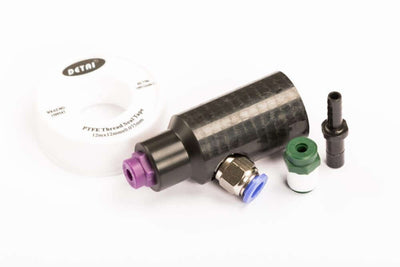
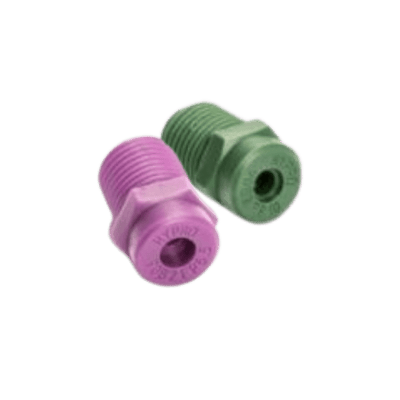
You do not need the largest softwash system to start learning, but you do need equipment that is appropriate, chemical-compatible and controllable. Online training can explain pumps, tanks, hose reels, metering systems, nozzles, lances and poles.
Contractors comparing set-ups can explore soft washing equipment to understand the difference between simple application tools and more advanced professional systems. The key is not just output; it is control, reliability and suitability for the chemical being used.
Step 5: Use Controlled Practice Before Paid Work
Practise on low-risk areas first. A rear garden path, a small section of block paving or a non-critical test panel is more sensible than a customer’s expensive rendered frontage. Focus on wetting technique, even coverage, overspray prevention, dwell time awareness and safe pack-down.
Step 6: Build Job Records and Before-and-After Evidence
Keeping records is good practice. Note the surface type, weather conditions, products used, dilution, dwell time, protection measures and outcome. This helps improve your decision-making and provides evidence if a query arises later.
Step 7: Continue Learning
Softwashing is a developing sector. Products change, regulations are updated, and contractors learn from unusual surfaces and site conditions. Ongoing learning through training, supplier guidance and industry discussion helps reduce mistakes over time.
The SoftWash UK Podcast is a useful resource for contractors who want practical industry discussion while building their knowledge beyond a single course.
How to Choose a Good Online Softwashing Course
Not all online training is equal. A credible course should be specific, practical and safety-led. Be cautious of any course or video that suggests softwashing is simply a quick way to make money with little training or responsibility.
Look for online softwash training that includes:
- clear explanations of chemical safety and COSHH;
- surface-specific application guidance;
- real job examples rather than only theory;
- advice on risk assessment and method statements;
- coverage of PPE, storage, transport and emergency procedures;
- business, insurance and customer communication guidance;
- access to further support, product information or refresher material.
SoftWash UK supplies professional softwashing chemicals, equipment and training resources for contractors who want to work safely and consistently. The Soft Wash Training Course is designed to help learners understand the practical and safety considerations behind professional softwashing rather than relying on guesswork.
Common Mistakes When Learning Softwashing Online
Mistake 1: Copying Internet Dilutions Without Understanding the Surface
One of the most common mistakes is copying a dilution mentioned online and applying it to every surface. This can damage sensitive materials, harm planting, create unnecessary risk or produce poor results. Dilution should be based on the product, surface, contamination level, weather conditions and manufacturer guidance.
Mistake 2: Treating All Stains as Organic Growth
Softwashing is excellent for many organic growth problems, but not every mark is algae or lichen. Rust, oil, tannin, cement staining, lead staining and mineral deposits require different products and methods. Misidentifying staining wastes time and can make the problem worse.
Mistake 3: Ignoring Weather Conditions
Wind, rain, frost, strong sun and high temperatures all affect softwashing. Spray drift, rapid drying, poor dwell time and runoff issues can turn a straightforward job into a complaint. Online training should teach you when not to apply as well as when to proceed.
Mistake 4: Buying Equipment Before Understanding the Work
New contractors sometimes buy pumps, tanks and reels before deciding what surfaces they will clean, how much volume they need, and whether they can transport chemicals safely. Training first usually leads to better buying decisions.
Mistake 5: Assuming Insurance Is Automatic
If you are charging for softwashing services, check that your insurance actually covers chemical application, treatment of roofs, working at height, public liability and any subcontractor arrangements. The SoftWash UK Knowledge Centre article on softwash contractor insurance is a useful starting point for understanding the questions to ask your broker.
Softwashing Myths That Online Learners Should Avoid
Myth: “Softwashing Is Always Safe Because It Uses Low Pressure”
Low pressure reduces the risk of mechanical surface damage, but chemical risk still has to be managed. Softwashing can be safe and effective when done correctly, but it is not risk-free.
Myth: “If It Does Not Clean Instantly, It Has Failed”
Many biocidal treatments work over time. Some roof and render treatments continue improving for weeks or months as weathering removes dead organic matter. Setting the right customer expectation is part of professional softwashing.
Myth: “You Can Learn Everything From Free Videos”
Free videos can be useful, but they rarely provide full context, compliance guidance, surface limitations or professional documentation. They may also reflect overseas methods or products that are not appropriate for UK work.
Myth: “One Chemical Cleans Everything”
No single chemical solves every exterior cleaning problem. A professional contractor understands when to use a biocide, when to use a surfactant, when a specialist stain remover is required, and when not to treat at all.
Who Is Online Softwash Learning Suitable For?
Exterior Cleaning Contractors
Window cleaners, pressure washing businesses and roof cleaning contractors can use online softwash training to add a safer, lower-pressure cleaning method to their services. It is particularly useful for understanding render cleaning, post-clean biocidal treatment and recurring maintenance plans.
Property Maintenance Professionals
Maintenance teams responsible for housing stock, leisure facilities, schools, offices or retail parks can use online learning to improve contractor supervision and decide when softwashing is appropriate. Even if work is outsourced, understanding the process helps assess quotations and method statements.
Facilities Managers
Facilities managers may not apply chemicals themselves, but they still need to understand risk, site access, tenant communication, public safety, environmental protection and expected results. Online education helps them ask better questions of contractors.
Serious DIY Users
Homeowners or estate owners with practical experience may learn the basics online, but they should be realistic. Chemical handling, working at height and treating delicate surfaces can carry significant risk. DIY users should follow product labels, wear appropriate PPE, avoid roof work unless properly trained and equipped, and consider hiring a competent contractor for complex jobs.
Frequently Asked Questions
Can I start a softwashing business after online training?
Online training can help you start planning a softwashing business, but you should not rely on online learning alone for high-risk jobs. You will need appropriate equipment, insurance, chemical knowledge, risk assessments, practical experience and safe working procedures. It is also sensible to understand the cost to start a softwashing business before buying products or advertising services.
Is online softwash training recognised in the UK?
Recognition depends on the provider and course structure. CPD-style training can support professional development, but competence still depends on how well you apply the knowledge in practice. Employers, commercial clients and insurers may also ask for evidence of training, RAMS and relevant experience.
Do I need practical training if I already pressure wash?
Yes, practical softwash training is still strongly recommended. Pressure washing experience helps with site work, hose management and customer expectations, but softwashing introduces chemical handling, dwell time, plant protection and different surface risks.
Can facilities managers learn enough online to manage softwashing contractors?
Yes. Facilities managers can learn enough online to understand method statements, ask informed questions, assess risk controls and set realistic expectations. They do not necessarily need to become applicators, but they should understand the process well enough to manage contractors responsibly.
What equipment do I need to practise softwashing?
For controlled practice, you need suitable PPE, clean water supply, a compatible application method, accurate measuring tools, appropriate chemicals, signage or barriers where needed, and a safe test area. Do not practise on valuable surfaces, near ponds, or in public areas without proper controls.
Is softwashing safer than pressure washing?
Softwashing can be safer for delicate surfaces because it uses low pressure, but it brings chemical risks that must be controlled. The safer method depends on the surface, contamination, access, product choice and operator competence.
Conclusion: Online Softwashing Training Is Valuable, But It Must Be Used Properly
You can learn a great deal about softwashing online. It is one of the best ways to build a foundation in cleaning science, chemical awareness, surface identification, risk assessment, product selection and business planning. For contractors and facilities teams, it can reduce mistakes before they happen and make practical training more effective.
However, online learning should be treated as part of your competence journey, not the whole journey. Softwashing is practical work carried out in changing weather, on varied surfaces, around clients, plants, vehicles, drains and public access areas. The best operators combine online education with practical instruction, cautious experience, good documentation and continual learning.
If you want to learn softwashing properly, SoftWash UK can help you take the next step with professional training, educational resources, compliant documentation, softwashing equipment and chemicals designed for exterior cleaning professionals. Explore the SoftWash UK training resources, Knowledge Centre and product guidance to build your skills safely, responsibly and with confidence.
To continue your learning, visit SoftWash UK for professional softwashing chemicals, equipment, training and industry education for UK contractors and property professionals.