Softwashing vs Pressure Washing Roof Tiles: A Practical UK Guide
Softwashing is generally the lower-risk option for cleaning suitable roof tiles because it treats biological growth without relying on high-pressure water. Pressure washing can remove moss and dirt quickly, but it can also damage weathered surfaces, disturb tiles and drive water beneath the roof covering. Neither method should be specified without checking the tile manufacturer’s guidance, roof condition and site risks.
For many UK tiled roofs, the practical choice is controlled moss removal followed by a suitable low-pressure treatment. However, some roofs should not be cleaned at all until defects have been repaired, and some manufacturers advise against particular cleaning methods.
For contractors, facilities managers and property maintenance professionals, the question is not simply which method cleans fastest. It is which method achieves a worthwhile result without creating leaks, surface damage, chemical exposure or uncontrolled run-off.
What Is the Difference Between Softwashing and Pressure Washing Roof Tiles?
Softwashing uses suitable cleaning chemistry applied at low pressure to treat algae, moss and other biological contamination. Depending on the product and specification, the process may include preliminary moss removal, controlled rinsing or a treatment left to work and weather naturally.
Pressure washing relies primarily on the mechanical force of water to dislodge contamination. Its effect depends on more than the machine’s pressure rating: water flow, nozzle type, working distance, angle and operator technique all influence the force reaching the tile.
A pressure washer fitted with a chemical application system may deliver a low-pressure treatment. Equally, an unsuitable nozzle on a small machine can cause damage. Judge the process at the roof surface, not just the equipment label.
| Consideration | Softwashing | Pressure washing |
|---|---|---|
| Main cleaning action | Chemical treatment of biological growth | Mechanical removal using pressurised water |
| Visible results | May develop gradually, depending on treatment and contamination | Usually immediate where material is physically removed |
| Surface damage risk | Lower mechanical impact, but chemical compatibility remains essential | Greater potential for erosion or damage to weathered surfaces and finishes |
| Water ingress risk | Still possible with poor application, excessive wetting or existing defects | Particularly concerning if water is directed into laps, flashings or openings |
| Heavy moss | Often benefits from careful bulk removal before treatment | Removes material quickly but can scatter debris and overload gutters |
| Main controls | Product selection, dosing, exposure, drift and run-off management | Manufacturer approval, controlled water delivery, access and debris management |
Start With the Roof, Not the Cleaning Machine
A roof covering is designed to shed rain through its pitch, overlaps and detailing. It is not necessarily designed to resist a concentrated jet or prolonged wetting from an unexpected direction.
Before quoting, establish the tile type, condition and any available manufacturer’s instructions. A roof that looks sound from the driveway may have cracked tiles, loose ridge components or failed mortar visible only during a closer inspection.
Concrete roof tiles
Concrete tiles can become weathered, with exposed aggregate or a deteriorating surface finish. Aggressive washing may remove more than the moss and leave a visibly different surface.
Do not assume every concrete tile has the same coating or that a brighter appearance proves a successful clean. Where the manufacturer permits cleaning, specify a method suited to the actual tile and its condition.
Clay roof tiles
Clay tiles vary considerably. Older handmade tiles can be fragile, while decorative or glazed finishes require particular care. Inspect for cracking, spalling and frost damage before proposing treatment.
Manual scraping is not automatically harmless: forcing a poorly matched scraper across an uneven clay profile can chip edges or disturb tiles.
Slate and suspected asbestos cement
Natural slate is not a roof tile, but it often appears in roof-cleaning enquiries. Weathered slate, fixings and laps require a separate assessment rather than a standard tiled-roof specification.
If a roof covering could contain asbestos, stop and arrange competent identification before planning cleaning. Do not pressure wash, scrape or otherwise disturb suspected asbestos-containing materials as part of a routine roof-cleaning job. Specialist assessment and applicable asbestos controls are required.
When Is Softwashing the Better Choice?
Softwashing is often appropriate where biological growth is the main problem and the roof can tolerate the proposed treatment. Its main advantage is reducing reliance on mechanical force.
Typical examples include algae-stained tiles or a serviceable roof where bulk moss can be removed carefully before treatment. Low-pressure application can also help avoid the widespread debris generated by aggressive washing, although drift and run-off still need controlling.
Heavy moss usually needs a separate removal stage
A thick moss covering absorbs solution, conceals defects and creates a substantial debris load. Applying treatment over it may produce uneven results and leave large quantities of dying material to move into gutters.
Where appropriate, carefully remove the bulk growth using tools matched to the tile profile, working from a suitable access system. Avoid levering against tile edges. Collect debris rather than pushing it into valleys and outlets.
Some residual staining or lichen may remain after the initial visit. Explain the expected treatment and weathering process before starting, rather than promising an immediately uniform roof.
Softwashing is not damage-proof
Low pressure does not eliminate the risks of unsuitable chemistry, excessive application, spray drift or water entering existing defects. Treatment can also affect sensitive metals, coatings, plants and neighbouring surfaces.
The wider principles are covered in SoftWash UK’s guide to softwashing vs pressure washing, but roof work needs additional attention to fragile materials, access and weatherproofing.
Can Pressure Washing Roof Tiles Ever Be Appropriate?
Pressure washing should not be the default simply because the contractor already owns the equipment. It may be considered only where the roof covering manufacturer permits it, the roof is sound and the proposed method can be properly controlled.
Even then, a test area cannot prove that the whole roof will remain watertight or that no hidden damage will occur.
Before including pressure washing in a roof-cleaning specification, establish:
- Whether the manufacturer permits the method and sets any limits.
- Whether the tile finish and condition can withstand the proposed process.
- How water will be kept away from vulnerable laps, flashings and roof penetrations.
- How access, overspray, debris and wastewater will be controlled.
- Whether insurance covers the specific activity and method.
There is no universal “safe pressure” for roof tiles. A broad spray at one distance behaves differently from a concentrated jet close to a weathered edge. Directing water down the roof slope is not, by itself, a guarantee against ingress.
Choosing Roof-Cleaning Chemicals Responsibly
The chemical should follow the diagnosis and specification, not the other way round. Biological staining, mineral deposits, corrosion marks and worn tile finishes are different problems; they will not all respond to the same treatment.
Common professional approaches include oxidising cleaners, such as suitable sodium hypochlorite formulations, and appropriately authorised biocidal treatments, including some quaternary ammonium compound products. These are not interchangeable, and their application, contact time, rinsing and environmental controls may differ.
SoftWash UK’s explanation of softwashing chemicals provides useful background. Select a product only after checking its label, intended use, surface compatibility and safety data sheet.
- Follow the specified dilution, application rate, contact time and rinsing instructions.
- Where a product is used as a biocide, confirm that it is lawfully supplied and permitted for the intended use in the relevant UK jurisdiction.
- Complete a COSHH assessment; a safety data sheet alone is not that assessment.
- Never mix sodium hypochlorite with acids, ammonia or incompatible products.
- Do not add a surfactant or other additive unless the product instructions permit it.
When comparing professional softwash chemicals, assess suitability and compliance rather than buying on concentration alone. There is no responsible universal roof-cleaning dilution that applies to every product and roof.
A Practical Roof-Cleaning Workflow
1. Confirm whether cleaning is justified
Identify whether the concern is appearance, loose moss, blocked drainage or another maintenance issue. Moss does not automatically mean the roof is failing, and cleaning will not repair leaks, defective flashing or deteriorated underlay.
2. Survey and record the condition
Photograph cracked or slipped tiles, exposed finishes, fragile rooflights, ridge defects and drainage problems. Check nearby vehicles, planting, roof-mounted equipment and public access routes. Refer structural or roofing defects to a competent roofer.
3. Check instructions and agree the result
Review manufacturer guidance and any warranty, heritage or site restrictions. State whether the work includes moss removal, biological treatment, rinsing, gutter clearance and follow-up inspection.
For a shaded concrete-tile roof with thick moss, for example, careful removal followed by a compatible treatment may be sensible. For brittle clay tiles with widespread defects, repair or declining the clean may be the better recommendation.
4. Plan access and site protection
Choose a suitable working platform and establish exclusion zones. Plan hose routes, emergency arrangements and chemical storage. Trace downpipes before starting: they may discharge into surface water drains, soakaways or rainwater harvesting tanks.
5. Remove bulk debris where appropriate
Use suitable tools and avoid unnecessary abrasion. Keep gutters and outlets clear without allowing moss or contaminated wash water to enter drains.
6. Test and apply the specified treatment
Carry out a representative compatibility test where appropriate, while recognising its limits. Monitor weather, wind, surface drying and product contact time throughout the job. Do not compensate for unsuitable conditions by making an unapproved stronger mixture.
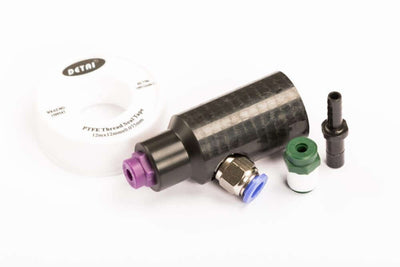
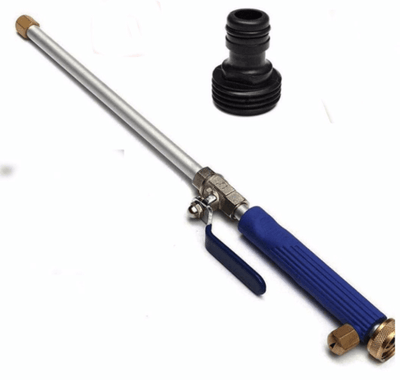
Suitable softwashing equipment should provide controlled delivery, chemical compatibility and reliable shut-off. Longer reach does not remove the need to control pole movement, drift and overspray.
7. Inspect, document and hand over
Check gutters, outlets and surrounding surfaces. Record the product, dilution, application details and observations. Give the customer realistic aftercare advice, including any label-specified restrictions and the likely timescale for remaining growth to weather away.
Roof-Cleaning Safety and UK Best Practice
Work at height
Follow the work-at-height hierarchy: avoid work at height where reasonably practicable, prevent falls where it cannot be avoided, and minimise the consequences of any remaining fall risk.
Do not walk directly on tiles as a routine cleaning method. Roofs and rooflights may be fragile, and wet biological growth makes footing unreliable. Ladders are not a default workstation; their suitability depends on the task and risk assessment. Harness use requires suitable anchorage, training and a rescue plan.
For serious DIY users, the practical boundary matters: owning a pressure washer or extendable pole does not make roof cleaning safe. Where competent access, chemical handling and wastewater control cannot be arranged, use an appropriately trained and insured contractor.
Run-off, neighbours and environmental protection
Plan how to prevent chemicals and contaminated wastewater entering surface water drains, watercourses, ponds and rainwater systems. Do not assume foul sewer disposal is automatically acceptable; permission or trade effluent consent may be required. Requirements vary across the UK.
Protect planting, neighbouring property and pedestrians. Simply wetting plants is not a complete protection strategy. Collection, containment or a different method may be necessary.
SoftWash UK’s exterior cleaning RAMS pack can support planning, but templates must be adapted to the roof, access arrangements, chemicals and drainage on the actual site.
Cost, Results and Maintenance Expectations
Pressure washing can produce a fast visual change, while some softwash treatments take longer to show their full effect. Neither observation establishes which method offers better value.
A proper quotation should account for access, roof complexity, contamination, debris collection, chemical controls, wastewater management and follow-up. Safe access can cost more than the treatment itself on a difficult property.
Do not guarantee a fixed moss-free period regardless of conditions. Shade, trees, moisture retention, roof orientation and the surrounding environment affect regrowth. SoftWash UK’s guide to how long softwashing lasts explains why maintenance intervals vary.
Common Roof-Cleaning Myths
- “Every dirty roof needs cleaning.” Cosmetic discolouration alone does not necessarily justify intervention.
- “Softwashing means spraying over everything.” Heavy moss, drainage risks and surface defects need attention first.
- “More chemical gives a better result.” Exceeding instructions can increase damage, exposure and environmental risks.
- “A clean-looking roof is a repaired roof.” Cleaning does not restore defective tiles, fixings, mortar or underlay.
- “Pressure washing always ruins tiles.” That is too absolute, but without manufacturer support and suitable controls it is an unjustified risk.
If you want to understand the professional approach before committing to full training, you can try selected lessons from the SoftWash UK course for free. The preview is a useful introduction to the teaching style and safety-led thinking behind professional softwashing.
Frequently Asked Questions
Is softwashing better than pressure washing roof tiles?
Often, particularly where biological growth is the main concern and reducing mechanical impact is important. However, the roof condition, tile manufacturer’s guidance and treatment compatibility must determine the method. Some roofs should not be cleaned.
Can pressure washing make roof tiles leak?
It can drive water beneath laps or through existing defects, particularly when water is directed upwards or towards vulnerable detailing. It can also disturb damaged components. An absence of visible leaks during cleaning does not prove the method caused no harm.
Will softwashing remove thick roof moss?
A suitable treatment can control susceptible growth, but thick moss often benefits from careful bulk removal first. Otherwise, substantial dead material may remain and later obstruct gutters or outlets.
Do roof tiles need rinsing after softwashing?
Follow the product instructions. Some processes require controlled rinsing; others are intended to remain and weather naturally. Neither approach removes the need to manage run-off and protect surrounding surfaces.
Can I clean roof tiles with household bleach?
Household bleach is not a substitute for a properly specified roof-cleaning process. Formulations, labelling and intended uses differ. Avoid improvised mixtures and use only products suitable and legally permitted for the proposed task.
Should a roof be sealed after cleaning?
Not automatically. A coating is a separate specification requiring assessment of tile suitability, condition, moisture behaviour and manufacturer guidance. It should not be sold as a routine necessity after every clean.
Conclusion: Specify the Safest Suitable Method
For many serviceable tiled roofs, careful moss removal followed by a compatible low-pressure treatment is preferable to aggressive pressure washing. The advantage comes from reducing mechanical stress, not from assuming chemicals are harmless.
The professional sequence is straightforward: identify the roof covering, inspect its condition, check manufacturer guidance, plan access and drainage, then choose the least aggressive suitable method. If cleaning cannot be justified or controlled safely, recommend repair, specialist assessment or no intervention.
SoftWash UK supplies professional softwashing chemicals, equipment, training and educational resources. Explore the guidance and product information to build a roof-cleaning specification around the surface, the site and safe working practice—not simply the fastest visible result.