Understanding Chemical Delivery Systems for Softwashing and Exterior Cleaning
A chemical delivery system controls how a cleaning product moves from its container to the surface being treated. In exterior cleaning, this may involve a pre-mixed solution in a sprayer, a dedicated softwash pump, a downstream injector or a proportional dosing unit that introduces concentrate into a water supply.
The right system delivers a suitable product at a verified dilution, with enough flow and control to wet the surface without unnecessary drift, run-off or damage. Choosing one is therefore about more than spraying distance: chemical compatibility, dosing accuracy, working pressure and site conditions all matter.
For UK exterior cleaning contractors, facilities managers and property maintenance teams, understanding these differences helps prevent inconsistent results, wasted chemicals and avoidable equipment failures. Serious DIY users benefit from the same principle: use the simplest suitable system that you can operate safely and accurately.
What Does a Chemical Delivery System Include?
A complete chemical application system normally contains several connected components:
- A container holding chemical concentrate or a pre-mixed working solution.
- A water supply, where dilution takes place during operation.
- A pump, injector or dosing mechanism.
- Chemically compatible suction tubes, hoses, seals and fittings.
- Filters, valves and appropriate backflow protection.
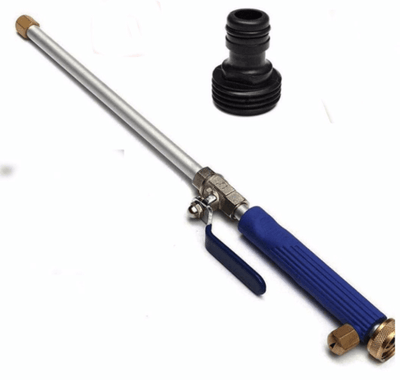
- A trigger, lance, pole or nozzle controlling application.
These components must work together. A suitable pump connected to an unsuitable hose is not a suitable system. Equally, an accurate dosing unit can perform poorly if the available water flow falls outside its operating range.
Start with the cleaning task and product instructions, then select the delivery equipment. Buying a machine first and trying to make every chemical work through it reverses that process.
Main Types of Chemical Delivery System
| System | How it works | Typical applications | Main limitation |
|---|---|---|---|
| Manual or battery sprayer | Applies a solution mixed in its tank. | Small areas, accessible surfaces and localised treatments. | Limited capacity; compatibility varies considerably. |
| Dedicated batch-mix softwash system | A compatible pump draws pre-mixed solution from a tank. | Render, façades and larger treatment areas. | Requires mixing, storage and management of remaining solution. |
| Downstream injector | Draws chemical into the water after the pressure washer pump. | Compatible cleaning treatments where the achieved dilution is suitable. | Draw rate changes with operating conditions. |
| Water-powered proportional dosing unit | Meters concentrate into flowing water within a specified operating range. | Repeated application requiring controlled dilution. | Needs correct sizing, calibration and maintenance. |
| Adjustable multi-feed proportioning system | Combines water and chemical feeds through adjustable controls. | Professional work requiring changes between approved working mixtures. | Valve positions do not independently prove the delivered concentration. |
Manual and battery-powered sprayers
A suitable chemical-resistant sprayer can be practical for a small wall, boundary feature or spot treatment. It provides straightforward batch mixing without a vehicle-mounted installation.
However, a garden sprayer is not automatically suitable for professional cleaning chemicals. Check the manufacturer's compatibility information for the complete assembly, including seals, lance and trigger. Confirm whether the product permits spraying and whether the equipment produces an appropriate spray pattern.
Dedicated batch-mix softwash pumps
With batch mixing, the operator prepares the working solution before application. The pump then transfers that mixture to the nozzle.
This makes the dilution relatively easy to document, provided the starting product strength and measured volumes are correct. It can suit repeat treatments across a large façade.
The practical drawbacks are tank space, payload and leftover mixture. A 200-litre working solution weighs approximately 200 kg before the tank, equipment and other loads are included. Vehicle payload, axle limits and load restraint need checking, not estimating.
Downstream chemical injectors
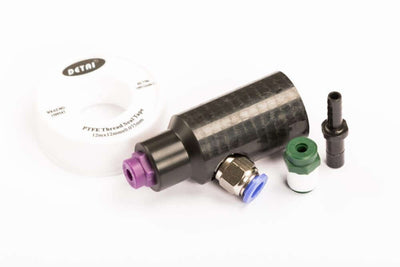
A downstream injector introduces chemical after the pressure washer pump, keeping the concentrate out of that pump. Chemical draw normally depends on a pressure differential and a compatible low-pressure application nozzle.
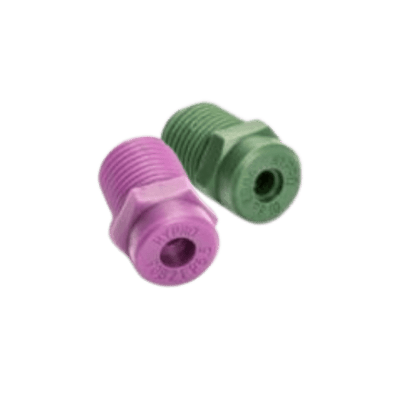
Hose length, restrictions, nozzle selection, elevation and machine flow can all affect performance. Changing to a higher-pressure nozzle may stop chemical draw altogether.
Do not confuse downstream injection with feeding chemical through the pressure washer pump. Upstream chemical use requires explicit equipment approval and compatibility; a downstream-rated product or accessory does not establish that approval.
Proportional dosing and adjustable blending
Water-powered dosing units meter concentrate according to water passing through the unit. They can reduce repeated manual mixing, but only when the model's dosing range, pressure range, flow requirements and chemical compatibility match the job.
For example, when assessing a Dosatron biocide injector, compare its current specifications with the chosen product's label dilution and the actual water supply. A dosing unit is not universally suitable for every biocide or cleaning chemical.
Adjustable multi-feed systems offer flexibility, but a marked valve position is only a setting. The resulting mixture still needs checking under working conditions.
Pressure, Flow and Concentration: Three Different Controls
Pressure affects delivery and surface impact
Pressure helps move liquid through the system and influences the spray leaving the nozzle. Excessive application pressure can damage fragile coatings or drive liquid into vulnerable joints and openings.
Softwashing uses chemical action with controlled, low-pressure application rather than relying primarily on high-pressure abrasion. Low pressure, however, does not eliminate exposure, drift or run-off risks.
Flow affects wetting and run-off
Flow is the volume delivered over time, usually measured in litres per minute. Too little flow can make even coverage difficult. Too much can flood window details, overwhelm protection measures and send treatment straight to the ground.
On a rendered elevation, the aim is generally controlled, even wetting consistent with the product instructions—not liquid continuously streaming down the wall.
Concentration affects the treatment
Concentration describes how much product or active ingredient is present in the working solution. It must suit the product label, contamination, substrate and intended application.
Stronger is not automatically better. Excess concentration can increase exposure, residue, staining and material compatibility problems without improving the outcome.
Review the label and safety data sheet before selecting from professional softwash chemicals. Different formulations require different delivery arrangements; one pump-and-hose setup should not be assumed suitable for all of them.
Understanding Dilution Ratios Without Guesswork
Dilution notation is a common source of mistakes. “One part product plus nine parts water” makes ten parts of working solution, containing 10% product by volume. That is not necessarily 10% active ingredient.
A label or equipment manual may express dosing as product-to-water, product-to-total-solution or a percentage. Establish which convention applies before calculating quantities.
For a straightforward dilution, the relationship is:
Working active concentration = concentrate active concentration × concentrate volume ÷ total solution volume.
This simplified calculation assumes compatible concentration units and an appropriate volume basis. Where product strength is expressed by mass, density or other formulation details may matter. Follow the manufacturer's mixing instructions rather than converting percentages casually.
Measure injector performance at the working setup
Using clean water for commissioning, suppose an injector draws 1 litre from its pickup container while the machine supplies 9 litres through the main water feed. The resulting 10 litres contain one part pickup liquid to nine parts main-feed water.
That is a measurement of draw under those conditions—not a recommended chemical recipe. If the pickup container later holds a diluted product rather than concentrate, that additional dilution also needs accounting for.
Record the nozzle, hose length and supply conditions used for testing. A result obtained beside the machine may not represent application through a long hose at height.
How to Choose a Suitable System
Match the equipment to the chemical
Ask the equipment supplier about compatibility at the intended concentration, temperature and contact duration. Check pumps, diaphragms, seals, valve seats, fittings, hoses and containers individually.
“Chemical resistant” is not a universal specification. A component suitable for one formulation may deteriorate rapidly with another.
Do not mix sodium hypochlorite with acids, ammonia or other incompatible products: dangerous gases can be released. Dedicated, clearly labelled equipment is preferable for incompatible chemical families. Any changeover must follow a documented, manufacturer-approved cleaning procedure; a quick rinse is not proof that equipment is safe to reuse.
Match capacity to the property
A portable sprayer may suit a small accessible treatment. A larger building may justify a dedicated pump, hose reel or metered system.
Facilities managers should also consider operational constraints: public access, ventilation intakes, drainage, noise, water availability and permitted working hours. A system that applies quickly but cannot control overspray around occupied areas is a poor fit.
Assess the whole installation
Compare softwashing equipment by its complete operating requirements, not maximum advertised reach alone. Check usable flow, power demand, filtration, serviceability, hose pressure losses and safe application options.
Where connected to a mains water supply, the installation needs backflow protection appropriate to the fluid risk under the applicable water fittings requirements. A basic non-return valve may not be sufficient; obtain competent advice on the arrangement.
Step-by-Step: Commissioning and Checking Chemical Delivery
- Read the documents. Check the product label, safety data sheet and equipment instructions. Confirm permitted uses, dilution, application method, contact time and rinsing requirements.
- Assess the site. Identify sensitive materials, plants, people, pets, watercourses, drains, electrical equipment and nearby vehicles.
- Inspect the system. Check hoses, filters, fittings, tank restraints and electrical connections. Replace damaged or suspect components.
- Commission with clean water. Check for leaks, confirm stable flow and test the nozzle pattern in a controlled area.
- Measure actual delivery. Follow the manufacturer's calibration procedure, using water where appropriate. Measure pickup and output over a known period without exposing yourself to spray or running equipment dry.
- Prepare the approved working mixture. Follow the specified mixing sequence and use suitable measuring equipment and PPE.
- Complete a discreet test area. Check the surface response, coverage, dwell behaviour and any required rinsing.
- Monitor application. Watch for changes in draw, wind, wetting and run-off. Stop if conditions become unsuitable.
- Shut down correctly. Follow the manufacturer's flushing, depressurising, storage and waste-handling instructions.
Recheck performance after changing the injector, nozzle, hose configuration or chemical formulation. An unexpected drop in cleaning performance may be an application fault, not a need for stronger chemical.
UK Safety, Compliance and Environmental Controls
Professional chemical application needs a task-specific COSHH assessment and suitable risk assessment and method statement. A safety data sheet supports that work but does not replace it.
Use cleaning and biocidal products only as legally supplied and permitted for their intended use. Check applicable biocidal product requirements, authorised uses and any professional-user restrictions. Serious DIY users should not assume that a professionally restricted product is suitable for domestic use.
- Control exposure: choose suitable application methods, establish exclusion zones and select PPE from the assessment and product instructions.
- Control drift: use appropriate nozzles and stop when wind prevents controlled application.
- Protect drainage: identify surface-water drains, foul drainage and watercourses before starting. Do not assume foul-sewer disposal is permitted; obtain any necessary water company consent.
- Protect occupants: plan around windows, doors, air intakes, pedestrian routes and neighbouring properties.
- Plan for incidents: provide suitable spill equipment, eyewash arrangements and clear emergency procedures.
- Manage access safely: assess work at height separately. Ground-based spraying does not automatically make every application safe.
SoftWash UK's exterior cleaning RAMS pack can help structure documentation, but it must be adapted to the actual site, chemicals, equipment and people involved.
Common Mistakes and Practical Troubleshooting
| Problem | Possible causes | First checks |
|---|---|---|
| Injector stops drawing | Wrong nozzle, excessive backpressure, blocked pickup or air leak. | Check the approved nozzle, suction line, strainer and hose configuration. |
| Application becomes inconsistent | Changing supply flow, restricted filter, worn components or unstable feed. | Verify supply conditions and repeat the manufacturer's calibration check. |
| Excessive run-off | Too much flow, unsuitable pattern or repeated application to an already wet area. | Stop, contain run-off and reassess the application method. |
| Pump pulses or loses prime | Restricted suction, air ingress, low liquid level or an unsuitable operating arrangement. | Check feed level, suction fittings and manufacturer guidance before continuing. |
Three myths cause particular trouble: that a higher pressure always cleans better, that an injector setting guarantees dilution, and that extra surfactant automatically improves results. None is reliable. Only use additives approved for the formulation, at the specified rate; excess foam can hinder application and rinsing.
For broader learning about methods and surface suitability, explore the SoftWash UK Knowledge Hub.
If you want to understand the professional approach before committing to full training, you can try selected lessons through the free SoftWash UK course preview. It provides a useful introduction to the teaching style and structure of the full programme.
Frequently Asked Questions
What is the best chemical delivery system for softwashing?
The best system matches the chemical, required dilution, surface, water supply and site risks. Small jobs may suit a compatible sprayer; larger or repeated applications may benefit from a dedicated pump or proportional dosing system.
Does a downstream injector deliver a fixed dilution?
Not necessarily. Its actual draw can change with nozzle selection, hose restrictions, machine flow and elevation. Measure performance in the working configuration rather than relying solely on a nominal ratio.
Can one system apply every exterior cleaning chemical?
No. Material compatibility and hazardous chemical interactions limit what equipment can safely handle. Dedicated systems are preferable for incompatible products, with clear labelling and controlled storage.
Is low-pressure spraying always safe for render?
No. Render condition, coatings, openings and chemical compatibility still matter. Inspect the surface, follow product guidance and complete a discreet test before wider application.
How often should chemical delivery equipment be calibrated?
Follow the manufacturer's schedule and recheck after changes that could affect delivery. These include a different nozzle, hose length, product formulation, repaired component or altered water supply.
Should stronger chemical compensate for poor coverage?
No. Diagnose flow, nozzle pattern, dilution and application technique first. Increasing concentration can create additional risks without correcting uneven delivery.
Choose Control and Consistency, Not Just Spraying Power
A dependable chemical delivery system applies the correct working solution consistently, protects the surface and gives the operator control over exposure and run-off. Achieving that requires compatible components, verified dosing and a method suited to the property.
SoftWash UK supplies professional softwashing chemicals, equipment and training. Before investing in a new setup, speak to the team about your intended products, typical sites and existing equipment. A properly matched system—and the knowledge to use it—is more valuable than additional spraying power alone.