Why Softwashing Training Matters: Safer Work, Better Results and Stronger Businesses
Softwashing training matters because successful exterior cleaning depends on more than applying a chemical at low pressure. You need to identify the surface and contamination, select a suitable treatment, control exposure and runoff, and know when not to proceed. Training helps turn those decisions into a safe, repeatable working method.
For UK exterior cleaning contractors, property maintenance teams and facilities managers, that knowledge can reduce avoidable damage, improve quotations and make work easier to supervise. For serious DIY users, it helps explain which tasks are manageable and which require professional equipment, specialist advice or a competent contractor.
A certificate alone does not make someone competent. Good softwashing training provides a foundation that must be supported by practical experience, current product information and site-specific judgement.
What Is Softwashing, and Why Does It Require Training?
Softwashing is an exterior cleaning approach that uses suitable chemical treatments and controlled, low-pressure application to tackle biological contamination such as algae and other organic growth. Depending on the surface, product and cleaning objective, it may also involve preparation, gentle agitation and controlled rinsing.
It is not simply pressure washing with the pressure turned down. Nor is it one chemical recipe that suits every building.
A rendered wall with green algae, a tiled roof with moss and a paved courtyard with dark spotting present different challenges. Their appearance alone does not establish the correct treatment: substrate condition, previous coatings, drainage, access and neighbouring materials all influence the method.
Professional training should help you answer five questions before starting:
- What is the surface, and what condition is it in?
- What is causing the discolouration or growth?
- Is chemical treatment appropriate and permitted for this application?
- How will people, property and the environment be protected?
- What result can realistically be achieved, and over what timescale?
Training Teaches You to Diagnose Before You Treat
Recognising surfaces and existing defects
Render, natural stone, concrete, brick, painted finishes, timber and roof coverings do not respond identically to cleaning. Even similar-looking surfaces can behave differently because of their age, porosity, coatings or previous repairs.
On a rendered property, for example, inspect for cracks, loose material, failed seals and exposed services before considering treatment. Cleaning cannot repair defective render or prevent water entering an existing opening.
Training should encourage condition photographs, substrate checks and a representative test area. A test patch helps assess compatibility and likely results, but it does not replace manufacturer guidance or guarantee that every part of an unevenly weathered surface will respond identically.
Distinguishing biological growth from other staining
Not every dark mark is algae. Rust, mineral deposits, traffic pollution, paint deterioration and moisture-related staining may need different investigation or treatment.
A common costly mistake is repeatedly applying a biological treatment to a non-biological stain. The answer is not automatically a stronger solution. It may be a different cleaning process, a specialist stain treatment or advice about an underlying building defect.
Good training develops the judgement to stop and reassess rather than escalate chemical use.
Chemical Knowledge Is a Core Safety Skill
Different softwashing products have different hazards, permitted uses, application requirements and environmental precautions. Sodium hypochlorite-based cleaners and other biocidal treatments are not interchangeable, and their instructions should never be treated as optional.
Operators need to understand the product label, technical guidance and safety data sheet, then use that information in a task-specific assessment.
What practical chemical training should cover
- Checking whether a product is suitable and legally supplied for the intended use.
- Following labelled application rates, contact times and rinsing instructions.
- Calculating dilution accurately and understanding application equipment output.
- Selecting chemical-resistant gloves, eye protection and other controls from the assessment.
- Preventing exposure to workers, occupants, pets and members of the public.
- Storing, transporting and labelling chemicals appropriately.
- Preparing for leaks, splashes, spills and first-aid situations.
Never mix cleaning chemicals unless the manufacturer expressly permits the specific combination. In particular, mixing hypochlorite with acids or ammonia-containing products can release dangerous gases. Separate products and incompatible residues must also be considered when cleaning tanks, hoses and application equipment.
Odour is not a reliable measure of exposure or safety. Likewise, adding a fragrance does not remove a chemical hazard.
Why copying someone else’s dilution is unreliable
A ratio shared online may omit the starting product concentration, injector settings, substrate limitations or product authorisation conditions. The solution leaving the nozzle may also differ from what an operator believes is in the tank.
Training should teach calculation and verification rather than reliance on a universal “mix”. Always follow the specific product’s instructions and applicable restrictions.
UK Compliance: Training Supports Your Duties, but Does Not Replace Them
For businesses, softwashing sits within wider health, safety and environmental responsibilities. Depending on the work, these can include COSHH, work equipment requirements, work at height duties, chemical storage and transport controls, and pollution prevention obligations.
Biocidal products must meet the applicable legal requirements for the market and use concerned. Requirements can differ between Great Britain and Northern Ireland. Do not assume that a product is acceptable for an application simply because its active ingredient is familiar.
Risk assessments and method statements
A site risk assessment identifies hazards and the controls needed for that job. A method statement explains how the work will be carried out safely. Generic paperwork is not enough if it ignores the occupied doorway, nearby pond or public footpath beside the actual work area.
The Knowledge Centre guide to a softwash risk assessment explains why these checks matter before application begins.
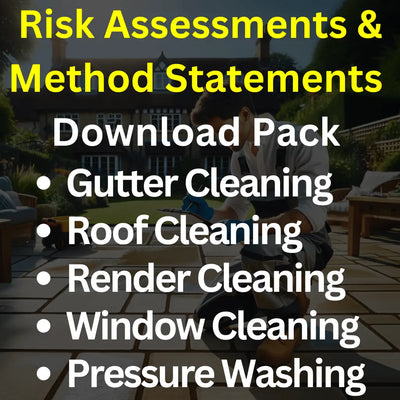
Documentation templates can make preparation more consistent. SoftWash UK’s Risk Assessment and Method Statement Pack for Exterior Cleaning can support that process, but documents must be adapted to the site, products, people and equipment involved.
Runoff, drainage and environmental protection
Before cleaning, establish where liquid will travel. Surface water drains may discharge directly to watercourses, while foul drainage is not an automatic disposal route for chemical washwater.
Plan containment, collection and disposal in advance, obtaining the necessary permissions or specialist advice where required. Do not allow chemical runoff to enter surface water drains, watercourses or other sensitive areas.
Protecting planting is also more than giving leaves a quick rinse. Assess exposure routes, overspray, soil contamination and whether protection can genuinely be maintained. If it cannot, change the method or postpone the work.
Equipment Training Prevents Avoidable Application Errors
Owning an application system does not mean its output is understood. Pumps, hoses, seals, injectors and nozzles must be compatible with the products used and maintained in line with their manufacturers’ instructions.
Practical equipment training should address:
- Pre-use checks for leaks, damaged hoses and insecure connections.
- Flow and dosing checks under actual operating conditions.
- Nozzle selection and spray control to limit drift.
- Safe hose routing around pedestrians and vehicles.
- Preventing contamination of water supplies through appropriate backflow protection.
- Safe shutdown, depressurisation and cleaning procedures.
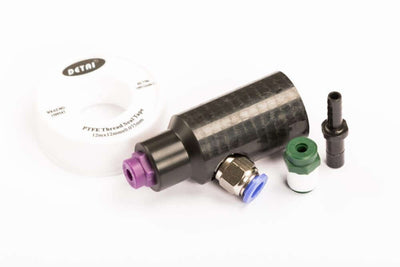
When assessing professional softwashing equipment, consider controllability, chemical compatibility and servicing requirements rather than reach or output alone.
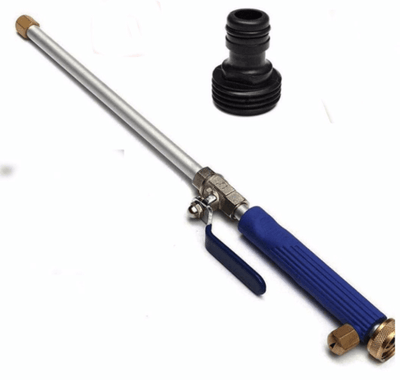
Long-reach poles can help avoid some work at height, but they introduce handling, overhead service and spray-control hazards. Roof cleaning requires its own assessment: a softwash system does not make climbing onto a fragile or slippery roof safe.
What Changes When Training Is Applied on Site?
| Decision | Unstructured approach | Training-led approach |
|---|---|---|
| Surface identification | Assume similar-looking surfaces need the same treatment. | Check material, condition, coatings and manufacturer restrictions. |
| Chemical selection | Use the product already available. | Match the product and permitted use to the contamination and substrate. |
| Site protection | Deal with overspray or runoff after it occurs. | Plan exclusion zones, drainage controls and protection before application. |
| Quotation | Price mainly by area. | Include access, preparation, containment, labour and realistic outcomes. |
| Handover | Promise an immediate, uniform result. | Explain expected changes, limitations and any review arrangements. |
Consider an occupied apartment block with algae-stained render. The spraying may be straightforward, but residents opening windows, delivery drivers crossing hoses and runoff reaching shared planting can make the job complex. Training helps the contractor recognise that site management is part of cleaning, not an extra.
A Training-Led Softwashing Workflow
A repeatable process reduces omissions without encouraging a one-size-fits-all method.
- Survey the property. Identify substrates, contamination, defects, access restrictions, sensitive materials and drainage routes.
- Define the outcome. Agree what is included, what may remain and whether results will develop after treatment.
- Select and test the method. Check product suitability, surface guidance and compatibility, then complete an appropriate test area.
- Prepare the assessment and controls. Address COSHH, public access, weather, environmental protection and emergency arrangements.
- Check equipment and dosing. Confirm compatibility, condition and actual delivery before treating the main area.
- Apply under controlled conditions. Monitor coverage, drift, exposure, surface behaviour and runoff. Stop if conditions change.
- Complete the specified finishing process. Follow product requirements for contact time, rinsing, collection and disposal.
- Inspect and record. Photograph the outcome, document any concerns and provide clear handover information.
For facilities managers, this sequence is also useful when evaluating contractors. Ask how they assess surfaces, protect occupants and manage drainage, rather than relying solely on before-and-after photographs.
Training Improves Quoting and Customer Communication
Softwashing profitability depends partly on recognising the work that happens before and after application. A quotation that ignores protection, access equipment, drainage management or a second attendance may be unprofitable even when the cleaning itself goes well.
Better knowledge helps contractors explain why two apparently similar buildings need different prices. A clear elevation with straightforward access is not equivalent to one above a conservatory, beside a pond or overlooking a busy pavement.
Training also supports realistic expectations. Biological contamination may respond differently from permanent discolouration, and some treatments produce changes over time rather than an immediate finished appearance. Avoid promising a fixed period without regrowth: shade, moisture, vegetation and maintenance all influence recurrence.
Insurance needs the same careful attention. Confirm that your actual activities, chemicals, working heights and treatment risks are covered, and check exclusions with your insurer. The guide to softwash contractor insurance provides useful points to discuss; training does not automatically secure cover.
How to Choose a Useful Softwashing Training Course
Choose training by its relevance and depth, not simply the certificate offered at the end. Look for clear learning objectives and content that connects chemical knowledge with practical decision-making.
- Surface assessment: identifying materials, defects and unsuitable applications.
- Chemical safety: labels, safety data sheets, dilution, exposure controls and incompatibilities.
- Application methods: equipment checks, dosing, weather limitations and runoff management.
- Site planning: risk assessment, access, occupied properties and emergency arrangements.
- Commercial practice: surveys, quotations, scope and customer expectations.
- Assessment and support: opportunities to check understanding and identify further learning needs.
What does CPD certification mean?
Continuing professional development provides a structured way to develop and record learning. However, CPD certification is not a statutory softwashing licence, a guarantee of practical competence or permission to undertake every type of work.
Read the explanation of CPD certified softwash training to understand its role alongside experience and task-specific instruction.
If you want to assess the learning approach before committing, you can try selected lessons from the SoftWash UK course for free. The preview provides a useful introduction to the course’s teaching style and structure before deciding whether the full programme suits your needs.
Common Myths About Softwashing Training
“Low pressure means low risk”
Lower pressure can reduce some mechanical damage risks, but chemical exposure, material incompatibility, pollution and falls remain possible. Pressure is only one part of the assessment.
“A stronger treatment always cleans better”
Increasing concentration can increase hazards without addressing the cause of poor results. Recheck diagnosis, application, conditions and product instructions instead.
“Years of pressure washing experience cover everything”
Existing cleaning experience is valuable, but chemical-led cleaning requires additional knowledge. Experience with one method does not establish competence in every other method.
“Online training replaces practical experience”
Online learning can build understanding and support revision. It should be followed by appropriate practical familiarisation and, where needed, supervised experience. High-risk access and specialist tasks may require separate training.
Frequently Asked Questions
Is softwashing training legally required in the UK?
There is no single universal softwashing licence covering all work. However, businesses must meet applicable duties for adequate information, instruction, training and competence. Specific products, equipment, access methods or contracts may introduce additional requirements.
Can beginners take a softwashing course?
Yes. Training can help beginners understand the work before buying equipment or accepting jobs. Start with manageable tasks within your competence and build practical experience rather than taking on complex roof or commercial work immediately.
Is training worthwhile for DIY users?
Yes, particularly when it helps users recognise limitations. Serious DIY users still need to understand chemical hazards, surface compatibility and drainage. Professional-use products should not be assumed suitable for domestic users, and access risks may justify appointing a competent contractor.
Will a training certificate help me win commercial contracts?
It can support evidence of professional development, but clients may also require suitable insurance, relevant experience, site-specific RAMS and clear working procedures. A certificate is one part of demonstrating capability.
How often should softwashing knowledge be refreshed?
Review knowledge when products, equipment, guidance or working methods change, and after incidents or near misses. Revisit unfamiliar tasks before starting them. Regular learning through the softwashing training and business hub can support that ongoing development.
Build Competence Before Increasing Capacity
Softwashing training matters because the most important decisions happen before the trigger is pulled. Correct diagnosis, controlled application, environmental protection and honest customer communication make the difference between a repeatable service and an avoidable problem.
For contractors, training supports safer working and more informed pricing. For property teams, it improves specification and oversight. For DIY users, it clarifies when to proceed cautiously and when to seek professional help.
SoftWash UK supplies professional softwashing chemicals, equipment and training. If you are starting out or reviewing your existing methods, explore the SoftWash UK softwashing training course and use structured learning to identify gaps before investing in more equipment or taking on more demanding work.