How Professional Contractors Save Time on Site
Professional contractors save time on site by planning the job properly, choosing the right cleaning method, organising equipment and following a repeatable workflow. They reduce unnecessary handling, avoid preventable delays and get the result right first time. Working faster is usually the outcome of better preparation, not rushing the cleaning itself.
For UK exterior cleaning contractors, property maintenance teams and facilities managers, the biggest time losses often happen between tasks: finding fittings, moving vehicles, waiting for access, correcting unsuitable chemical applications or returning to finish missed areas.
The same principles help serious DIY users. A well-planned patio, render or driveway clean is easier to control than a job started with equipment unpacked, no drainage plan and an assumption that more pressure will solve every problem.
Where Does Time Get Lost on Exterior Cleaning Jobs?
Before buying a faster machine, identify what is actually slowing the work down. A higher-output pump will not resolve poor access, an inadequate water supply or repeated trips back to the van.
| Common delay | Typical cause | Better approach |
|---|---|---|
| Slow set-up | Loose equipment, tangled hoses and missing connectors | Use a standard loading layout and pre-departure checklist |
| Repeated treatment | Incorrect diagnosis, uneven coverage or unsuitable conditions | Inspect, test and select a surface-appropriate method |
| Frequent equipment moves | No planned hose route or working sequence | Position equipment around access, drainage and reach |
| Unproductive waiting | Access restrictions or unplanned treatment stages | Agree access beforehand and schedule compatible tasks |
| Long pack-down | Waste handling and equipment cleaning left unplanned | Include both in the method and job allowance |
| Return visits | Unclear scope, missed sections or unrealistic expectations | Confirm the scope and complete a documented final inspection |
1. Survey the Site Before Committing to a Method
A useful site survey does more than establish square metres. It identifies the conditions that determine how efficiently and safely the work can be completed.
Check the details that affect production
- Surface: identify the material, coating, condition and visible defects.
- Contamination: distinguish organic growth from traffic film, oil, rust, mineral deposits and permanent discolouration.
- Access: check gates, parking, hose routes, working height and public movement.
- Water: confirm permission to use the supply and assess available flow where relevant.
- Drainage: identify surface-water drains, foul drainage, soakaways and sensitive receptors; do not assume a drain is suitable for wash water.
- Surroundings: note plants, ponds, vehicles, electrical equipment, ventilation openings and neighbouring property.
For example, a courtyard may look straightforward in photographs but have only one entrance serving occupied flats. The cleaning method might be simple; maintaining safe resident access is what governs the programme.
Ask facilities managers about deliveries, opening hours, alarms and restricted areas before arrival. One agreed access window can prevent several interruptions during the job.
Quote for the complete job
Allow for protection, access equipment, chemical application, required contact time, rinsing where specified, wastewater management and pack-down. Pricing only the visible cleaning stage creates pressure to cut corners later.
Make the scope explicit. If gutter clearance, stain removal or moving heavy furniture is excluded, record that before work begins.
2. Match the Cleaning Method to the Surface and Contamination
The quickest suitable method is not always the most aggressive one. Excessive pressure can damage coatings, disturb pointing or leave visible cleaning patterns that take longer to correct than the original contamination.
Softwashing uses controlled low-pressure application of an appropriate cleaning treatment. It can be suitable for certain surfaces affected by organic growth, but it is not a universal solution for every stain or substrate.
| Situation | Time-saving decision | Important qualification |
|---|---|---|
| Organic growth on suitable render | Assess a compatible softwashing treatment rather than defaulting to high pressure | Check the render system, condition and manufacturer guidance |
| Heavy loose dirt on robust paving | Remove bulk debris and assess suitable mechanical cleaning | Consider joints, surface condition and wash-water recovery |
| Localised rust or oil staining | Identify the stain and assess a targeted treatment | General biocidal treatments may not address it |
| Fragile or defective surfaces | Stop and clarify repair needs or specialist requirements | Avoid turning a cleaning job into a damage claim |
Test an inconspicuous area before committing to the whole elevation. Check the cleaning response and material compatibility, allowing enough time to assess the outcome. A quick visual change while a surface is wet is not proof of a satisfactory finished result.
When selecting professional softwashing chemicals, compare intended uses, substrate compatibility, application requirements and product instructions rather than buying solely on concentration or price.
3. Standardise the Van and Equipment Set-up
Contractors who work efficiently tend to know where every regularly used item belongs. They do not rebuild their working system from a collection of loose parts each morning.
Create a repeatable loading layout
- Keep frequently used fittings accessible and clearly organised.
- Carry compatible spare seals, connectors and other likely failure items.
- Separate clean equipment from contaminated tools and waste.
- Secure chemical containers upright, with suitable segregation and containment.
- Position spill equipment and emergency supplies where they can be reached quickly.
- Use a checklist for PPE, signs, barriers, hoses and application equipment.
Carry out maintenance and basic function checks before travelling. A split hose or leaking connection is easier to address at the workshop than beside a busy pedestrian entrance.
Choose equipment for the whole system
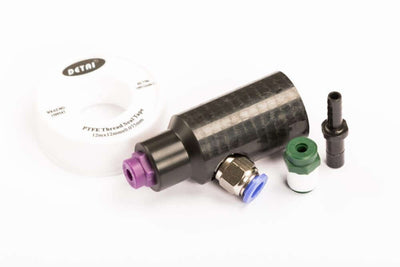
Evaluate pump capacity, chemical compatibility, hose length, nozzle selection, power supply and maintenance together. A larger pump offers little advantage if the supply cannot support it or the application becomes difficult to control.
When comparing softwashing equipment, prioritise controllability, serviceability and suitability for your typical work. Check compatibility across every wetted component, not just the pump.
Working from the ground with suitable equipment may reduce repeated access changes, but only where reach, visibility and control are adequate. Do not overreach with poles or substitute an unstable working position for properly planned access.
4. Turn the Method Statement into a Practical Working Sequence
A method statement should explain how the job will actually run. If it bears little resemblance to the site, it will not help the team work safely or efficiently.
Templates can provide a useful starting structure. SoftWash UK’s risk assessment and method statement pack for exterior cleaning should be adapted to the specific site, people, equipment, substances and environmental risks rather than treated as automatic compliance.
A practical site workflow
- Confirm conditions on arrival. Check weather, access, surface condition and any changes since the survey.
- Brief the team and client contact. Agree responsibilities, exclusion zones and emergency arrangements.
- Establish protection. Put access controls, drainage measures and protection for sensitive areas in place.
- Position equipment. Choose stable locations and hose routes that minimise obstruction and repeated moves.
- Complete the test area. Confirm that the proposed method remains appropriate.
- Work through defined sections. Apply, inspect and complete each section according to the agreed method.
- Check the result. Inspect from suitable viewpoints and assess dry areas where necessary.
- Clean down and hand over. Manage waste, maintain equipment and record any follow-up requirements.
For multi-person teams, assign clear roles without making them rigid. One person may control application while another manages hoses and monitors boundaries. Nobody should be left unsure who is watching pedestrian access or checking runoff.
5. Manage Chemical Application Without Rushing It
Uneven coverage, unnecessary overspray and uncontrolled repeat applications waste both time and product. Efficient application means delivering the correct treatment consistently to the intended surface.
Use measured, repeatable processes
Follow the product label and relevant technical guidance for preparation, application rate, contact time and any rinsing requirements. Use measuring equipment and check dosing systems rather than estimating by eye.
Check that biocidal products are legally permitted for the intended use and user category. Complete a COSHH assessment where required; a safety data sheet informs that assessment but does not replace it.
Never mix chemicals unless the manufacturer expressly specifies that combination. In particular, keep hypochlorite products away from acids and ammonia. Use suitable PPE, and assess exposure controls for the actual task.
Schedule around contact time, not through it
Where a treatment requires a contact period, that time is part of the process. Shortening it can create extra work, while leaving a product longer than instructed can introduce other problems.
During a permitted waiting period, a team may prepare the next section or organise clean equipment, provided this does not compromise supervision of the treated area. Do not leave an application unattended if the risk assessment requires active monitoring.
Monitor wind, temperature, rain and drying conditions. A surface that becomes too hot or dries too quickly may need a different working window, not simply another application.
6. Treat Water, Runoff and Public Access as Production Issues
Environmental controls and safe access are not separate from productivity. If they are missing, the job may have to stop halfway through.
Do not allow chemical solution or contaminated wash water to enter surface-water drains or watercourses. Establish a suitable containment, recovery and disposal arrangement before starting. Obtain any necessary permissions or consents for discharge, including trade effluent consent where applicable; requirements vary across the UK and by discharge route.
A drain cover alone is not a complete wastewater plan. You also need to know where captured liquid will go and how it will be handled lawfully.
On occupied commercial sites, agree phased working areas. Cleaning one controlled section at a time can be more productive than repeatedly stopping because pedestrians need to cross the work area.
For serious DIY users, uncertainty about drainage, hazardous substances or work at height is a reason to seek competent advice, not improvise.
7. Measure Labour Hours, Not Just Finish Time
A job completed in three hours by two operatives uses six operative-hours. A single operative completing it in five hours uses fewer operative-hours, although staffing must still be appropriate for safety and the work involved.
Track useful figures across comparable jobs:
- Travel, set-up, cleaning and pack-down time separately.
- Operative-hours and area completed.
- Water and chemical consumption.
- Equipment faults and interruptions.
- Rework, return visits and customer queries.
As an illustrative example, reducing set-up from 35 to 20 minutes and pack-down from 30 to 20 minutes saves 25 minutes per visit. Across eight comparable visits, that is three hours and 20 minutes without increasing application speed.
Use your own records to establish realistic production rates. Square metres per hour mean little without knowing the substrate, contamination, access and required finish.
Common Time-Saving Myths That Create More Work
“A stronger solution always works faster”
Not reliably. Increasing concentration beyond instructions can raise exposure, damage and environmental risks without resolving an unsuitable method. Diagnose the cause of poor performance before changing the process.
“More pressure means better productivity”
Only where the material and task justify it. Surface damage, disturbed joints and water ingress can turn apparent speed into expensive rework.
“Experienced contractors do not need checklists”
Checklists protect against ordinary omissions when teams are busy. They are particularly useful when vehicles, operatives or job types change.
“Packing away starts when the cleaning stops”
Plan pack-down from the outset. Keep equipment organised throughout the job, while maintaining all necessary protection until the work and associated risks are finished.
Build Skills Before Chasing Higher Output
Training helps contractors make better decisions about surfaces, treatment methods, equipment and site controls. Those decisions often save more time than trying to move faster with the same unresolved problems.
The SoftWash UK Knowledge Centre and Softwashing Knowledge Hub provide supporting educational resources for developing that understanding alongside practical experience.
If you want to see how professional training is structured before committing to a full programme, you can try selected lessons from the SoftWash UK course for free. The preview offers a low-pressure way to explore the teaching style and professional approach before deciding on further training.
Frequently Asked Questions
What is the quickest way to save time on an exterior cleaning job?
Start with preparation: confirm access, inspect the surface, check equipment and plan the working sequence. These steps reduce avoidable delays without compromising the cleaning process.
Does softwashing always take less time than pressure washing?
No. The appropriate method depends on the surface, contamination, treatment requirements and site conditions. Compare the complete job, including protection, contact time, rinsing, waste management and the risk of rework.
Can a dosing system reduce time on site?
A compatible, correctly set-up dosing system can reduce some manual preparation and support consistency. It still requires calibration or output checks, maintenance and use within the equipment and chemical manufacturer’s instructions.
Should a contractor work alone to reduce labour costs?
Only where the work and risk assessment permit it. Some sites need additional people for access control, equipment handling, emergency arrangements or other safety requirements. Assess total labour cost alongside safe delivery and quality.
How can facilities managers help contractors finish efficiently?
Provide accurate site information, confirm water and access arrangements, identify sensitive areas and nominate an available contact. Arrange vehicle movements and notify occupants before the agreed work window.
How do contractors avoid return visits?
Agree the scope and expected outcome beforehand, test the method, inspect completed work and document the handover. Explain any treatment that develops results over time so the client understands what to expect.
Conclusion: Remove Delays, Not Essential Steps
Professional contractors save time on site by making good decisions early and repeating reliable processes. Survey properly, choose a suitable method, organise equipment and plan access, chemical use and wastewater management before cleaning begins.
The aim is not to skip contact time, protection or inspection. It is to eliminate preventable stops, unnecessary handling and work that has to be done twice.
SoftWash UK supplies professional softwashing chemicals, equipment and training. If you are reviewing your workflow, explore the SoftWash UK training course and seek guidance on equipment and product suitability for your work. Start with the bottleneck that costs you the most time, then build a safer, more consistent process around it.