The Most Common Equipment Mistakes New Softwash Contractors Make
The most common equipment mistakes new softwash contractors make are buying unsuitable pumps, using non-chemical-resistant fittings, overspending on kit they do not yet understand, failing to calibrate application rates, and treating softwashing like ordinary pressure washing. In practice, most early problems are not caused by a lack of effort. They come from using the wrong equipment for the chemical, the surface, the access requirements or the job specification.
For UK exterior cleaning contractors, facilities managers, property maintenance teams and serious DIY users, the right softwashing equipment should do three things: apply the correct treatment safely, protect people and property, and deliver consistent results without damaging surfaces. If your system cannot control flow, reach, dilution, dwell time and rinse management, it will eventually cost you money in callbacks, wasted chemical, damaged components or unnecessary safety risks.
This guide explains the equipment mistakes we see most often when contractors are starting out, why they happen, and how to avoid them before they affect your reputation or profitability.
Why Equipment Choices Matter So Much In Softwashing
Softwashing is a controlled chemical cleaning process, not simply low-pressure washing. The equipment has to work with the cleaning chemistry, the surface type and the biological contamination being treated. That includes algae, lichen, mould, mildew, bacteria and other organic growth commonly found on render, roofs, cladding, patios, timber and commercial building exteriors.
If you are new to the method, it is worth spending time in the Softwashing Chemistry Equipment Knowledge Hub, as understanding how chemistry and equipment work together will help you avoid many expensive buying decisions.
Good equipment choices affect:
- Application consistency across the surface
- Chemical dwell time and coverage
- Operator safety and exposure control
- Overspray management
- Protection of plants, metals, glass, seals and coatings
- Speed and profitability on site
- Compliance with COSHH, RAMS and safe systems of work
- The lifespan of pumps, hoses, lances, seals and fittings
Mistake 1: Buying Equipment Before Understanding The Softwash Method
One of the biggest mistakes is buying a pump, hose reel, tank and a few nozzles before properly understanding how professional softwashing is actually carried out. This often happens when a contractor watches a few videos, sees a compact van setup and assumes the equipment is the business.
The equipment is only useful if it supports the method. A contractor cleaning K-render at low level has different requirements from someone treating a mossy roof, applying biocide to commercial cladding, or maintaining a school building exterior during holiday shutdown.
What to do instead
Before purchasing a full setup, define the type of work you intend to target:
- Domestic render cleaning
- Commercial cladding and façade cleaning
- Roof treatment and moss control
- Patio and hard surface treatment
- Facilities maintenance programmes
- Timber, decking or fencing restoration
Then match the equipment to the work. A small trolley system may suit occasional domestic work, while a professional van-mounted setup may be more suitable for regular commercial cleaning. If you are building a professional setup, SoftWash UK’s soft washing equipment range is a useful place to compare application tools, injectors, nozzles and system components designed for chemical work.
Mistake 2: Using Pumps That Are Not Suitable For Softwash Chemicals
Not every pump that moves liquid is suitable for softwashing. Sodium hypochlorite, biocides and surfactant mixes can be harsh on internal components if the pump is not designed with compatible materials. New contractors sometimes use cheap transfer pumps, pressure washer pumps, garden sprayers or agricultural equipment without checking chemical compatibility.
This leads to failed seals, corroded fittings, unreliable flow, leaks and unexpected downtime. In the worst cases, it can also create unsafe chemical exposure for the operator or the public.
Pump considerations for softwashing
- Is the pump compatible with the chemical being used?
- Are the seals, diaphragm and valves resistant to the solution?
- Can the pump provide enough flow at suitable low pressure?
- Is it easy to flush after use?
- Can replacement parts be sourced quickly?
- Is the pump appropriate for the distance and height you need to reach?
For contractors using hypochlorite-based solutions, it is important to understand sodium hypochlorite properly, including its strengths, limitations and compatibility considerations. Equipment failure often comes from treating it like ordinary detergent rather than a highly reactive chemical that requires correct handling.
Mistake 3: Confusing Pressure Washing Equipment With Softwashing Equipment
Pressure washing and softwashing are related exterior cleaning services, but the equipment requirements are different. A pressure washer relies on mechanical force. Softwashing relies on controlled chemical application at low pressure, followed by dwell time and appropriate rinsing or natural weathering, depending on the method and surface.
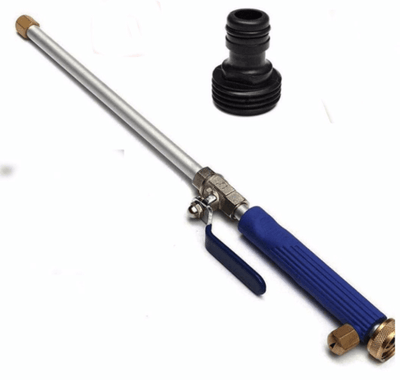
A common mistake is trying to use a pressure washer for everything. This can damage render, force water behind cladding, disturb pointing, mark timber, scar soft stone and cause unnecessary mess. It can also atomise chemical if used incorrectly, increasing overspray and inhalation risks.
| Task | Pressure Washing Approach | Softwashing Approach |
|---|---|---|
| Organic staining on render | May damage delicate surfaces or leave patchy results | Applies cleaning solution at low pressure with controlled dwell time |
| Roof biological growth | High risk of damage and water ingress if misused | Uses appropriate application equipment and controlled treatment process |
| Commercial cladding | May be useful for rinsing when specified correctly | Often requires low-pressure chemical application and safe runoff control |
| Patio algae | Mechanical removal can be effective but may not treat regrowth | Can treat organic growth and support longer-lasting results |
The best contractors understand when to use pressure, when to use chemistry, and when to combine both carefully. The mistake is not owning a pressure washer. The mistake is using it as the answer to every exterior cleaning problem.
Mistake 4: Choosing The Wrong Nozzles And Application Tools
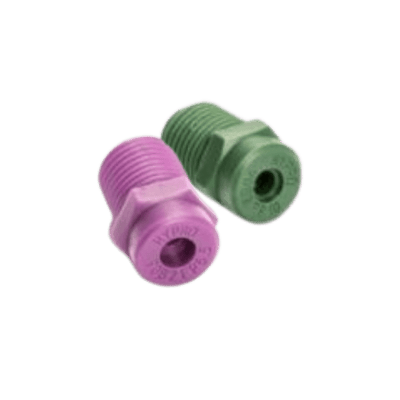
Nozzles are often treated as accessories, but they are central to good softwashing. The wrong nozzle can cause excessive misting, uneven coverage, wasted chemical, poor reach or unnecessary runoff. It can also make a job more dangerous by increasing drift in windy conditions.
Common nozzle errors
- Using a nozzle that atomises chemical too finely
- Choosing too narrow a spray pattern and striping the surface
- Using too much flow on delicate details
- Failing to carry different nozzle options for different surfaces
- Trying to reach too far with unsuitable equipment
- Using metal components that are not compatible with the chemical
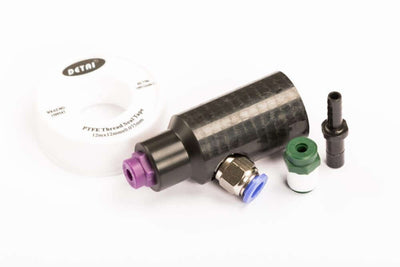
For contractors working with water-fed poles, a dedicated applicator such as the Water Fed Pole Softwash Nozzle can help improve control when applying softwash solutions through appropriate pole systems. The key is to match the nozzle to the job rather than forcing one setup to do everything.
Mistake 5: Ignoring Chemical Compatibility In Hoses, Reels And Fittings
A professional-looking system can still fail if the hose, reel, seals or fittings are not compatible with the chemicals being used. This is one of the most common hidden equipment mistakes. New contractors often focus on pumps and tanks but overlook every other contact point in the system.
Brass, aluminium, mild steel and unsuitable seals can quickly deteriorate when exposed to strong oxidising chemicals. Leaks at couplings and hose ends are not just inconvenient; they can create slip hazards, skin exposure, property damage and environmental issues.
Best-practice equipment checks
- Use chemical-compatible hoses and seals
- Avoid reactive metals where chemical contact is likely
- Label chemical lines clearly
- Flush equipment after use according to the chemical and manufacturer guidance
- Inspect hose ends, clamps and couplings before each job
- Carry spare O-rings, hose clips, connectors and repair fittings
Mistake 6: Not Calibrating Dilution And Flow Rates
Many early softwashing problems come from guessing the mix, guessing the dilution, or assuming an injector is delivering the expected percentage. Without calibration, you are effectively working blind.
Too weak a solution may fail to clean properly, leading to callbacks. Too strong a solution increases risk to surfaces, plants, metals, clothing and the environment. It also wastes chemical and can make the operator appear unprofessional.
If you use metering or injection equipment, it must be understood and tested. Equipment such as the Clever Injector Dosatron can be useful for controlled dosing, but only when the contractor understands its setup, limitations and calibration process.
Simple calibration procedure
- Start with clean water during testing, not active chemical.
- Measure the amount of water passing through the system over a fixed time.
- Measure draw rate from the chemical feed line over the same time period.
- Calculate the actual dilution being delivered at the nozzle.
- Record the result for that setting, hose length, nozzle and flow rate.
- Repeat when you change nozzles, hose length, injector settings or pump output.
- Keep a simple calibration log in the van or job folder.
This does not need to be complicated, but it does need to be done. Professional softwashing is based on repeatable control, not guesswork.
Mistake 7: Underestimating The Role Of Surfactants
Surfactants are often misunderstood by new contractors. Some think they are only added to make foam or improve smell. In reality, the right surfactant can help the cleaning solution cling to vertical surfaces, improve contact time, reduce rapid runoff and support more even coverage.
However, more surfactant is not always better. Too much can cause excessive residue, unnecessary rinsing, slippery surfaces or over-foaming in equipment. The right amount depends on the surface, weather, application method and chemical being used.
If you are unsure where surfactants fit into softwashing, the Knowledge Centre article What Is A Softwash Surfactant explains the purpose and practical role of surfactants in more detail.
Mistake 8: Buying Too Much Equipment Too Soon
It is easy to spend heavily before earning consistently. New contractors sometimes buy large tanks, multiple pumps, reels, specialist lances, roof tools, dosing systems and accessories before they have a clear market, pricing structure or workflow.
This can put pressure on cash flow and encourage rushed jobs just to pay for kit. It can also create a van full of equipment that is not properly understood, maintained or used.
A sensible starter approach
For many new contractors, a better approach is to build in stages:
- Learn the softwashing method, chemistry and safety requirements.
- Start with a controlled setup suitable for the work you genuinely intend to offer.
- Complete training and practise on appropriate test areas.
- Standardise your application and rinsing process.
- Upgrade equipment based on real job data, not guesswork.
- Add specialist tools only when they solve a specific problem.
This staged approach reduces waste and produces better operators. A smaller, well-understood setup is usually safer and more profitable than a large system used badly.
Mistake 9: Poor Tank Choice, Labelling And Vehicle Setup
Tank choice and vehicle layout are often overlooked. A poorly secured tank, unlabelled chemical container or awkward hose route can create serious safety and compliance concerns.
In the UK, contractors should think carefully about transport, segregation, spill control, manual handling, ventilation, chemical labelling and emergency procedures. The van is part of the system. If the vehicle setup is disorganised, the site work usually follows the same pattern.
Practical vehicle setup tips
- Secure tanks properly to the vehicle structure
- Keep chemicals labelled and segregated where required
- Carry spill control materials
- Store PPE where it remains clean and accessible
- Keep Safety Data Sheets available
- Avoid loose hoses and trip hazards
- Plan hose deployment to reduce public interaction
- Keep clean water available for rinsing and emergency use
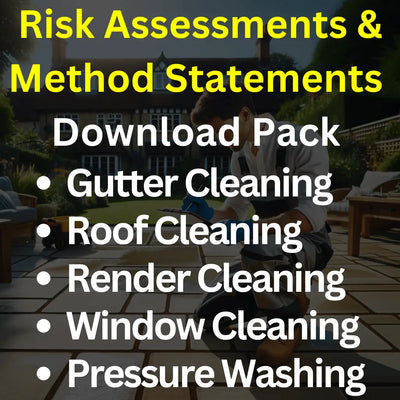
For contractors building safe systems of work, the Risk Assessment and Method Statement Pack for Exterior Cleaning can help structure documentation around equipment use, site hazards, chemical handling and method statements.
Mistake 10: Not Carrying Spares And Backup Equipment
A £2 fitting can stop a £700 job. This is something most contractors learn the hard way. Softwash systems use pumps, hoses, connectors, nozzles, seals, batteries, chargers, clips, valves and filters. Any of these can fail on site.
Experienced contractors carry a small but organised spares kit. It does not need to be excessive, but it should cover the most common failure points.
Useful spares to keep on the vehicle
- Spare nozzles in commonly used spray patterns
- Hose repair joiners and clips
- Chemical-resistant O-rings and seals
- Spare filters or strainers
- Fuses and electrical connectors for 12V systems
- Backup lance or applicator
- PTFE tape suitable for the application
- Basic hand tools
- Spare PPE
- Clean water and eyewash provision
The goal is not to carry a full workshop. It is to avoid cancelling a job because a predictable small component failed.
Mistake 11: Failing To Control Overspray And Runoff
Overspray and runoff control are equipment issues as much as method issues. If your equipment produces too much mist, lacks shut-off control, over-applies chemical or cannot rinse effectively, you increase the risk of damaging plants, staining metals, affecting neighbouring property or creating public complaints.
Common overspray control measures include:
- Checking wind direction before application
- Using lower-mist nozzles where appropriate
- Working in smaller sections
- Pre-wetting and protecting sensitive plants
- Using controlled flow rather than excessive pressure
- Having a rinse plan before applying chemical
- Using spotters when working near boundaries, roads or public areas
Facilities managers and commercial clients increasingly expect evidence that contractors have considered runoff, access, public protection and environmental controls. Good equipment helps you demonstrate that professionalism.
Mistake 12: Using Chemicals Without Understanding Their Equipment Demands
Chemicals behave differently, and your equipment setup should reflect that. Sodium hypochlorite, DDAC-based biocides, surfactants, degreasers, stain removers and brighteners all have different handling and application considerations.
For example, a biocide may be applied as part of a longer-term treatment process, while hypochlorite-based cleaning is often used for more immediate organic stain removal. Understanding DDAC is useful for contractors who carry out maintenance treatments or want to understand the role of quaternary ammonium compounds in exterior cleaning.
Equipment should be selected and maintained according to the chemical being used, the Safety Data Sheet, COSHH assessment and manufacturer instructions. Never mix chemicals unless the process is specified by competent guidance. In particular, hypochlorite must never be mixed with acids or incompatible products, as dangerous gases can be released.
Quick Equipment Mistake Checklist
| Equipment Mistake | Likely Consequence | Better Practice |
|---|---|---|
| Using non-compatible pumps | Leaks, seal failure, unsafe chemical exposure | Select pumps designed for the chemical and application method |
| Guessing dilution | Poor results or over-strong application | Calibrate injectors, pumps and nozzles |
| Wrong nozzle choice | Misting, drift, striping or wasted chemical | Carry multiple nozzles and match them to the surface |
| Unlabelled tanks and containers | Compliance and safety risks | Use clear labelling and correct storage procedures |
| No spares kit | Lost jobs and wasted travel time | Carry seals, connectors, nozzles and basic repair items |
| Over-reliance on pressure washing | Surface damage and water ingress | Use low-pressure chemical application where appropriate |
| No rinse or runoff plan | Plant damage, staining and complaints | Plan containment, rinsing and protection before application |
Step-By-Step: How To Choose Your First Softwash Equipment Setup
If you are starting from scratch, use this simple process before spending money on equipment.
- Define your target work. Decide whether your main jobs will be render, roofs, cladding, patios, timber or maintenance treatments.
- Understand the chemicals. Learn the active ingredients, dilution ranges, PPE requirements and surfaces they are suitable for.
- Check access requirements. Consider working height, hose runs, water supply, public access and whether poles, towers or other access methods are needed.
- Select compatible core components. Choose pumps, hoses, seals, fittings and tanks designed for chemical use.
- Choose nozzles and application tools. Match spray patterns, flow and reach to your work type.
- Plan flushing and maintenance. Build maintenance into your daily routine from the beginning.
- Prepare documentation. Complete COSHH assessments, RAMS, SDS access and emergency planning.
- Practise and calibrate. Test with water, record flow rates and understand your system before using active chemical on client property.
- Review after real jobs. Upgrade only when you know what problem the new equipment will solve.
Contractors who want a more structured route can consider the Soft Wash Training Course, which is designed to help operators understand method, safety, equipment selection and professional softwashing practice rather than simply copying a setup.
If this is an area you want to understand properly before committing to full training, you can start by accessing the free SoftWash UK course preview. It includes selected lessons from the full training course and is designed to help contractors see whether professional softwashing training is the right next step.
Safety And Best-Practice Notes For UK Contractors
Softwashing involves chemical use, work at height considerations, public safety, environmental controls and professional judgement. Equipment alone will not keep you safe. You need a safe system of work.
Key safety points
- Complete a site-specific risk assessment before starting work
- Use appropriate PPE, including eye, skin and respiratory protection where required
- Read and follow Safety Data Sheets and product instructions
- Carry out COSHH assessments for substances used
- Never mix incompatible chemicals
- Protect plants, metals, glass and sensitive surfaces
- Control public access and trip hazards from hoses
- Flush equipment safely after use
- Store and transport chemicals responsibly
- Train staff before allowing them to apply chemical treatments
Good contractors do not rely on luck or habit. They use documented processes, suitable equipment and trained judgement to reduce risk.
Common Myths About Softwash Equipment
Myth 1: The most powerful pump is always best
Power is not the same as control. A pump that delivers excessive flow can create runoff, waste chemical and increase overspray. The right pump is the one that delivers the required solution safely and consistently for the job.
Myth 2: Any hose will do
Hose compatibility matters. Unsuitable hoses and fittings can become brittle, leak, swell or fail. Always check compatibility with the chemical and working pressure.
Myth 3: A bigger tank makes you more professional
A larger tank may help on certain commercial jobs, but it also affects payload, vehicle handling, storage and chemical management. Professionalism is about safe, repeatable work, not simply carrying more liquid.
Myth 4: Softwashing is just spraying and waiting
Professional softwashing involves survey, surface assessment, chemical selection, dilution, application technique, dwell time, agitation where needed, rinsing strategy, runoff control and post-work checks.
Frequently Asked Questions
What equipment does a new softwash contractor need?
A new softwash contractor typically needs a chemical-compatible pump or application system, suitable hoses and fittings, controlled nozzles, tanks or containers, PPE, measuring equipment, flushing arrangements, access equipment where required, and proper safety documentation. The exact setup depends on whether you are cleaning render, roofs, cladding, patios or other exterior surfaces.
Can I use my pressure washer for softwashing?
A pressure washer may be useful for rinsing or for separate pressure washing tasks, but it should not be treated as a direct replacement for softwash application equipment. Softwashing requires low-pressure controlled chemical application. Using high pressure on delicate surfaces can cause damage, water ingress and unnecessary risk.
Why do softwash pumps fail so quickly?
Softwash pumps usually fail early because they are not chemically compatible, they are not flushed correctly, they are run dry, filters are blocked, incompatible fittings are used, or the system is poorly maintained. Choosing the right pump and following a maintenance routine will greatly reduce failures.
Do I need a Dosatron or injector system when starting out?
Not every beginner needs an injector system immediately, but dosing equipment can help improve consistency when used correctly. The important point is that any injector must be calibrated and understood. Guessing the delivered dilution is a common cause of poor results and unnecessary risk.
What is the biggest equipment mistake in softwashing?
The biggest mistake is buying equipment without understanding the softwashing process. Contractors often focus on pumps and tanks before learning chemistry, safety, dilution, access, runoff control and surface suitability. Training and method should come before major equipment investment.
How often should softwash equipment be checked?
Softwash equipment should be visually checked before every job, flushed as required after use, and maintained on a scheduled basis. Hoses, seals, filters, nozzles and fittings should be inspected regularly because small failures can quickly become safety or quality problems on site.
Conclusion: Buy For Control, Safety And Repeatability
The best softwash equipment is not always the biggest, most expensive or most complicated setup. It is the equipment that allows you to apply the correct solution safely, consistently and profitably for the work you actually do.
Most new contractor mistakes come from rushing the buying process, copying another operator’s setup, ignoring chemical compatibility, failing to calibrate dilution, or underestimating safety and compliance. If you take time to understand the method first, your equipment choices become much clearer.
SoftWash UK supports contractors, property maintenance professionals and serious DIY users with professional softwashing chemicals, equipment, training and educational resources. If you are building or improving your setup, explore the SoftWash UK Knowledge Centre, compare suitable equipment, and invest in training before costly mistakes become part of your learning curve.
For practical next steps, review your current equipment against the checklist above, identify weak points in compatibility or control, and speak to SoftWash UK about suitable products, documentation and training to help you work more safely and professionally.