The Most Common Equipment Mistakes New Softwash Contractors Make
New softwash contractors usually make equipment mistakes in five areas: choosing the wrong pump system, using incompatible hoses and fittings, applying chemicals without accurate dilution control, relying on pressure instead of controlled low-pressure application, and failing to plan for safety, rinsing and chemical containment. These mistakes can lead to poor results, damaged surfaces, wasted chemical, unsafe working practices and expensive call-backs.
Softwashing is not simply “pressure washing with chemicals”. It is a controlled exterior cleaning method that relies on the right chemical, the right dwell time, the right application equipment and the right safety process. For UK exterior cleaning contractors, property maintenance teams, facilities managers and serious DIY users, getting the equipment set-up right from the start is one of the quickest ways to improve results and reduce risk.
This guide explains the most common equipment errors new softwash operators make, why they happen, and how to avoid them in real-world work on render, roofs, cladding, paving, patios, commercial buildings and domestic properties.
Quick Answer: What Equipment Do New Softwash Contractors Most Often Get Wrong?
The most common equipment mistakes are:
- Buying a pump that is not suitable for sodium hypochlorite, biocides or softwash chemicals.
- Using pressure washing equipment as the main application method.
- Failing to control chemical dilution accurately.
- Using hoses, seals, connectors and lances that degrade quickly with chemical exposure.
- Choosing nozzles that over-apply, mist excessively or create poor coverage.
- Not carrying enough clean water for rinsing, spill response and plant protection.
- Ignoring PPE, labels, SDS information, RAMS and site-specific risk assessment.
- Building a system before understanding the surfaces, access requirements and chemical process.
Most of these problems are avoidable with proper planning, suitable equipment and basic training. If you are new to the industry, a structured course such as the SoftWash UK Soft Wash Training Course can help you understand equipment selection, chemical application, safety and professional workflow before you invest heavily in kit.
Mistake 1: Buying Equipment Before Understanding the Softwashing Process
One of the biggest mistakes is buying a van-load of equipment before understanding what softwashing actually requires. New contractors often focus on pumps, reels and tanks first, when they should begin with the cleaning method, substrate type and site risk.
Softwashing involves applying a cleaning solution at low pressure, allowing the correct dwell time, managing runoff, protecting sensitive materials, and rinsing where required. The equipment must support that process. If the process is misunderstood, the equipment choice is usually wrong.
Real-world example
A contractor buys a large high-flow pump expecting faster work on render. On site, the pump applies too much solution too quickly, causes unnecessary runoff, increases chemical use, and makes plant protection harder. A more controlled application system with suitable nozzles would often produce a better result with less waste.
Better approach
- Decide what work you will mainly do: render, roofs, cladding, patios, commercial façades or maintenance treatments.
- Choose equipment based on flow control, chemical compatibility and reach.
- Understand the chemicals you intend to use before buying pumps, hoses and seals.
- Build a simple, reliable system before investing in complex upgrades.
The Softwashing Knowledge Hub is a useful starting point for understanding the principles behind softwashing before choosing equipment.
Mistake 2: Using the Wrong Pump for Chemical Application
Your pump is the heart of your softwash system. The wrong pump can fail early, create inconsistent application, leak chemical, or make the job unnecessarily difficult.
Many new contractors choose a pump based only on litres per minute or price. That is a mistake. For softwashing, you must consider chemical compatibility, pressure range, duty cycle, flow rate, priming ability, maintenance access and the type of work being carried out.
Key pump considerations
- Chemical resistance: wetted parts must be suitable for the chemicals being used.
- Flow rate: too little flow slows down large façades; too much flow wastes solution.
- Pressure: softwashing requires controlled low pressure, not aggressive force.
- Reliability: pumps used daily need robust components and easy maintenance.
- Power supply: battery, mains or engine-driven systems all have different use cases.
Common pump mistake
Using a cheap transfer pump or non-compatible pump for sodium hypochlorite-based work is false economy. It may work briefly, then seals, diaphragms or fittings can degrade. The result is downtime, leaks and potential safety issues.
Professional contractors should explore purpose-specified soft washing equipment rather than adapting unsuitable components without understanding their limitations.
Mistake 3: Thinking More Pressure Means Better Cleaning
Softwashing is often confused with pressure washing, but the two methods are very different. A common beginner mistake is applying softwash chemicals with too much pressure or using a pressure washer as the main cleaning tool on delicate surfaces.
High pressure can damage render, force water behind cladding, disturb roof coverings, mark timber, erode mortar and strip protective coatings. With softwashing, the chemical does most of the cleaning. The equipment’s job is to apply evenly and safely.
Softwashing versus pressure washing equipment
| Factor | Softwashing | Pressure Washing |
|---|---|---|
| Main cleaning action | Chemical reaction and dwell time | Mechanical force from high-pressure water |
| Typical pressure | Low pressure application | High pressure jetting |
| Best for | Organic staining, algae, mould, render, roofs, cladding | Hard surfaces, heavy soil, some paving and concrete work |
| Main risk | Chemical misapplication or poor containment | Surface damage from excessive pressure |
| Skill requirement | Dilution, dwell time, safety and surface knowledge | Pressure control, nozzle selection and surface assessment |
Many professional exterior cleaning businesses use both methods, but they use them for different reasons. The mistake is treating them as interchangeable.
Mistake 4: Poor Chemical Dilution Control
Accurate dilution is essential in softwashing. Too weak and the job may fail. Too strong and you increase risk to plants, metals, coatings, seals, fabrics and surrounding surfaces. You also waste money.
New contractors often mix “by eye”, copy ratios from social media, or fail to account for starting strength, surface condition, weather and application method. This is risky and unprofessional.
Why dilution accuracy matters
- It improves cleaning consistency.
- It reduces chemical waste.
- It helps protect sensitive surfaces.
- It supports safer working practices.
- It makes quoting and repeat work more predictable.
Batch mixing versus injection systems
| Method | Advantages | Limitations | Best suited for |
|---|---|---|---|
| Batch mixing | Simple, low cost, easy to understand | Requires careful measuring and labelling | Small jobs, controlled applications, new operators |
| Proportioning or injection | Efficient, adjustable, reduces manual mixing | Requires calibration and understanding | Regular contractors, larger sites, commercial work |
| Pre-formulated products | Convenient and consistent | Less flexible for unusual situations | Maintenance treatments and defined tasks |
For contractors using proportioning systems, equipment such as the Clever Injector Dosatron can help with controlled dosing, but it must be installed, calibrated and maintained correctly. The equipment does not replace knowledge; it supports good practice.
Mistake 5: Using Incompatible Hoses, Seals and Fittings
Hoses and fittings are often treated as minor accessories. In softwashing, they are critical. Chemicals can attack unsuitable materials, causing swelling, cracking, leaks or sudden failure.
New contractors commonly use general garden hose, cheap fittings or components left over from pressure washing. These may not be suitable for repeated chemical exposure.
What to check before use
- Is the hose rated for the intended chemical?
- Are seals and O-rings resistant to the chemicals being used?
- Are fittings secure and easy to isolate if a leak occurs?
- Can the hose be flushed properly after use?
- Is the hose length practical without excessive pressure loss?
It is also sensible to carry spare seals, hose clips, quick connectors and isolation valves. A small fitting failure can stop an entire job, especially on commercial sites where access windows are limited.
Mistake 6: Choosing the Wrong Nozzles and Application Tools
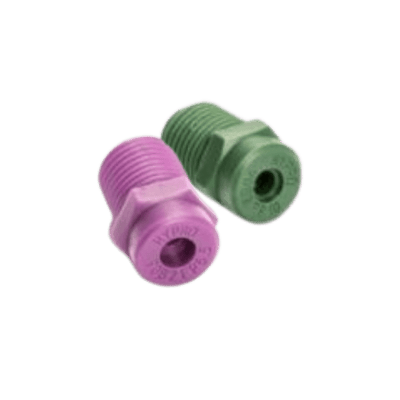
Nozzle selection has a major impact on coverage, chemical use and safety. A poor nozzle can atomise chemical into unwanted areas, cause streaking, create excessive runoff or make it difficult to reach the surface evenly.
New softwash operators often focus on reach alone. Reach is important, but so are droplet size, spray pattern, flow rate and control.
Common nozzle errors
- Using tips that create excessive mist in windy conditions.
- Applying too much product because the nozzle flow is too high.
- Using a pattern that causes striping on render or cladding.
- Lacking the right tool for higher façades or awkward elevations.
- Failing to rinse the nozzle and lance after chemical use.
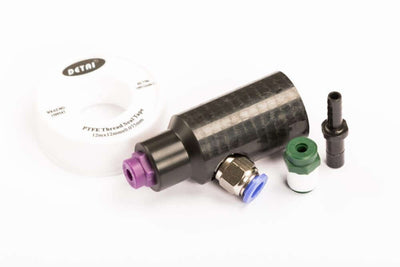
For controlled application from a water-fed pole, a product such as the Water Fed Pole Softwash Nozzle may be useful where suitable for the task. The benefit is not simply reach; it is controlled low-pressure application at height when used as part of a planned system.
Mistake 7: Not Carrying Enough Clean Water
Some beginners load chemical but forget clean water. This is a serious operational mistake. Clean water is needed for pre-wetting, plant protection, rinsing sensitive materials, dilution, emergency wash-down and equipment flushing.
Clean water is needed for:
- Pre-wetting plants, lawns and delicate surfaces.
- Rinsing windows, frames, metals and nearby surfaces.
- Reducing overspray risk.
- Responding to accidental spills or splashes.
- Flushing pumps, hoses, lances and nozzles after use.
- Personal decontamination in the event of exposure.
On domestic work, a customer’s outside tap may not provide enough flow or may not be accessible. On commercial jobs, water access may be restricted or require permission. Always confirm water supply before attending site.
Mistake 8: Poor Tank and Van Set-Up
A softwash van should be safe, organised and easy to operate. A poorly planned set-up leads to spills, cross-contamination, wasted time and unnecessary manual handling.
New contractors often underestimate tank placement, load weight, ventilation, bunding and segregation. Chemicals should not be left unsecured, unlabelled or stored in unsuitable containers.
Best-practice van set-up tips
- Secure tanks and containers so they cannot move in transit.
- Keep chemical containers clearly labelled and upright.
- Separate incompatible products and avoid cross-contamination.
- Use secondary containment where appropriate.
- Carry spill response materials.
- Install reels and valves where they can be operated safely.
- Think through hose routing to avoid trip hazards on site.
Vehicle payload is another overlooked issue. Water is heavy, and a full tank can quickly push a van towards its safe working limits. Contractors should understand their payload capacity and distribute weight responsibly.
Mistake 9: Ignoring PPE and Safety Equipment
Softwashing involves chemical handling, working outdoors, working at height, public interface and potential exposure to plants, pets, vehicles and building materials. Equipment is not just pumps and hoses; it includes PPE and safety controls.
Essential safety equipment may include:
- Chemical-resistant gloves.
- Eye and face protection.
- Suitable footwear with slip resistance.
- Protective clothing or chemical-resistant coveralls where needed.
- Respiratory protection where a risk assessment indicates it is required.
- Clean water for emergency rinsing.
- Barriers, cones and signage for public areas.
- Spill kits and containment materials.
Always read product labels and safety data sheets before use. SoftWash UK provides resources such as Softwash SDS Sheets to help contractors keep safety information accessible and organised.
Mistake 10: Treating All Chemicals as the Same
Different chemicals perform different jobs. New contractors sometimes expect one solution to clean every stain, on every surface, in every condition. This leads to over-application, poor results and unnecessary risk.
For example, organic growth on render may require a different approach from rust staining, oil contamination, tannin staining or lead staining. Equipment selection also changes depending on the product. Some products need careful application, others may require controlled dwell and rinse, and some are ready-to-use rather than mixed on site.
Typical product categories in exterior cleaning
| Cleaning challenge | Typical approach | Equipment consideration |
|---|---|---|
| Algae, mould and organic growth | Softwash treatment or biocidal cleaning process | Low-pressure application, accurate dilution, controlled dwell |
| Rust staining | Specialist rust remover | Targeted application, avoid unnecessary overspray |
| Oil stains on driveways | Degreasing or oil stain treatment | Agitation tools, containment, rinse control |
| Wood brightening | Specialist wood brightener | Gentle application, surface-sensitive rinsing |
For contractors comparing product types, the SoftWash UK soft wash chemicals collection is a useful reference point because it separates products by application and cleaning challenge. For example, a surfactant such as Clever Wash Surfactant may help improve cling and coverage in suitable softwash mixes, whereas a specialist product such as Rust X Pro Rust Stain Remover is designed for a very different problem.
Mistake 11: Failing to Maintain and Flush Equipment
Chemical residues left inside pumps, hoses, lances and nozzles can shorten equipment life. New contractors often finish the visible cleaning work and forget the equipment care stage.
Basic post-job equipment routine
- Safely isolate the chemical supply.
- Flush the system with clean water according to the equipment and chemical requirements.
- Rinse exterior surfaces of pumps, reels, lances and fittings where contamination may have occurred.
- Check hoses and seals for signs of wear, swelling or leaks.
- Empty or secure containers correctly for transport.
- Record any faults or replacements needed before the next job.
This simple routine reduces failures and helps maintain a professional operation. It also prevents arriving at the next job with blocked nozzles, contaminated fittings or damaged seals.
Mistake 12: Not Planning for Access and Working at Height
Softwashing often involves high walls, rooflines, gutters, cladding and awkward elevations. New contractors sometimes assume their equipment will reach everything from ground level. On site, they find obstructions, wind exposure, poor angles and uneven ground.
Access should be assessed before the job. In some cases, water-fed poles are suitable. In other situations, scaffold towers, MEWPs or specialist access planning may be required. Ladders should not be treated as a default solution for chemical work at height.
Access planning checklist
- Can the surface be reached safely from the ground?
- Will the spray pattern remain controlled at that height?
- Is wind likely to carry overspray beyond the work area?
- Are pedestrians, vehicles, neighbours or sensitive areas nearby?
- Is a formal working-at-height plan needed?
- Will the equipment allow safe rinsing and emergency wash-down?
For commercial facilities managers, this planning is especially important because work may take place near entrances, car parks, loading bays or public footpaths.
Mistake 13: Overlooking Documentation, RAMS and Compliance
Professional softwashing is not only about cleaning results. It also involves safety documentation, method statements, COSHH awareness, risk assessment and evidence of competence.
New contractors can lose commercial opportunities because they cannot provide suitable documentation. Facilities managers and property maintenance companies increasingly expect contractors to supply RAMS, SDS information, insurance details and a clear method of work.
A Risk Assessment and Method Statement Pack for Exterior Cleaning can help contractors structure their safety paperwork and demonstrate a more professional approach. For broader safety reference, the HSE Soft Washing Full Collection may also be useful for understanding documentation and compliance expectations.
Step-by-Step: How to Build a Sensible Starter Softwash Equipment Set-Up
If you are starting out, do not try to build the most complex rig immediately. Build a controlled, safe and maintainable system that matches the work you intend to do.
- Define your target work. Decide whether you will focus on domestic render, roofs, patios, driveways, cladding or commercial maintenance.
- Learn the cleaning process. Understand dilution, dwell time, surface sensitivity, rinsing and runoff before buying advanced equipment.
- Choose a compatible pump system. Select equipment suitable for the chemicals and flow rates you need.
- Use chemical-resistant hoses and fittings. Do not rely on unverified components.
- Select nozzles for control. Prioritise even coverage, suitable droplet size and minimal drift.
- Plan water supply. Carry or confirm enough clean water for rinsing, emergency use and flushing.
- Include PPE and spill response. Treat safety kit as part of your core equipment, not an optional extra.
- Prepare documentation. Keep SDS, RAMS, labels and records available for clients and site managers.
- Test on low-risk jobs. Gain experience on manageable projects before taking on complex commercial work.
- Maintain equipment after every job. Flush, inspect and record faults immediately.
Common Softwash Equipment Myths
Myth 1: “A bigger pump always means a better system”
Not necessarily. A bigger pump can apply too much solution, increase runoff and waste chemical. Control is often more important than raw flow.
Myth 2: “Any hose will do”
Incorrect. Hoses, seals and fittings must be suitable for the chemicals used. Incompatible parts can fail quickly and create safety risks.
Myth 3: “Softwashing is just spraying chemical and leaving it”
Good softwashing involves assessment, preparation, controlled application, dwell management, plant protection, rinsing decisions and safe site management.
Myth 4: “Training is only for beginners”
Training benefits new and experienced contractors. It can improve efficiency, safety, quoting, compliance and confidence on more complex sites. Ongoing learning through resources such as the SoftWash UK Podcast can also help contractors keep improving their technical and business knowledge.
Equipment Best-Practice Checklist for New Contractors
- Use pumps, hoses, seals and fittings compatible with your chosen chemicals.
- Keep application pressure low and controlled.
- Measure dilution accurately and avoid guessing.
- Carry enough clean water for rinsing and emergency response.
- Use suitable PPE and site safety equipment.
- Check weather conditions, especially wind and temperature.
- Protect plants, metals, painted surfaces and sensitive materials.
- Flush equipment after every job.
- Carry spare nozzles, seals, connectors and isolation valves.
- Keep SDS, RAMS and product information available.
- Invest in training before taking on high-risk or large commercial work.
FAQ: Softwash Equipment Mistakes
What is the most important piece of softwash equipment for a new contractor?
The most important item is a suitable chemical-compatible application system, including pump, hose, fittings and nozzle. However, PPE, clean water supply, correct chemicals and safety documentation are equally important. A pump alone does not make a professional softwash set-up.
Can I use a pressure washer for softwashing?
A pressure washer may be used in some exterior cleaning processes, especially for rinsing or hard surface cleaning, but softwashing should generally be applied at low pressure. Using high pressure on render, roofs or cladding can cause damage. The method should be chosen according to the surface and the type of contamination.
Do I need a chemical injector or can I batch mix?
Both methods can work. Batch mixing is simple and suitable for many small or controlled jobs, provided you measure accurately and label containers correctly. Injection or proportioning systems can improve efficiency on regular or larger work, but they must be calibrated and maintained. Beginners should understand dilution principles before relying on automated dosing.
Why do softwash hoses and fittings fail?
They usually fail because they are not chemically compatible, are not flushed after use, are exposed to unnecessary pressure, or are made from low-quality materials. Regular inspection and using proper components can prevent many leaks and breakdowns.
What safety documents should a softwash contractor carry?
Contractors should have access to relevant safety data sheets, COSHH information, risk assessments, method statements and product labels. Commercial clients may request this before work starts. Good documentation also helps staff follow a consistent and safer process.
Is training worth it before buying softwash equipment?
Yes. Training can prevent costly buying mistakes and help contractors understand chemical use, surface assessment, equipment selection, plant protection, safety and compliance. It is usually cheaper to learn the correct process first than to replace unsuitable equipment later.
Conclusion: Good Equipment Choices Create Safer, More Profitable Softwashing
The most common equipment mistakes new softwash contractors make are rarely caused by laziness. They usually happen because the contractor buys kit before understanding the process. Softwashing requires controlled application, chemical knowledge, surface awareness, safety planning and reliable equipment that is suitable for the job.
Start with the fundamentals: use compatible pumps and fittings, control your dilution, choose the right nozzles, carry clean water, protect the site and maintain your equipment. Avoid the temptation to copy another contractor’s rig without understanding why it works for their type of work.
SoftWash UK supplies professional softwashing chemicals, equipment and training for UK contractors who want to work safely and responsibly. If you are building a new set-up or improving an existing one, explore the SoftWash UK website, compare suitable softwashing equipment, review professional softwash chemicals, and consider formal softwash training before taking on higher-risk or commercial projects.
The right equipment will not make up for poor technique, but the right knowledge and the right equipment together will help you deliver better results, reduce call-backs and operate with greater confidence.