Can You Learn Softwashing Online?
Yes, you can learn a great deal about softwashing online, especially the principles, safety procedures, chemical handling, equipment selection, surface assessment, quoting and business systems. For UK exterior cleaning contractors, property maintenance professionals, facilities managers and serious DIY users, online softwash training can be an effective starting point and, when well structured, a practical route into professional standards.
However, softwashing is not something to treat as a few YouTube tips and a chemical shopping list. Real competence comes from combining online learning with careful practice, risk assessment, correct product selection, live site experience and a clear understanding of UK health and safety responsibilities. The best online softwashing training should teach you how to think on site, not just what to spray.
This guide explains what you can realistically learn online, what still needs hands-on practice, how to choose a credible course, and how to avoid the common mistakes that cause poor results, damage, complaints or unsafe working.
What Does “Learning Softwashing Online” Actually Mean?
Softwashing is a controlled exterior cleaning method that uses low-pressure application, specialist cleaning solutions and dwell time to treat organic growth such as algae, lichen, mould and biofilm. It is commonly used on render, roofs, cladding, patios, walls, fencing, driveways and commercial buildings where high-pressure washing may cause surface damage.
Learning softwashing online should cover far more than simply mixing chemicals. A proper online programme should help you understand:
- How to identify different types of soiling and staining.
- Which surfaces are suitable for softwashing and which need caution.
- How softwash chemicals work and when they should be avoided.
- How to protect people, pets, plants, roofs, metals, coatings and drainage routes.
- How to apply cleaning solutions safely using suitable equipment.
- How to rinse, neutralise or manage residues where needed.
- How to carry out risk assessments and method statements.
- How to quote jobs commercially and explain the process to customers.
Good online softwash training gives you the framework. Practical competence comes from applying that framework carefully on real properties, starting with low-risk surfaces and working up to more complex jobs.
What Parts of Softwashing Can Be Learned Online?
Many of the most important parts of softwashing are knowledge-based. In fact, many on-site mistakes happen because the operator has not learned the theory properly before picking up a sprayer.
Surface Identification and Surveying
Online training is well suited to teaching surface recognition. Contractors need to understand the difference between painted render, monocouche render, K Rend-type finishes, concrete roof tiles, clay tiles, natural stone, timber, uPVC, powder-coated metal and composite cladding.
Each surface behaves differently. For example, a low-pressure softwash that is suitable for algae-covered render may not be suitable for certain delicate coatings, oxidised metalwork or untreated timber without additional consideration. A facilities manager may also need to know whether a building elevation can be treated from access equipment, water-fed pole systems or a ground-based application method.
Chemical Knowledge and Product Selection
Online learning can explain how different softwash chemicals are used, what their limitations are and why product labels, safety data sheets and manufacturer guidance matter. Contractors commonly work with oxidising solutions, biocides, surfactants, stain removers and specialist cleaners for specific problems such as rust, oil, lead staining or organic growth.
SoftWash UK supplies professional soft wash chemicals for different exterior cleaning applications, but the important point is knowing when a product is appropriate and when it is not. A responsible contractor should never choose a chemical simply because it is strong. The correct approach is to match the product to the surface, the contamination, the weather, the exposure risk and the required result.
Equipment Set-Up and Application Methods
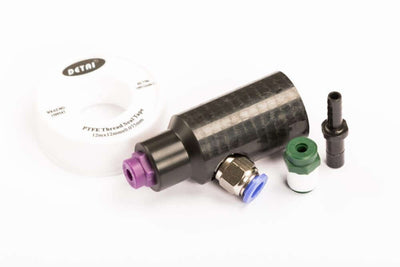
Online training can show how softwash systems are assembled and used, including pumps, hoses, nozzles, water-fed poles, chemical-resistant fittings, dosing systems and rinse equipment. It can also explain the difference between batch mixing, downstream or injection systems, and dedicated softwash delivery units.
For contractors building a professional set-up, SoftWash UK’s soft washing equipment range is useful to compare different application options. Online training should help you understand why flow rate, pressure, chemical compatibility and spray control matter on real sites.
Risk Assessment, RAMS and Safe Working Procedures
Safety and compliance are areas where online learning can be particularly valuable. Before treating a property, a contractor should be able to identify hazards such as public access, overspray drift, fragile surfaces, working at height, chemical storage, drainage routes, neighbouring vehicles, ponds, planting and vulnerable building materials.
The SoftWash UK Knowledge Centre article Why Do Softwash Contractors Need Risk Assessments is a useful supporting resource for understanding why paperwork is not just a box-ticking exercise. A proper softwash risk assessment protects the customer, the public, your staff, your business and the environment.
Quoting, Customer Communication and Business Processes
Softwashing is also a business skill. Online training can teach you how to survey jobs, ask the right questions, explain expected results, price for time and risk, manage customer expectations and avoid underquoting complex work.
This matters because not every stain disappears instantly, not every surface should be treated the same way, and some jobs require staged cleaning or aftercare. Contractors who communicate clearly tend to have fewer disputes and better repeat business.
What Can’t Be Fully Learned Online?
Online learning is valuable, but it has limits. You cannot become fully competent by watching videos alone. Practical experience is essential because every property behaves slightly differently.
| Can Be Learned Online | Needs Practical Experience |
|---|---|
| Softwashing theory and terminology | Judging live surface condition under site conditions |
| Chemical safety principles and SDS use | Controlling overspray in wind and awkward access areas |
| Equipment options and system layouts | Handling hoses, poles and pumps around real obstacles |
| Risk assessment structure | Making dynamic decisions when site conditions change |
| Quoting structure and business systems | Estimating time accurately after seeing many job types |
| Product selection principles | Recognising subtle surface reactions during application |
For example, online lessons can explain how to protect plants, but real-world application teaches you how much water is needed before, during and after treatment, how wind affects drift, and how different planting reacts near walls, patios and rooflines.
Who Is Online Softwashing Training Suitable For?
Exterior Cleaning Contractors
For pressure washing businesses, window cleaners, roof cleaners and property cleaning companies, online softwash training can provide a structured route into higher-value exterior cleaning work. It is particularly useful if you already understand customer service, access, water management and working outdoors, but need proper softwashing knowledge before offering the service commercially.
If you are planning to become a softwash contractor, online learning can help you understand the equipment, training, insurance, risk management and business decisions needed before investing heavily.
Property Maintenance Professionals
Maintenance teams responsible for schools, housing associations, estates, retail units, industrial sites or commercial buildings can use online softwashing education to improve specification, contractor supervision and planned maintenance.
Even if your team does not carry out the work directly, understanding softwashing helps you assess contractor competence and choose appropriate methods for different building materials.
Facilities Managers
Facilities managers often need to balance appearance, safety, access disruption, tenant complaints and budget. Online training can help you understand what a professional softwash specification should include, what questions to ask contractors and why the cheapest quote may not be the safest or most effective option.
Serious DIY Users
Some homeowners and serious DIY users want to clean patios, walls or outbuildings themselves. Online learning can help, but DIY users should be especially cautious. Chemical handling, PPE, plant protection, runoff control and surface compatibility still matter, even on your own property.
If a job involves height, roofs, neighbouring property, public footpaths, delicate surfaces or large chemical volumes, it is usually better to use a trained and insured contractor.
How to Learn Softwashing Online: A Practical Step-by-Step Route
The safest way to learn softwashing is to build knowledge in stages. Do not start with the most difficult roof or render job you can find. Start with fundamentals, then apply them gradually.
Step 1: Learn the Basic Method
Understand what softwashing is and what it is not. Softwashing is not simply low-pressure spraying. It is a controlled process involving inspection, preparation, product choice, application, dwell time, monitoring, rinsing where appropriate and aftercare.
Step 2: Study Surfaces and Soiling
Learn to identify organic growth, carbon staining, rust staining, oil staining, lead staining, tannin marks, efflorescence and general atmospheric soiling. Different problems require different products and expectations.
For example, algae on render is not the same as rust staining on stone or oil contamination on block paving. Treating every stain with the same approach is one of the quickest ways to get poor results.
Step 3: Understand Chemical Safety
Before using any softwash product, read the label, safety data sheet and technical guidance. Learn about PPE, storage, transport, dilution, incompatibilities, first aid measures and environmental precautions.
Never mix chemicals unless the manufacturer specifically states it is safe to do so. Never guess application rates. Never decant chemicals into unlabelled containers. Never treat chemical handling as casual garden maintenance.
Step 4: Learn Equipment Control
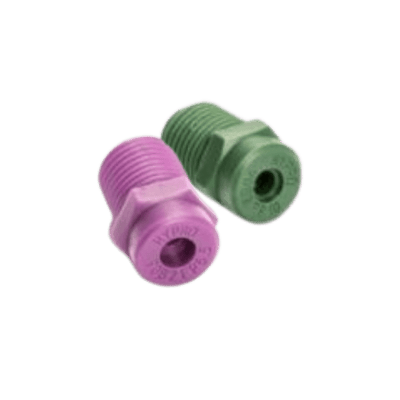
Training should explain how to choose nozzles, control application patterns, avoid excessive atomisation, reduce drift and maintain consistent coverage. A good operator applies product carefully and deliberately, rather than flooding the surface or allowing overspray to travel.
Step 5: Practise on Low-Risk Areas
Start with your own test areas or low-risk surfaces where you have permission and control. Observe dwell times, run-off behaviour, rinsing needs and surface response. Keep notes. This is how you build judgement.
Step 6: Build Site Documentation
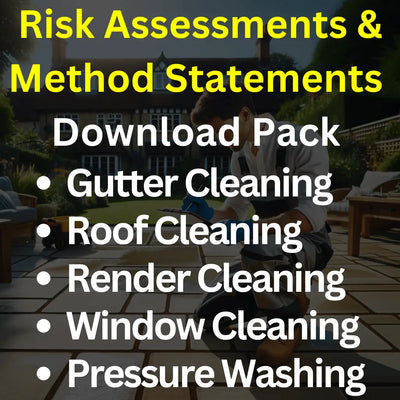
For commercial work, you should be able to produce appropriate risk assessments, method statements, COSHH information and site-specific procedures. SoftWash UK’s Risk Assessment and Method Statement Pack for Exterior Cleaning can help contractors understand the type of documentation expected when working professionally.
Step 7: Continue Professional Development
Softwashing is not a one-day learning exercise. Surfaces, coatings, access methods, regulations and best practice evolve. Ongoing education helps contractors reduce mistakes and improve profitability.
The SoftWash UK softwashing training and business hub is a useful place to continue building knowledge around training, compliance, business systems and professional softwashing standards.
Online Softwashing Training Versus In-Person Training
Both online and in-person learning have value. The right option depends on your experience, learning style, budget, risk profile and business goals.
| Training Type | Advantages | Limitations | Best For |
|---|---|---|---|
| Online softwashing training | Flexible, repeatable, structured, good for theory, safety and business systems | Does not physically supervise your technique on site | Contractors starting out, staff training, facilities managers, serious DIY users |
| In-person training | Hands-on correction, live equipment use, practical demonstrations | Usually fixed date and location, may be harder to revisit later | Contractors who want practical coaching and direct feedback |
| Blended learning | Combines theory, video lessons, documentation and practical application | Still requires commitment and practice | Professional contractors building a long-term softwashing service |
For most UK contractors, the strongest route is blended learning: study the theory online, set up your equipment properly, practise under controlled conditions, then progress to commercial work with appropriate documentation, insurance and ongoing support.
How to Choose a Good Online Softwashing Course
Not all online training is equal. Some content gives useful professional guidance, while other material is little more than surface-level tips. A good course should help you reduce risk, improve results and make better decisions on site.
Look for Structured Training, Not Random Videos
A credible course should have a logical sequence. You should not be left guessing what to learn next. Look for modules covering safety, chemicals, surfaces, equipment, processes, quoting and business development.
Check for UK Relevance
Softwashing advice from overseas can be useful, but UK contractors need UK-relevant guidance. This includes British weather, UK building materials, HSE expectations, COSHH principles, insurance requirements, customer expectations and common surfaces found on UK homes and commercial buildings.
Look for CPD or Professional Standards
Professional development matters, especially if you are building a commercial exterior cleaning business. The SoftWash UK Knowledge Centre explains What Is CPD Certified Softwash Training and why structured learning can be helpful for contractors who want to evidence ongoing competence.
Make Sure Safety Is Central
If a course focuses mainly on dramatic before-and-after photos and barely discusses risk assessment, chemical handling, PPE, plant protection and site control, be cautious. Strong results are important, but safe and repeatable methods are what protect your business.
Check Whether Business Skills Are Included
Many new contractors underestimate quoting and customer communication. A good course should help you avoid underpricing, explain limitations clearly and build a professional process from enquiry to completion.
SoftWash UK’s soft wash training course is designed for contractors who want structured education rather than piecemeal advice, covering the practical and commercial knowledge needed to work more professionally.
Safety and Best-Practice Notes for Online Learners
If you are learning softwashing online, safety needs to be treated as part of the method, not an optional extra. The following points are based on common issues seen in exterior cleaning work across the UK.
- Carry out a site-specific risk assessment. Do not rely on a generic template without considering the actual property.
- Use appropriate PPE. This may include eye protection, gloves, suitable footwear, protective clothing and respiratory protection depending on the product and task.
- Read SDS and product labels. Safety data sheets explain hazards, controls, storage and emergency measures.
- Protect vegetation. Pre-wet, shield and rinse plants where required. Do not assume established plants are immune.
- Manage runoff. Consider drains, ponds, lawns, neighbouring land and public areas.
- Control overspray. Wind can turn a simple job into a complaint. Adjust method or postpone work if conditions are unsuitable.
- Avoid unsuitable surfaces. Some coatings, metals, timbers or delicate finishes may react badly to the wrong chemical.
- Do not work at height without proper planning. Roof work, ladders, towers and MEWPs require appropriate competence and controls.
- Keep records. Photos, survey notes, RAMS, product information and customer approvals can be valuable if a question arises later.
Contractors should also consider whether their insurance properly covers softwashing activities. The Knowledge Centre guide on softwash contractor insurance is a helpful starting point for understanding the types of cover commonly relevant to professional exterior cleaning work.
Common Mistakes When Trying to Learn Softwashing Online
Mistake 1: Copying Chemical Mixes Without Understanding Context
One of the biggest problems online is that people share chemical recipes without explaining the surface, temperature, soiling level, dwell time, rinse method, surrounding risks or product type. What worked on one driveway or rendered wall may be unsuitable elsewhere.
Professional softwashing is not about using the strongest possible solution. It is about using the right method for the surface and situation.
Mistake 2: Thinking Softwashing Means No Rinsing Ever
Some treatments are left to weather naturally, while others require controlled rinsing or follow-up depending on the surface, product and job objective. A trained operator understands when each approach is appropriate.
Mistake 3: Ignoring Weather Conditions
Wind, rain, direct sun and temperature all affect softwashing. Strong wind increases drift. Heavy rain can reduce dwell time and increase runoff. Hot sun can dry products too quickly. Good training helps you decide whether to continue, adjust or postpone.
Mistake 4: Treating All Green Growth the Same
Algae, moss, lichen and biofilm respond differently. Heavy moss on a roof may require physical removal before treatment, whereas algae on render may be treated with a carefully controlled softwash process. Lichen may need longer-term treatment expectations.
Mistake 5: Starting With High-Risk Jobs
New operators sometimes begin with roofs, high render elevations or commercial sites because the job value looks attractive. This can be risky. Build experience on simpler projects first, then move into more complex work when your process, documentation and equipment are ready.
Useful Softwashing Knowledge to Build Before Your First Paid Job
Before offering softwashing commercially, you should be confident with the following areas:
- How to survey a property and identify fragile or reactive materials.
- How to decide whether softwashing, pressure washing, manual removal or specialist stain treatment is suitable.
- How to explain realistic outcomes to a customer.
- How to protect plants, pets, vehicles, people and neighbouring property.
- How to use, store and transport chemicals responsibly.
- How to complete RAMS and COSHH-related documentation where required.
- How to maintain pumps, hoses, nozzles and application equipment.
- How to price for preparation, protection, application, rinsing, travel, risk and business overheads.
If you want to see how professional softwashing training is structured before committing to the full programme, you can try selected lessons from the SoftWash UK course for free. It is a useful way to preview the training and understand the standards, safety thinking and practical approach behind professional softwashing.
Can Facilities Managers Use Online Softwashing Training Without Becoming Contractors?
Yes. Facilities managers do not always need to carry out softwashing themselves to benefit from online training. In many cases, the main value is being able to specify work properly and assess contractor competence.
A facilities manager who understands the basics can ask better questions, such as:
- What surface assessment has been carried out?
- What products will be used and are SDS available?
- How will plants, vehicles, pedestrians and drainage be protected?
- Is the contractor insured for this type of work?
- Will RAMS be supplied before work begins?
- What result is expected immediately and what may improve over time?
This helps avoid vague specifications such as “clean all walls” and encourages a safer, more professional scope of works.
Frequently Asked Questions About Learning Softwashing Online
Can I become a professional softwash contractor from an online course?
An online course can give you the knowledge base to start building a professional softwashing service, but you still need practical experience, suitable equipment, insurance, risk assessments and responsible chemical handling. The best approach is to combine structured online learning with careful practice and ongoing development.
Is YouTube enough to learn softwashing?
YouTube can be useful for seeing demonstrations, but it is not usually enough on its own. Short videos often miss important detail such as surface compatibility, chemical safety, risk assessment, runoff control, insurance and quoting. Use free videos cautiously and prioritise structured UK-focused training.
Do I need certification to offer softwashing in the UK?
There is no single universal softwashing licence in the UK, but contractors still have legal duties around health and safety, COSHH, working at height, environmental protection and competent service delivery. CPD training, RAMS, SDS knowledge and appropriate insurance can help demonstrate professionalism.
Can I learn roof softwashing online?
You can learn the theory of roof softwashing online, including moss removal principles, biocide treatment, access planning and safety considerations. However, roof work involves additional risks such as working at height, fragile materials and runoff control. Practical competence and proper access planning are essential before attempting roof cleaning commercially.
Is softwashing safe for render?
Softwashing can be very effective on many rendered surfaces when carried out correctly, but render type, age, coating condition, staining and surrounding materials must be assessed first. Incorrect chemical choice, poor rinsing, excessive pressure or poor overspray control can cause problems. Always test, assess and follow suitable guidance.
What equipment do I need after online softwashing training?
The equipment depends on the work you plan to do. A basic set-up may include chemical-resistant application equipment, hoses, nozzles, PPE, water supply equipment, rinsing capability, signage and safety documentation. Commercial contractors may later add dosing systems, water-fed pole application tools or dedicated softwash systems.
Conclusion: Online Softwashing Training Is a Strong Start, But Competence Comes From Applying It Properly
You can learn softwashing online, and for many UK contractors, property professionals and facilities managers it is the most practical way to build a solid foundation. The right online training can teach you the principles of softwashing, chemical safety, surface assessment, equipment selection, risk management, quoting and professional standards.
What online learning cannot do is replace judgement built through careful practical experience. Softwashing involves real chemicals, real buildings, real customers and real risks. Treat it as a professional trade, not a shortcut cleaning trick.
If you want to build your knowledge properly, SoftWash UK provides professional softwashing chemicals, equipment, training and educational resources for UK exterior cleaning professionals. Explore the SoftWash UK Knowledge Centre, review suitable products and equipment, and consider structured training if you want to offer softwashing safely, confidently and commercially.
For contractors ready to take the next step, the SoftWash UK training pathway is designed to help you move from interest to informed practice, with a strong focus on safe working, practical methods and professional business standards.