How to Build Confidence as a New Softwash Contractor
To build confidence as a new softwash contractor, develop a repeatable process: learn how surfaces and cleaning products behave, practise on suitable low-risk areas, assess every job properly and record your results. Confidence should come from knowing why your method is appropriate, not simply from owning equipment or completing a few successful cleans.
Feeling cautious at the beginning is sensible. You are working around customers’ properties, chemical products, drainage systems and sometimes fragile finishes. The aim is not to eliminate that caution, but to turn it into sound professional judgement.
For UK exterior cleaning contractors, property maintenance teams and facilities managers, the strongest foundation is a combination of training, controlled practice and clear working procedures. Serious DIY users should follow the same principles while recognising that some products and tasks require professional competence.
What Does Confidence in Softwashing Actually Look Like?
A confident softwash contractor can explain what they are treating, why they have selected a particular method, what could go wrong and how they will control those risks. They also know when to stop or decline a job.
Softwashing generally uses low-pressure application of suitable cleaning treatments to tackle biological growth and contamination. However, low pressure does not automatically mean low risk. An unsuitable product can damage a surface even when applied gently.
| False confidence | Professional confidence |
|---|---|
| Using the same treatment on every surface | Identifying the substrate, finish and contamination before choosing a method |
| Increasing chemical strength when results are slow | Checking the diagnosis, label instructions, conditions and expected treatment timescale |
| Assuming a small job does not need planning | Making the assessment proportionate to the actual risks |
| Promising a perfect result before testing | Explaining what is achievable and confirming suitability through assessment and testing |
| Accepting every enquiry | Staying within current competence and referring specialist work when necessary |
A useful rule is simple: if you cannot explain your treatment choice without guessing, investigate further before applying anything.
Build Knowledge Before Buying More Equipment
Understand the surface, not just the stain
Green growth on a rendered wall is not the same problem as rust staining on paving. Dark marks may involve biological growth, atmospheric pollution, water tracking or deterioration of the finish itself. These problems do not necessarily respond to the same treatment.
Before selecting a process, establish:
- The substrate and any paint, coating, sealant or protective treatment.
- The likely cause of the discolouration.
- The condition of the surface, joints and surrounding materials.
- Whether manufacturer guidance restricts particular cleaning methods.
- Whether the treatment is intended to clean immediately or deliver results over time.
For example, an apparently straightforward render clean can involve loose paint, exposed metal fittings and decorative timber beneath the wall. The cleaning challenge is not just removing green growth; it is treating the wall without damaging everything around it.
Use structured learning to identify gaps
Online demonstrations can show a result without showing the survey, chemical selection, drainage controls or rejected methods behind it. Structured training helps connect those missing stages.
The SoftWash UK Knowledge Centre explains CPD certified softwash training and its role in professional development. A certificate can document learning, but it does not replace site-specific judgement, practical experience or any separate competence needed for specialist access equipment.
Keep a short learning list. If you are uncertain about surface identification, dilution calculations or runoff management, address those gaps before buying a larger system.
Choose First Jobs That Build Competence
Your first jobs should let you practise the full process without introducing several unfamiliar risks at once. A manageable ground-level area with confirmed surface compatibility and controllable runoff is generally a better learning environment than a roof or busy commercial frontage.
Look for a controlled starting point
- A surface you can identify and assess confidently.
- Safe access without improvised work at height.
- Enough space to protect adjacent materials and exclude other people.
- A workable plan for containing and managing runoff.
- A customer who understands the proposed outcome and limitations.
- Time to work methodically rather than rush between bookings.
Practise only on property you own or have permission to treat. Use an inconspicuous test area, follow the product instructions and inspect it after the relevant reaction, rinsing and drying period. Some effects are not apparent while the surface remains wet.
Increase complexity one variable at a time
After several repeatable results on one suitable surface type, introduce a different substrate or a larger area—not necessarily both together. Roofs, fragile cladding, heritage materials and difficult access should not become practice jobs simply because the enquiry looks profitable.
The practical question is not “Could I probably manage this?” It is “Can I explain and control the risks throughout this job?”
A Seven-Step Process for Building Confidence on Every Job
1. Survey before quoting
Record the surface, contamination, dimensions, access, water supply, defects and sensitive surroundings. Take photographs of existing damage, including cracked render, failed pointing, oxidised coatings and leaking gutters.
Ask about previous treatments and known leaks. Locate drains, ponds, planting, ventilation openings, electrical fittings and neighbouring property that could be affected.
2. Complete the risk assessment and chemical assessment
Assess the task and exposure risks under COSHH. Read both the product label and current safety data sheet: the label explains permitted use and application requirements, while the safety data sheet supports handling, hazard and emergency planning.
A practical softwash risk assessment should influence how you carry out the job, not merely become a document filed afterwards.
Choose PPE from the assessment and product instructions, considering splash exposure, glove compatibility, eye protection and any respiratory protection requirements. Where tight-fitting respiratory protective equipment is required, appropriate face-fit testing and training are necessary.
3. Write a simple method statement
Set out the sequence: establish the work area, protect sensitive features, prepare equipment, test, treat, manage runoff, inspect and hand over. Include what will make you stop, such as unexpected reactions, loss of containment or unsuitable weather.
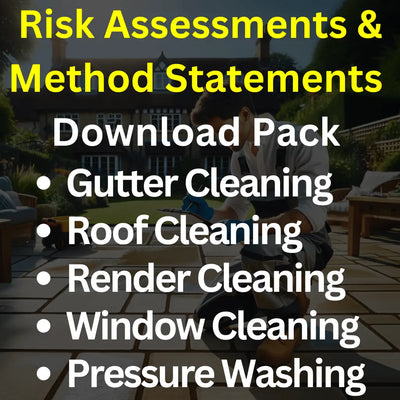
The SoftWash UK RAMS pack for exterior cleaning can support a structured approach to documentation. Templates must be adapted to the actual site and do not make a job compliant by themselves.
4. Test the proposed method
Use a representative, discreet area to check compatibility and response. Follow the product instructions for preparation, application, contact time and any rinsing requirements.
A successful test reduces uncertainty; it does not guarantee that every part of a weathered elevation is identical. Remain alert to changes in coatings, repairs and substrate condition.
5. Apply consistently and monitor conditions
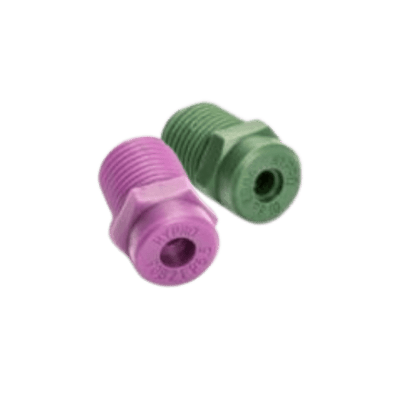
Check connections, hose condition, nozzle pattern and equipment compatibility before introducing chemicals. Keep coverage controlled and avoid unnecessary overspray.
Monitor wind, temperature, rainfall and surface conditions against the product instructions. If weather changes undermine your controls, pause the work rather than trying to finish at any cost.
6. Inspect and explain the outcome
Assess the result at the appropriate stage. Distinguish remaining biological growth from permanent staining, coating defects or another problem requiring separate investigation.
Never keep adding chemical simply because the finish differs from the customer’s expectation. Reassess the cause first.
7. Record what you learnt
Keep a job record covering the product, label-compliant dilution, equipment settings, weather, application process, time taken and outcome. Take photographs from comparable positions and lighting where possible.
This creates a reference library for future decisions. It also helps you recognise when a new job is genuinely similar—and when it only looks similar.
Understand Chemical Safety and Runoff Before Working Independently
Chemical confidence means understanding limits, not memorising a universal mixing ratio. There is no single concentration suitable for every product, surface and situation.
- Use products suitable for the intended task and follow their labels, including applicable biocidal authorisation conditions.
- Never mix sodium hypochlorite with acids, ammonia or unapproved products; dangerous gases can be released.
- Do not assume a surfactant or additive is compatible without confirmation.
- Store and transport chemicals securely in suitable, clearly labelled containers.
- Plan spill response and make emergency information available before starting.
- Prevent uncontrolled discharge to surface-water drains, watercourses and sensitive environments.
Identify drainage routes rather than assuming every drain connects to a foul sewer. Any proposed sewer discharge needs to meet the relevant water company’s requirements; environmental and waste rules also vary across the UK. Seek advice where the lawful disposal route is unclear.
Pre-wetting plants is not a substitute for preventing chemical exposure. Equally, adding water does not automatically make contaminated runoff safe or lawful to discharge.
Before progressing to unfamiliar work, you can try selected lessons from the SoftWash UK course for free. The preview offers a low-pressure way to explore the training structure and professional approach before deciding whether to enrol.
Use Equipment You Understand and Can Control
A complex rig will not correct weak surface knowledge or poor planning. Start with equipment appropriate to your intended work, then learn its output, limitations and maintenance requirements.
Practise set-up, controlled application and shutdown using clean water where appropriate. Check the manufacturer’s instructions for calibration and chemical compatibility, remembering that water-only practice does not reproduce every characteristic of a treatment solution.
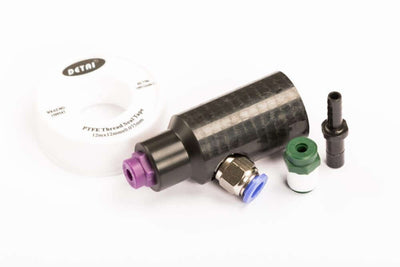
When comparing professional softwashing equipment, prioritise controllable delivery, suitable components, reliable isolation and accessible maintenance over headline output. Know how to stop the flow quickly and what to do if a hose or connection fails.
For facilities teams, consistent equipment checks are particularly valuable when several people share a system. A clear inspection and defect-reporting routine is more dependable than assuming the previous user left everything ready.
Build Confidence in Quoting and Customer Conversations
Price the complete job
New contractors often price only the treatment stage. Include surveying, travel, access, protection, chemical use, labour, runoff management, equipment wear, administration and any agreed return visit.
A small courtyard with delicate planting and restricted drainage may take more preparation than a larger, simpler area. Price the work required to complete it safely, rather than relying on area alone.
Explain limitations without apologising
Customers usually respond better to a clear boundary than a promise you cannot keep. Useful explanations include:
- “The treatment is intended to address the biological growth; it will not repair failed paint.”
- “I need to assess the test area before confirming the full method.”
- “This option works progressively, so the final appearance will not be immediate.”
- “The access arrangement is outside my current scope, so I recommend a suitably equipped specialist.”
Check softwash contractor insurance before accepting work. Ask your insurer or broker to confirm cover for your actual activities, chemical use, treatment risks and working heights. General descriptions such as “exterior cleaning” should not be assumed to cover every task.
Common Mistakes That Undermine Confidence
Copying another contractor’s chemical recipe
Their product strength, surface, equipment and conditions may differ from yours. Follow the specific product instructions and assess your own site rather than copying an online ratio.
Believing stronger always means better
A poor result may reflect incorrect diagnosis, unsuitable conditions or permanent substrate damage. More chemical can increase risk without improving the outcome.
Confusing speed with competence
Early jobs often take longer because you are checking each stage deliberately. Improve efficiency by refining preparation and workflow—not by skipping tests or protection.
Hiding uncertainty
Checking guidance or asking for technical support is professional behaviour. Guessing to avoid appearing inexperienced is not.
Create a Practical Development Plan
Set competence goals rather than promising yourself you will be ready for every job within a fixed number of weeks.
- Establish the foundations: learn surface assessment, chemical safety, equipment operation and customer communication.
- Practise under controlled conditions: complete appropriate test work and record the process.
- Deliver a narrow service consistently: repeat suitable jobs within your competence and review the results.
- Review your gaps: identify uncertainties, near misses, quoting errors and equipment issues.
- Expand deliberately: obtain the training, access capability and insurance needed before adding more complex services.
The Knowledge Centre’s softwashing training and business hub supports ongoing learning as your technical and commercial questions become more detailed.
Frequently Asked Questions
How long does it take to become confident at softwashing?
There is no fixed timescale. Confidence develops through relevant training, controlled practice and repeated successful work. Completing several similar jobs can build familiarity, but it does not establish competence on unrelated surfaces or higher-risk sites.
Do I need training before starting a softwashing business?
You need sufficient knowledge and competence to carry out your work safely. Professional training is a practical way to build that foundation, but a course alone does not remove the need for site assessments, supervised experience where appropriate and ongoing learning.
What should a beginner softwash contractor avoid?
Avoid unidentified surfaces, uncontrolled runoff, incompatible chemicals and work beyond your access capability. Do not use roofs, delicate finishes or complex commercial sites as experiments. Declining unsuitable work protects both your business and the customer.
How can I practise without damaging a customer’s property?
Start on suitable areas you own or have explicit permission to treat, after assessing the risks and checking compatibility. Use discreet tests and follow product instructions. Practising does not remove your responsibility to protect people, property and the environment.
What if I cannot identify a stain?
Pause and investigate. Review the surface history, consult manufacturer guidance or seek technical advice. Avoid applying several products in succession to see what works; residues may react, and the wrong treatment can make diagnosis harder.
How do I look professional while still gaining experience?
Be punctual, provide clear written scopes, document existing defects and explain limitations honestly. Professionalism is demonstrated through preparation and sound decisions—not claims of expertise you cannot support.
Build Confidence Through a Process You Can Repeat
The most reliable confidence comes from knowing what you are doing, why it is suitable and when to stop. Start with manageable work, use appropriate products and equipment, document outcomes and expand only when your competence supports it.
SoftWash UK supplies professional softwashing chemicals, equipment, training and educational resources to support that progression. If you want a structured next step, explore the SoftWash UK softwash training course and use the Knowledge Centre to investigate the areas where you need greater clarity.
You do not need to accept every job to become a capable contractor. You need a safe, informed process that you can repeat—and the judgement to recognise when a job needs a different approach.