The Safe Way to Clean Coloured Render
Coloured render should be cleaned using a controlled low-pressure softwashing process, not aggressive pressure washing. The safest method is to survey the render first, identify the type of staining, carry out a test patch, apply the correct cleaning solution at a suitable strength, allow controlled dwell time, and rinse gently without forcing water behind the render system.
For UK exterior cleaning contractors, facilities managers and serious DIY users, the key is to remove organic growth and surface contamination without damaging the pigment, texture, coating, seals, insulation system or surrounding materials. Coloured render can look robust, but it is often more vulnerable than people expect, especially on thin-coat silicone, acrylic, monocouche and insulated render systems.
This guide explains how to clean coloured render safely, what mistakes to avoid, which chemicals and equipment are appropriate, and when professional training or specialist advice is needed.
Why Coloured Render Needs a Careful Cleaning Method
Coloured render is commonly used on homes, schools, care homes, retail units, office blocks and modern apartment developments across the UK. It may be through-coloured monocouche render, silicone render, acrylic render, mineral render, painted textured coating or part of an external wall insulation system.
The staining that builds up on coloured render is usually caused by a combination of:
- Green algae on shaded elevations
- Black organic staining from cyanobacteria and biofilm
- Lichen growth on rougher textured surfaces
- Atmospheric pollution and traffic film
- Water staining from poor drainage, leaking gutters or overflows
- Rust, lead, copper or extractive staining from nearby materials
- Efflorescence from salts within the building fabric
The problem is that render is both visual and functional. A poor cleaning method can strip colour, leave wand marks, open the surface texture, drive water into cracks, damage seals around windows, or create patchy results that are more noticeable than the original staining.
This is why professional contractors normally favour softwashing for coloured render. Softwashing uses low-pressure application and appropriate cleaning chemistry to break down growth and staining, rather than relying on force.
Softwashing Coloured Render vs Pressure Washing
Pressure washing has its place in exterior cleaning, but coloured render is rarely the right surface for aggressive jet washing. The higher the pressure, the greater the risk of surface scarring, blown texture, water ingress and visible cleaning lines.
If you are unsure which method is appropriate, SoftWash UK’s Knowledge Centre guide on softwashing vs pressure washing is a useful supporting resource. In simple terms, softwashing treats the cause of organic staining, while pressure washing often only removes what the jet can physically dislodge.
| Method | How It Works | Risk On Coloured Render | Best Use |
|---|---|---|---|
| High-pressure washing | Uses force to blast away dirt and growth | High risk of etching, streaking, water ingress and surface damage | Hard surfaces such as some concrete, paving and robust masonry when appropriate |
| Low-pressure rinse | Uses gentle water flow to remove loosened contamination | Low risk when used correctly | Final rinse after chemical dwell on render |
| Softwashing | Uses cleaning chemistry and controlled dwell time at low pressure | Lower risk when properly specified, tested and applied | Organic staining, algae, biofilm and general render cleaning |
| Steam or hot water | Uses heat to loosen contamination | Can stress coatings, seals and some render finishes if misused | Specialist use only after assessing compatibility |
Identify the Render Before Cleaning
Before any chemical hits the wall, you need to understand what you are dealing with. Render systems vary significantly, and the safe cleaning process depends on the substrate, finish, age and condition.
Common Render Types in the UK
- Through-coloured monocouche render: Usually a cement-based render with pigment throughout the material. It can be porous and textured, which encourages algae and atmospheric dirt to grip.
- Silicone render: Often used on modern properties and external wall insulation systems. It is water-repellent but still attracts organic growth in shaded or damp conditions.
- Acrylic render: Flexible and colourful, but can be sensitive to harsh solvents, excess heat and incorrect chemical use.
- Mineral render: Breathable and often painted or coated. Cleaning should avoid trapping moisture or damaging the finish.
- Painted render: The cleaning result depends heavily on paint condition, adhesion, chalking and previous maintenance.
What to Check During the Survey
A proper survey protects the contractor and the client. On commercial and facilities work, it also helps with planning access, risk controls and realistic expectations.
- Is the render cracked, hollow, crazed, blown or friable?
- Is the colour faded from UV exposure before cleaning begins?
- Are there stains from rust, lead, copper, bitumen or timber tannins?
- Are gutters, downpipes, flashings or parapets causing repeat staining?
- Are there open air bricks, vents, window seals, electrical fittings or alarm boxes?
- Is the surface part of an external wall insulation system?
- Is safe access required from scaffold, MEWP, pole system or ground level?
Do not promise a “like new” finish until you have inspected the wall closely. Some shadowing, mineral staining, pigment variation or historic pressure-washing marks may remain even after correct cleaning.
The Safest Cleaning Process for Coloured Render
The following process is suitable as a professional framework. It must always be adapted to the site, surface condition, manufacturer guidance, chemical label instructions and your own risk assessment.
Step 1: Complete a Risk Assessment and Method Statement
Before starting, prepare a site-specific risk assessment and method statement. Consider chemical handling, working at height, pedestrian control, wind drift, overspray, run-off, plant protection, access equipment, PPE, manual handling and emergency procedures.
For contractors who want support with documentation, the Risk Assessment and Method Statement pack for exterior cleaning can help structure the safety planning process. It does not replace competence, but it can save time and improve consistency when preparing professional paperwork.
Step 2: Protect Sensitive Areas
Coloured render cleaning involves more than the wall itself. You need to manage the whole working area.
- Pre-wet nearby plants, lawns and sensitive landscaping where appropriate.
- Cover or isolate delicate metals, untreated timber, exterior sockets and vulnerable fixtures.
- Check window seals, vents and trickle vents before application.
- Divert or control run-off where necessary.
- Inform occupants to keep windows and doors closed during the work.
- Avoid application in strong wind, direct hot sun or freezing conditions.
Step 3: Carry Out a Test Patch
A test patch is essential on coloured render. Choose a discreet area and test the proposed cleaning solution, application method, dwell time and rinse process. Allow the area to dry fully before judging the result.
The test patch helps you check for:
- Colour change or pigment lift
- Patchiness from uneven porosity
- Reaction with previous coatings
- Run marks or streaking
- Effectiveness against the actual staining present
If the test patch causes visible damage or unacceptable colour change, stop and reassess. Do not simply dilute slightly and carry on with the whole elevation without understanding the reaction.
Step 4: Apply the Correct Cleaning Solution at Low Pressure
Most green and black organic staining on coloured render responds well to correctly specified professional softwash chemistry. The exact product, dilution and dwell time depend on the render type, contamination level, temperature and site constraints.
SoftWash UK supplies a range of professional softwash chemicals for exterior cleaning contractors. When selecting products, always read the safety data sheet and product guidance, wear suitable PPE and follow UK best practice for storage, transport, application and disposal.
Where sodium hypochlorite-based cleaning is appropriate, contractors must use it responsibly. It should not be treated as a “stronger is better” chemical. Over-application can cause streaking, bleaching of nearby materials, damage to vegetation and unnecessary safety risk. If you need to understand the role of different active ingredients and biocides, the Knowledge Centre guide on softwashing chemicals explains the main categories used in professional softwashing.
Step 5: Control Dwell Time
Dwell time is the period the cleaning solution remains active on the surface. On render, this needs careful control. Too short, and the clean may be weak or patchy. Too long, especially in sun or wind, and the solution may dry on the wall, increasing the risk of marks and uneven results.
Practical dwell-time tips include:
- Work in manageable sections rather than coating an entire elevation at once.
- Keep the surface damp with product during dwell where the method requires it.
- Avoid working on hot walls in direct sunlight where possible.
- Watch for rapid drying around edges, window reveals and high airflow areas.
- Do not exceed product guidance or your test patch findings.
Step 6: Rinse Gently and Evenly
Rinsing should be low pressure and controlled. The aim is to remove loosened contamination and remaining chemical residue without driving water into the render system.
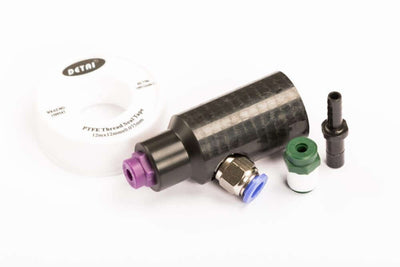
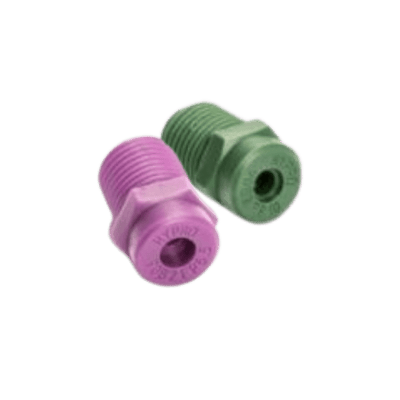
Use a fan pattern, soft rinse or suitable pole-based delivery rather than a concentrated turbo nozzle or aggressive lance. A water fed pole softwash nozzle can be useful for controlled application and rinsing on render, particularly where you want reach without excessive pressure.
Step 7: Inspect, Re-Treat if Necessary, and Record the Result
Once dry, inspect the wall from multiple angles. Render often looks different when wet, so do not judge the final finish too early. Some areas may need a second controlled application rather than stronger chemistry on the first pass.
For commercial clients and facilities managers, record:
- Products used
- Dilution or application method
- Weather conditions
- Test patch location
- Before and after photos
- Any defects or pre-existing damage
- Recommendations for future maintenance
Choosing Chemicals for Coloured Render
The safest chemical is not always the weakest, and it is not always the strongest. The safest option is the one that is appropriate for the staining, surface and site conditions, used by a competent person following product guidance.
| Cleaning Requirement | Typical Approach | Important Notes |
|---|---|---|
| Green algae and biofilm | Low-pressure softwash application using suitable exterior cleaning chemistry | Test patch first; avoid over-strength mixes on coloured finishes |
| Black organic staining | Controlled softwash treatment, sometimes with repeat applications | Do not expect instant perfection on deeply embedded staining |
| General grime and surfactant-assisted cleaning | Use an appropriate surfactant to improve wetting and contact time | A product such as Clever Wash Surfactant can help cleaning solution cling more evenly to textured render |
| Heavy organic contamination where SH is specified | Professionally controlled sodium hypochlorite-based softwash | Sodium hypochlorite for soft washing must be handled with care, correct PPE and proper dilution control |
| Rust, lead, copper or mineral staining | Specialist stain removers after diagnosis | Do not use random acids or household cleaners on coloured render without compatibility testing |
Surfactants are particularly useful on textured render because they improve wetting and help the solution stay in contact with the surface. However, more foam does not automatically mean better cleaning. Excessive foaming can make rinsing harder and increase the risk of residue if the method is poorly controlled.
Common Mistakes When Cleaning Coloured Render
Using Too Much Pressure
The most common damage we see in the industry is from pressure washing. Once wand marks, scars or blown texture are created, they are difficult to hide. The clean may look acceptable when wet, then dry with permanent striping.
Assuming All Render Is the Same
A ten-year-old monocouche render on a coastal property is not the same as a new silicone render on an insulated office block. Porosity, previous cleaning, exposure and substrate condition all affect the method.
Skipping the Test Patch
A test patch is not a formality. It is your evidence that the chosen method is compatible with the surface. On coloured render, it can prevent expensive disputes.
Cleaning Without Fixing the Cause of Staining
If water is constantly running down the same section from a leaking gutter, the clean will not last. Cleaning should be part of a maintenance plan, not a substitute for building repairs.
Letting Chemicals Dry on the Wall
This can cause streaks, uneven bleaching, residue and callbacks. Manage dwell time carefully, especially in summer or on south-facing elevations.
Using Household Bleach or Unlabelled Mixes
Household products are not a professional render cleaning system. Contractors should use suitable, correctly labelled chemicals with safety data sheets and proper dilution control.
How Long Will Coloured Render Stay Clean?
A correctly cleaned coloured render surface may stay visibly cleaner for months or years, depending on exposure, shade, moisture and the surrounding environment. North-facing walls, coastal properties, tree-covered sites and buildings with poor airflow often see organic regrowth sooner.
For a more detailed explanation, SoftWash UK has a Knowledge Centre article answering how long does softwashing last. In practice, the best results usually come from scheduled maintenance rather than waiting until heavy staining returns.
Facilities managers should consider a planned cleaning cycle for large render elevations, particularly on schools, housing developments, hotels, healthcare buildings and commercial units where appearance affects reputation.
Safety and Compliance Notes for UK Contractors
Professional render cleaning must be planned and documented. At a minimum, contractors should consider COSHH, PPE, working at height, public access, chemical storage, transport, labelling, emergency response and environmental protection.
Important safety practices include:
- Read the product label and safety data sheet before use.
- Wear appropriate gloves, eye protection, respiratory protection and protective clothing where required.
- Never mix chemicals unless the system manufacturer specifically instructs it.
- Keep chemicals away from children, pets and unauthorised persons.
- Do not spray in strong wind or where drift may affect people, vehicles, plants or neighbouring property.
- Control run-off and prevent avoidable contamination of drains, ponds and watercourses.
- Use safe access equipment and avoid overreaching from ladders.
- Document pre-existing damage with photographs before starting.
For contractors building a professional exterior cleaning business, training is often the difference between guessing and working to a repeatable method. The SoftWash UK training course covers the practical thinking behind safe chemical application, surface assessment, risk control and professional softwashing systems.
When Should You Avoid Cleaning Coloured Render?
Sometimes the safest decision is to delay the job or recommend remedial work first. Do not proceed blindly if the surface is compromised.
- The render is cracked, hollow or visibly detached.
- There is evidence of water ingress behind the system.
- The coating is chalking heavily or breaking down.
- Previous pressure washing has already damaged the texture.
- Access cannot be achieved safely.
- Weather conditions make chemical control impossible.
- The client expects complete removal of stains that require specialist restoration, not standard cleaning.
On high-value properties or commercial buildings, it is better to produce a cautious written recommendation than to take on a job that carries unacceptable risk.
Practical Tips for Better Results on Render
- Start at the least aggressive effective method and only increase strength or dwell time if the test patch supports it.
- Clean from logical breaks such as corners, downpipes and architectural lines to avoid visible stop-start marks.
- Pre-plan where run-off will travel before applying product.
- Use controlled low-pressure equipment rather than adapting high-pressure kit badly.
- Avoid cleaning one small patch in the middle of a large elevation unless the client understands it may stand out.
- Photograph defects before and after cleaning to protect both contractor and client.
- Recommend gutter repairs, vegetation cutting or drainage improvements where these are causing repeat staining.
If this is an area you want to understand properly, you can start by accessing the free SoftWash UK course preview. It includes selected lessons from the full training course and is designed to help contractors see whether professional softwashing training is the right next step.
FAQ: Cleaning Coloured Render Safely
Can you pressure wash coloured render?
It is possible to rinse coloured render at low pressure, but aggressive pressure washing is not recommended. High pressure can leave permanent wand marks, damage texture, force water behind the render and make the surface more porous. A softwashing approach is usually safer for algae, biofilm and organic staining.
Will softwashing bleach coloured render?
When correctly specified, tested and applied, softwashing should clean the contamination rather than strip the render colour. However, over-strength chemicals, poor dwell control, drying on the surface or incompatible coatings can cause colour change. This is why a test patch is essential.
What is the best cleaner for green algae on render?
Green algae on render is usually best treated with a suitable professional softwash cleaning solution applied at low pressure. The exact product and dilution depend on the render type, contamination and site conditions. Avoid household bleach and untested mixtures.
Do you need to rinse after softwashing render?
In many render cleaning situations, a controlled low-pressure rinse is recommended to remove loosened contamination and residue. Some biocidal maintenance treatments may be designed to remain active, but this depends on the product and method. Always follow product guidance and assess the surface.
How often should coloured render be cleaned?
Many properties benefit from render cleaning every one to three years, but this varies. Shaded, damp and north-facing elevations may need more frequent maintenance, while dry, open and sunny elevations may stay cleaner for longer.
Can serious DIY users clean coloured render themselves?
Ground-level light algae cleaning may be manageable for a competent DIY user using suitable products and PPE, but high-level work, chemical application, poor access or valuable render systems are best handled by trained professionals. Working at height and chemical misuse are common causes of accidents and damage.
Conclusion: Clean the Staining, Not the Render Away
The safe way to clean coloured render is to use a measured, low-pressure softwashing process based on inspection, testing, suitable chemistry and controlled rinsing. The aim is to remove algae, biofilm and surface contamination without damaging the render system or changing the colour.
For contractors and facilities managers, the professional standard is simple: survey first, test first, protect the site, use the right chemical at the right strength, control dwell time, rinse gently and document the job. Avoid high-pressure shortcuts and never treat all coloured render as if it were the same surface.
SoftWash UK supports the exterior cleaning industry with professional chemicals, softwashing equipment, training and educational resources designed around safe and responsible methods. If you are cleaning coloured render regularly, explore the SoftWash UK Knowledge Centre, suitable render cleaning products and professional training options to improve results, reduce risk and work with greater confidence.