How Professional Training Can Reduce Costly Errors in Exterior Cleaning
Professional training reduces costly exterior cleaning errors by teaching you how to identify surfaces, choose suitable cleaning methods, handle chemicals safely and plan work accurately. It replaces guesswork with a repeatable process, helping prevent damaged finishes, chemical waste, equipment failures, underpriced jobs and avoidable return visits.
For UK exterior cleaning contractors, property maintenance teams and facilities managers, these mistakes affect more than the cost of a single job. They can disrupt building users, trigger insurance claims and damage client relationships. Serious DIY users face many of the same technical risks, even when cleaning their own property.
Training does not make every job straightforward or remove the need for judgement. Its value is knowing what to check, when to change your approach and when not to proceed.
Why Small Cleaning Errors Become Expensive Problems
A cleaning mistake rarely creates just one expense. Applying an unsuitable treatment to a decorative finish may mean stopping work, arranging specialist advice, returning to site and discussing compensation with the client. Meanwhile, another booked job may need to move.
The true cost can include:
- Replacement materials or specialist repairs.
- Additional labour, travel and equipment hire.
- Wasted chemicals and contaminated waste disposal.
- Lost productive time and delayed payments.
- Insurance excesses and possible changes to future cover.
- Complaints, lost referrals and reduced client confidence.
Training is therefore not simply about learning to clean faster. It is about reducing the likelihood and consequences of poor decisions.
The Costly Errors Professional Training Helps Prevent
| Common error | Possible consequence | What training should teach |
|---|---|---|
| Misidentifying the surface or staining | Damaged finishes or ineffective treatment | Substrate assessment, stain recognition and test-patch procedures |
| Choosing unsuitable pressure or chemicals | Erosion, discolouration, water ingress or chemical damage | Method selection based on condition, compatibility and manufacturer guidance |
| Guessing dilution or equipment output | Over-application, inconsistent results and chemical waste | Accurate measurement, calibration and label-led application |
| Ignoring drainage, weather or nearby occupants | Pollution, exposure incidents and interrupted work | Site-specific risk assessment and environmental controls |
| Quoting only for visible cleaning time | Low margins and pressure to rush | Whole-job costing, realistic scheduling and clear scope |
| Poor handover and record keeping | Disputes, unnecessary callbacks and inconsistent repeat work | Photographic records, treatment logs and customer communication |
1. Correct Surface Assessment Prevents Damage
The first professional decision happens before equipment is unloaded: what exactly are you cleaning, and what condition is it in?
Painted render, through-coloured render, natural stone, concrete, timber and coated metal require different assessments. Even two apparently similar walls may have different coatings, repairs or weathering patterns.
Identify the cause, not just the colour
A dark mark is not automatically biological growth. Atmospheric deposits, traffic film, mineral staining, corrosion and coating failure can all alter a surface’s appearance. A treatment intended for algae will not necessarily resolve a rust stain or failed paint.
Repeatedly applying the wrong chemical can increase cost without improving the result. Training should teach a structured diagnosis rather than a single treatment for every discoloured surface.
Make test patches meaningful
A useful test patch checks more than immediate cleaning performance. It should assess compatibility, changes to colour or texture and, where appropriate, the appearance after drying. Follow the product instructions and allow sufficient time to judge the result.
For example, a shaded render panel may look uneven while wet. Increasing chemical strength immediately can create a second problem before the first result has been properly assessed.
Record existing cracks, loose coatings, failed seals and previous repairs. A test patch reduces uncertainty, but it does not prove that every part of a large elevation is identical.
2. Chemical Training Reduces Waste and Exposure
Professional softwashing is not a matter of making the strongest possible solution. It involves selecting a suitable product, using it within its permitted conditions and controlling exposure to people, materials and the environment.
Softwashing generally uses low-pressure application and appropriate cleaning chemistry to treat contamination. Low pressure does not mean low risk: a misapplied chemical can still damage surfaces or cause injury.
Understand the product before application
Training should help operators understand:
- The intended use and restrictions on the product label.
- The role of the safety data sheet in identifying hazards and controls.
- How stock concentration, dilution and application equipment affect the delivered solution.
- Required personal protective equipment and emergency arrangements.
- Storage, transport, spill response and disposal requirements.
A safety data sheet supports a COSHH assessment; it does not replace one. Likewise, a dilution used successfully on a previous job is not automatically suitable for a different product or substrate.
Never mix cleaning chemicals unless the manufacturer explicitly permits the combination and provides instructions. Mixing hypochlorite products with acids can release toxic chlorine gas. Adding another product to solve an unexpected reaction is not a safe response.
Where biocides are used, check that the product is lawful for the intended use and follow its label conditions. Requirements can differ between Great Britain and Northern Ireland. Serious DIY users must also check whether a product is restricted to professional use.
3. Equipment Competence Prevents Inconsistent Results
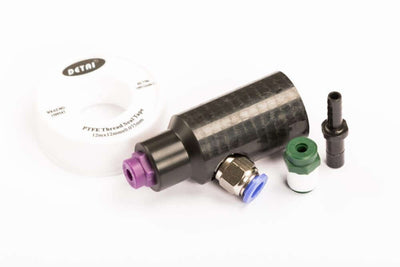
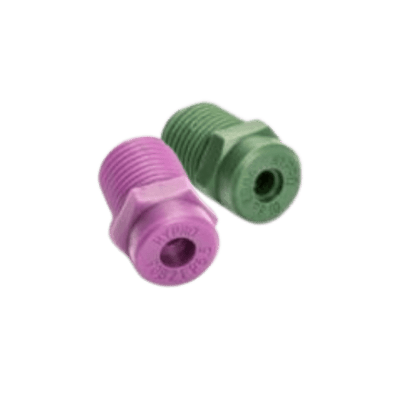
Buying professional equipment does not automatically produce professional control. Operators need to understand how the complete system behaves, including pumps, injectors, hoses, seals, filters and nozzles.
A worn component or incorrect injector setting can change application performance. If an operator assumes the system is delivering the intended dilution without checking it, an entire elevation may receive an unsuitable treatment.
Build checks into the working day
- Inspect hoses, connections and seals for deterioration or leaks.
- Confirm that components are compatible with the intended chemical.
- Check output and proportioning using the manufacturer’s approved procedure.
- Assess spray control, working distance and potential drift.
- Follow the specified flushing, maintenance and storage procedures.
When comparing professional softwashing equipment, consider controllability, chemical compatibility and maintenance requirements, not just output. Training helps you choose a system suited to your work rather than buying equipment that introduces unnecessary complexity.
4. Site Planning Reduces Safety and Compliance Failures
Many expensive incidents arise outside the immediate cleaning area. Spray reaches an occupied entrance. Runoff enters a surface-water drain. A hose crosses a public route. An operator discovers that safe access is not possible only after arriving on site.
A site survey should identify these issues before work starts. SoftWash UK’s guidance on a softwash risk assessment explains why assessments need to reflect actual working conditions rather than a generic description of cleaning.
Turn paperwork into practical controls
Depending on the site, controls may include:
- Separating the work area from pedestrians, vehicles and building occupants.
- Agreeing arrangements for entrances, windows, ventilation intakes and sensitive equipment.
- Identifying drainage routes and planning suitable runoff collection or containment.
- Protecting vegetation and vulnerable finishes without assuming protection makes any application safe.
- Setting weather-related stop points for wind, rain, frost or excessive drying conditions.
- Selecting safe access methods and avoiding work at height where reasonably practicable.
Do not allow chemical washwater to enter surface-water drains or watercourses. Establish a lawful disposal route in advance; discharge to a foul sewer may require permission from the relevant sewerage undertaker.
A RAMS pack for exterior cleaning can provide a useful documentation framework. It still needs adapting by a competent person to the site, task, products and people involved. A completed template is not evidence that the controls have actually been implemented.
5. Better Quoting Prevents Unprofitable Work
Technical mistakes and commercial mistakes often reinforce each other. An underpriced job creates pressure to rush, skip protection or attempt work without suitable access equipment.
Professional training should help contractors price the complete operation, including:
- Surveying, testing and customer communication.
- Set-up, protection and access arrangements.
- Labour, chemical use and equipment wear.
- Runoff management and waste handling.
- Weather disruption and any planned follow-up visit.
- Overheads, contingency and profit.
Illustrative example: the hidden cost of a callback
Suppose an inadequately planned job requires a return visit involving two people for three hours. At an assumed internal labour cost of £25 per person per hour, that is £150 in labour alone. Add £40 for travel and consumables, and the direct additional cost reaches £190 before considering displaced work or customer management.
These figures are illustrative, not industry averages. The useful exercise is to calculate your own callback cost and compare it with the cost of preventing repeat errors.
Clear scope also matters. State what treatment is included, what staining may remain, any limitations caused by surface condition and when results should reasonably be assessed.
A Step-by-Step Process for Applying Training on Site
- Survey the property. Identify substrates, staining, defects, access constraints, drainage and sensitive areas.
- Confirm the proposed method. Check product suitability, surface guidance and equipment requirements. Seek specialist advice where uncertainty remains.
- Prepare the assessments. Complete site-specific risk and COSHH assessments, the method statement and emergency arrangements.
- Test and agree expectations. Complete an appropriate test patch, record its outcome and explain realistic results to the client.
- Brief everyone involved. Confirm responsibilities, exclusion zones, communication methods and stop-work conditions.
- Inspect and verify equipment. Check condition, compatibility and application performance before treatment.
- Work in controlled sections. Monitor weather, surface response, exposure risks and runoff throughout the task.
- Inspect, document and hand over. Record the treatment, relevant observations, photographs and any aftercare or review arrangements.
For facilities managers, this process also provides a useful contractor-selection checklist. Ask how the contractor will assess the specific building, not simply whether they hold a training certificate.
How to Choose Training That Changes Working Practice
A useful course should explain why decisions are made, not just demonstrate a successful clean. Look for clear learning outcomes, realistic scenarios, chemical safety, surface assessment, equipment instruction and a way to check understanding.
Before enrolling, ask:
- Does the syllabus cover the surfaces and services you intend to offer?
- Does it explain limitations, common failures and situations requiring specialist advice?
- How is understanding or practical competence assessed?
- What opportunities are available for questions, supervised practice or further development?
- Are UK safety and environmental responsibilities addressed?
SoftWash UK’s explanation of CPD certified softwash training is useful when comparing structured learning options. CPD certification can support professional development, but it is not a statutory licence, a guarantee of competence or a substitute for task-specific experience.
Training also does not replace suitable insurance. Review your proposed activities with your insurer, including chemical application, roof work, treatment damage and relevant exclusions. This guide to softwash contractor insurance highlights areas worth discussing.
If you want to assess the teaching approach before committing, you can try selected lessons from the SoftWash UK course for free. The preview is a straightforward way to explore the course structure and decide whether the full programme fits your needs.
Common Myths About Exterior Cleaning Training
“Experience means I no longer need training”
Experience is valuable, but repeated habits are not always correct habits. New products, unfamiliar substrates and changing responsibilities can expose gaps in an otherwise experienced operator’s knowledge.
“Stronger chemicals save time”
An unnecessarily strong solution can increase exposure, damage and waste without improving the outcome. Correct diagnosis and controlled application are more reliable than increasing concentration by default.
“A certificate makes every job safe”
Competence combines knowledge, skills and experience appropriate to the task. Training needs to be followed by suitable practice, supervision where required and recognition of personal limits.
“Online videos are enough”
Videos can support learning, but a short demonstration rarely shows the full survey, risk controls, failed tests or later outcome. Structured education should provide the reasoning behind the visible technique.
Frequently Asked Questions
Can professional training guarantee that mistakes will not happen?
No. Training reduces avoidable errors by improving assessment, planning and decision-making. Equipment maintenance, supervision, site conditions and consistent working practices remain important.
Is softwashing training legally required in the UK?
There is no single universal softwashing licence. However, employers and relevant dutyholders must meet applicable health and safety requirements, including providing suitable information, instruction and training. Chemical use, work equipment and work at height can introduce further duties.
Is training worthwhile for a small exterior cleaning business?
Yes, particularly where the owner surveys, quotes and carries out the work. One poor decision can affect both profit and available working time. Choose training relevant to the services you actually intend to provide.
Do serious DIY users benefit from professional training?
Yes. Understanding surface compatibility, chemical hazards and safe application can prevent expensive property damage. However, training does not make professional-use-only products suitable for unrestricted domestic use or remove the need for specialist help.
How can a business measure whether training is working?
Track callbacks, complaints, chemical consumption, equipment downtime, near misses and estimated versus actual labour hours. Review the causes, not just the totals, and use the findings to improve procedures and identify refresher needs.
Reduce Errors Before They Become Expensive
The strongest return from professional training is better judgement: recognising an unsuitable surface, questioning a dilution, allowing properly for access or stopping when conditions change.
SoftWash UK supplies professional softwashing chemicals, equipment and training to support informed, responsible working. If you are building a new service or addressing recurring problems, explore the SoftWash UK training course and compare its content with the skills your work requires.
Start with your most frequent or most serious error, identify the knowledge or process gap behind it, and put a clear control in place. That is how professional education becomes fewer callbacks, safer work and more dependable margins.