How Professional Training Can Reduce Costly Errors in Exterior Cleaning
Professional training reduces costly exterior cleaning errors by teaching operators how to assess surfaces, choose suitable treatments, control chemical application and recognise when work should stop. It also improves quoting, equipment checks and customer communication, helping prevent damage, wasted materials, repeat visits and avoidable claims.
For UK exterior cleaning contractors, property maintenance teams and facilities managers, these are practical business benefits. A job can look profitable until an unsuitable treatment damages a finish, uncontrolled runoff reaches a drain or an underestimated access requirement adds another day’s work.
Serious DIY users face the same technical risks, often without the equipment or experience needed to manage them. Training helps identify what can be tackled safely and what should be left to a competent professional.
The value is not simply learning how to apply a cleaning product. It is learning how to make reliable decisions before, during and after the work.
Where Do Costly Exterior Cleaning Errors Start?
Most expensive mistakes begin before the equipment is switched on. An incorrect surface identification, incomplete survey or unrealistic quotation can create problems that careful application alone cannot fix.
Softwashing uses controlled, low-pressure application of suitable cleaning treatments to address contamination such as algae and other biological growth. However, low pressure does not automatically mean low risk. Chemical compatibility, surface condition, exposure and environmental protection still matter.
| Common error | Potential cost | Training-led control |
|---|---|---|
| Treating an unidentified coating | Discolouration, coating failure or replacement costs | Surface identification, manufacturer checks and representative testing |
| Using an unsuitable chemical or concentration | Damage, wasted product or ineffective cleaning | Product selection, label interpretation and accurate measurement |
| Underestimating access and protection | Lost margin, delays and unsafe improvisation | Structured surveys and realistic job costing |
| Failing to control runoff | Pollution, complaints or enforcement action | Drain identification and an appropriate containment and disposal plan |
| Promising an immediate or uniform result | Disputes, refunds and unnecessary return visits | Clear scope, realistic timescales and documented limitations |
| Skipping equipment checks | Leaks, inconsistent dosing and downtime | Inspection, calibration and maintenance routines |
Training Improves Surface Assessment and Method Selection
Identify the substrate, not just the dirt
A green wall is not a complete diagnosis. Painted masonry, silicone render, mineral render, natural stone and composite cladding can require different approaches, even when the visible contamination looks similar.
A competent assessment considers:
- The underlying material and any coating or protective treatment.
- Cracks, loose pointing, failed seals and existing surface deterioration.
- Nearby metals, glazing, timber, electrical fittings and planting.
- Whether the staining is biological growth, rust, oil, mineral deposits or weathering.
- Manufacturer instructions, maintenance requirements and warranty conditions.
For example, dark marks beneath a metal fitting may be mineral or metallic staining rather than biological growth. Repeatedly applying a general softwash treatment may waste time without addressing the cause.
Use test areas as a decision-making tool
A test area helps assess compatibility, appearance and likely cleaning performance. It should be representative but discreet, with observations recorded before committing to the whole elevation.
Inspect the result after the relevant treatment period and, where necessary, after drying. A wet surface can hide colour differences and residual staining. Testing reduces uncertainty, but it does not override a product restriction or guarantee that every section will respond identically.
Professional training develops this judgement: when to proceed, when to investigate further and when to decline the work.
Chemical Knowledge Prevents Expensive Guesswork
Understand the product before calculating the dilution
One common misconception is that stronger treatment always produces a better result. In practice, excessive concentration can increase exposure, material incompatibility and environmental risk without improving the outcome.
Suitable training should explain how to interpret product labels, technical information and safety data sheets. These documents serve different purposes: a safety data sheet describes hazards and handling precautions, while the label provides essential directions and restrictions for use.
- Use products suitable for the intended surface, application and user category.
- Follow the label’s dilution, application, contact-time and rinsing requirements.
- Check the relevant authorisation or approval status where required for biocidal products.
- Never mix cleaning chemicals unless the manufacturer explicitly permits the combination.
- Never mix sodium hypochlorite with acids or ammonia-containing products: dangerous gases can be released.
Professional-use-only products are not made suitable for DIY use simply because someone has watched a demonstration or completed introductory lessons.
Check actual application, not just tank settings
An accurately measured tank mixture does not guarantee accurate delivery at the surface. Injector settings, water pressure, hose configuration, restrictions and equipment condition can affect application.
Training should teach operators to verify dosing using the equipment manufacturer’s procedure, normally with clean water where appropriate. Do not assume that a dial setting or a previous operator’s adjustment remains correct.
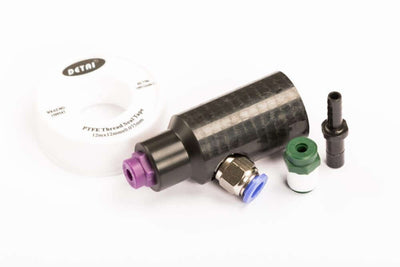
When selecting professional softwashing equipment, consider chemical compatibility, controllability, maintenance requirements and safe handling as well as output. A higher-capacity system is not automatically the most suitable choice for a small or sensitive site.
Safety Training Reduces Risks That Can Stop a Business
Make risk assessments specific to the site
A generic document cannot tell an operator where a school’s drainage outlets lead, whether residents will cross a work area or whether a fragile rooflight is hidden behind a parapet.
A useful assessment identifies the hazards, who could be harmed and the controls needed for that particular job. It must also be reviewed when conditions change.
The SoftWash UK Knowledge Centre explains the purpose of a softwash risk assessment, including why planning should happen before application begins.
For commercial work, relevant duties may include COSHH, work at height, work equipment and environmental requirements. Exact obligations depend on the activity and location, including differences between Great Britain and Northern Ireland. Training supports compliance; it does not replace checking the rules that apply.
Control access, exposure and runoff
On an occupied site, consider residents, visitors, pets, vehicles and building air intakes. Barriers, communication and scheduling may be as important as the application method.
Identify drains before starting. Do not assume a nearby gully leads to a foul sewer or that diluted wash water is harmless. Prevent uncontrolled discharge and agree an appropriate collection and disposal route, obtaining consent where required.
Personal protective equipment must follow the assessment and product instructions. Where respiratory protection is necessary, selection, fit testing where applicable and correct use matter; a disposable mask chosen by appearance is not a reliable control.
Use documentation to support the work
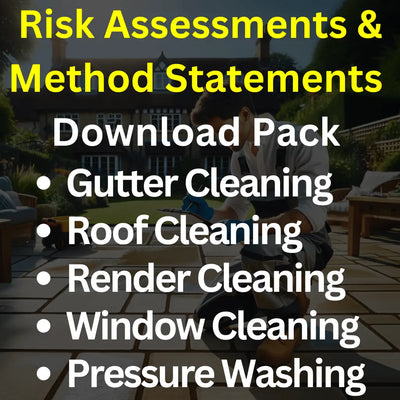
The SoftWash UK RAMS Pack for exterior cleaning can provide a starting point for organising safety documentation. Any template must be adapted to the actual task, chemicals, equipment and site conditions.
Facilities managers should also check that a contractor’s method statement matches the proposed work. A tidy document is not evidence of practical competence on its own.
Better Quoting Protects Profit Before Work Begins
Technical training and commercial judgement are closely connected. If a quotation ignores protection, access or waste handling, operators may feel pressured to rush the job or improvise.
A realistic quotation should account for:
- Surveying, testing and preparation.
- Access equipment and competent operation.
- Chemicals, water, fuel and consumables.
- Protection of sensitive surfaces and landscaping.
- Runoff management and waste disposal.
- Labour, travel, setup, pack-down and equipment cleaning.
- Weather disruption, aftercare and any agreed follow-up inspection.
Consider an illustrative job priced at £650, with £400 in expected direct costs. That leaves £250 before overheads and tax. An unplanned return visit costing £180 reduces that contribution to £70. A further £100 goodwill refund takes it below zero.
This is not an industry pricing benchmark. It demonstrates how a modest estimating error can remove the margin from an otherwise straightforward job.
Contractors should also check their softwash contractor insurance. Do not assume that general cleaning cover includes every chemical treatment, surface, access method or damage to property being worked on. Confirm relevant cover and exclusions with the insurer or broker.
Clear Communication Prevents Avoidable Disputes
Customers often judge work against what they expected, not simply what was delivered. Training should help operators explain likely results without making promises that the surface condition cannot support.
Before starting, record:
- The surfaces included and excluded from the quotation.
- Existing damage, staining and previous repairs.
- Whether results are expected immediately or progressively.
- Any limitations identified during inspection or testing.
- Access arrangements, protection measures and customer responsibilities.
- The agreed process for reporting and reviewing concerns.
For example, removing biological growth from render will not necessarily correct faded paint, failed coatings or historic water staining. Explaining that distinction before treatment is more effective than defending it after an invoice is challenged.
A Seven-Step Process for Reducing Cleaning Errors
- Survey the site. Identify surfaces, contamination, defects, access constraints, drainage and nearby sensitive areas. Photograph relevant conditions.
- Confirm suitability. Check manufacturer guidance and product instructions. Seek specialist advice where the material, coating or stain remains uncertain.
- Assess and plan. Prepare site-specific risk assessments, COSHH assessments where required, access arrangements and runoff controls.
- Test and document. Complete a representative test where appropriate, inspect the result and use it to refine the scope and expectations.
- Prepare and check. Inspect equipment, verify dosing, establish exclusion zones and brief everyone involved.
- Apply and monitor. Follow product directions and watch for drift, leaks, unexpected reactions, changing weather or uncontrolled public access. Stop if controls become ineffective.
- Inspect and hand over. Check the outcome, record any limitations, provide suitable aftercare advice and review actual costs against the quotation.
If you want to see how structured learning approaches these decisions before committing to a full programme, you can try selected lessons from the SoftWash UK course for free. The preview provides a useful opportunity to assess the teaching style and professional approach.
How to Choose Training That Delivers Practical Value
Look beyond a certificate or course title. Ask whether the learning is relevant to your surfaces, equipment, responsibilities and current experience.
A useful training programme should help you understand:
- Why a method is suitable, not just how to repeat it.
- How to recognise surface and chemical incompatibility.
- How to plan safe access, protection and environmental controls.
- How to check equipment and diagnose inconsistent application.
- When to stop, seek advice or refer work to a specialist.
Understanding CPD certified softwash training can help you assess professional development options. CPD certification is not, by itself, a trade licence or proof that a learner is competent for every task.
Review the current content of the SoftWash UK training course against your needs. Employers should combine learning with supervised practice and task-specific competence checks.
Check whether training changes behaviour
Useful measures include fewer return visits, more accurate estimates, consistent equipment checks and better survey records. Review near misses too. An initial increase in reporting may indicate improved awareness rather than deteriorating performance.
For ongoing development, the Knowledge Centre’s softwashing training and business hub provides a route into related educational topics.
Common Myths About Exterior Cleaning Training
“Experience means I no longer need training”
Experience is valuable, but repetition can reinforce poor habits. New products, unfamiliar substrates and changes in equipment create fresh learning needs.
“Low pressure cannot damage a surface”
Low pressure reduces some mechanical risks. It does not remove chemical incompatibility, water ingress, overspray or runoff risks.
“The certificate makes the business compliant”
Compliance depends on how work is planned and carried out. Training records support that process, but do not replace suitable controls, maintenance, supervision or insurance.
Frequently Asked Questions
Can professional training prevent every exterior cleaning mistake?
No. It reduces avoidable errors and improves responses when unexpected conditions arise. Hidden defects and variable materials still require testing, monitoring and a willingness to stop.
Is softwash training a legal requirement in the UK?
There is no single universal softwashing licence covering every activity. However, employers must provide adequate information, instruction, training and supervision for relevant risks. Specific products, equipment or access activities may have additional requirements.
Is online training enough to become competent?
Online learning can build knowledge, but practical competence also requires appropriate experience, equipment familiarisation and assessment. Higher-risk activities may need separate specialist training.
How does training help facilities managers?
It helps them assess quotations, question unsuitable methods and review contractor documentation. It also supports better scheduling, occupant protection and understanding of realistic results.
Is professional training worthwhile for serious DIY users?
Yes, particularly for understanding surface assessment and personal limits. However, training does not make professional-only chemicals appropriate for domestic use or remove the risks of roof access and chemical exposure.
Invest in Better Decisions, Not Just Faster Cleaning
The strongest financial argument for professional training is the work that does not need repeating, repairing or defending. Better surveys protect quotations. Better chemical knowledge protects surfaces. Better planning protects people and the environment.
SoftWash UK supplies professional softwashing chemicals, equipment, training and educational resources. Explore the training options and supporting guidance to identify gaps in your current process before your next job. Choosing suitable equipment and products matters, but understanding when and how to use them is what turns that investment into dependable professional practice.