How Professional Contractors Save Time on Site
Professional exterior cleaning contractors save time on site by removing avoidable delays: surveying properly, choosing the right cleaning method, organising equipment, controlling chemical application and following a repeatable workflow. The biggest gains usually come from better preparation and fewer repeat visits, not from working faster with a pressure washer or applying stronger chemicals.
For UK exterior cleaning businesses, property maintenance teams and facilities managers, productive working means completing an agreed specification safely, consistently and without unnecessary rework. The same principles help serious DIY users avoid turning a straightforward cleaning project into a whole weekend of trial and error.
This guide explains where time is commonly lost, which improvements make a practical difference and how to increase output without compromising surfaces, people or environmental protection.
Where Do Exterior Cleaning Contractors Lose the Most Time?
Delays often begin before cleaning starts. A locked rear gate, an unsuitable water supply or an unidentified surface coating can disrupt an otherwise sensible schedule.
The most common sources of wasted time are:
- Incomplete surveys and unclear customer expectations.
- Choosing a cleaning method before identifying the surface and contamination.
- Searching through an unorganised van for fittings, nozzles or protective equipment.
- Repeatedly moving hoses and machinery around poorly planned work areas.
- Incorrect chemical application that leads to unnecessary retreatment.
- Equipment faults that basic maintenance could have prevented.
- Cleaning areas twice because dirty runoff crosses completed sections.
- Returning to resolve missed details or an unclear handover.
A useful distinction is between productive time and avoidable time. Setting up barriers, protecting planting and checking drainage are productive tasks. Replacing damaged plants or dealing with a pollution incident is not.
1. Survey Properly Before Quoting or Mobilising
Identify the surface and the actual cleaning problem
“Dirty render” is not a complete specification. The problem might involve algae, atmospheric soiling, rust staining, failed paint or moisture-related discolouration. These do not necessarily respond to the same treatment.
Likewise, a paved area may contain natural stone, concrete blocks, resin-bound surfacing and delicate pointing within a few metres. Treating everything as one uniform surface can create damage and additional work.
Before selecting a method, establish:
- The substrate, coating and visible condition.
- The likely contamination and the result the customer expects.
- Existing defects, loose joints, damaged seals and vulnerable fittings.
- Access arrangements and whether work at height is necessary.
- Water availability, drainage routes and runoff containment requirements.
- Nearby planting, parked vehicles, public routes and neighbouring property.
Photographs help with planning, but they do not always reveal friable surfaces, poor drainage or hidden access restrictions. Where uncertainty could materially affect the method or price, inspect in person or make the quotation conditional on verification.
Confirm practical arrangements in writing
For commercial premises, agree the working area, access times, site contact and pedestrian arrangements before arrival. For domestic work, confirm gates, vehicle movements and access to an appropriate water supply.
On managed properties, ask whether permits, contractor inductions or approved risk assessments and method statements are required. Discovering a permit requirement after unloading equipment is an avoidable delay.
2. Choose the Right Cleaning Method First Time
The fastest suitable method depends on the surface, contamination, access and required finish. Pressure washing is not automatically quickest, and softwashing is not automatically appropriate for every task.
| Situation | Potentially suitable approach | Where time can be saved | Important limitation |
|---|---|---|---|
| Biological growth on compatible render | Low-pressure softwashing with an appropriate treatment | May reduce unnecessary mechanical cleaning | Confirm coating compatibility, application requirements and runoff controls |
| Heavy surface dirt on suitable paving | Controlled pressure washing, with surface-cleaning equipment where appropriate | Provides more consistent coverage across open areas | Protect joints, vulnerable surfaces and adjacent property |
| Localised rust or mineral staining | A compatible specialist stain treatment after testing | Avoids repeatedly treating a stain with the wrong chemistry | Identify the stain source and check substrate compatibility |
| Heavy roof moss | Suitable controlled removal and an appropriate treatment plan | Reduces repeated attempts to treat excessive bulk growth | Roof condition, access, debris control and work-at-height precautions are critical |
A test area is often one of the best time-saving tools available. It can establish whether the proposed method works, reveal an adverse reaction and help set realistic expectations before the full area is treated.
SoftWash UK’s Softwashing Knowledge Hub provides supporting education for contractors developing their understanding of cleaning methods and surface care. Use educational guidance alongside product instructions and a site-specific assessment.
3. Standardise Your Equipment and Van Layout
Give frequently used items a fixed location
A consistent loading system reduces searching and makes missing equipment easier to spot. Store equipment in the order it is normally needed, while maintaining safe loading, segregation and access.
For many teams, the practical setup sequence is:
- Access controls, signs and barriers.
- Drain protection and surface-protection equipment.
- Water supply and hose routes.
- The selected cleaning or application system.
- Inspection tools, camera and handover materials.
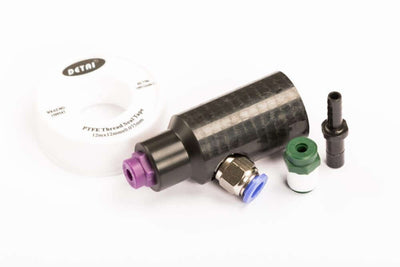
Keep compatible spare seals, fittings, filters and nozzles in a labelled service kit. A small replacement part can prevent a long interruption, but only if it matches the equipment and is safe for the intended chemical.
Buy equipment to remove a specific bottleneck
Before investing, identify what is actually slowing the job. Is the team spending too long repositioning hoses, refilling a system, applying unevenly or waiting for water?
A larger pump will not solve an inadequate water supply. A longer pole is not automatically easier to control. An injector still requires compatibility checks, calibration and an understanding of its operating limits.
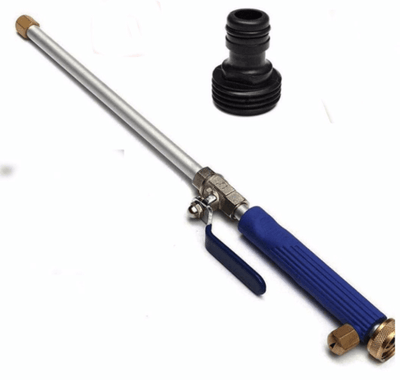
When comparing professional softwashing equipment, assess usable reach, output, chemical compatibility, serviceability and setup time together. The right system is the one that suits the work, not simply the one with the highest quoted capacity.
4. Control Chemical Application Rather Than Increasing Strength
Applying more chemical is not a reliable shortcut. Excessive concentration can increase material costs, surface damage, exposure risks and the amount of control needed around the work area.
Effective application depends on selecting the right product, using the labelled dilution and application rate, achieving suitable coverage and allowing the specified contact time.
Make application repeatable
- Check the product label and current safety data sheet before use.
- Measure accurately using suitable dedicated equipment.
- Verify dosing equipment under the actual operating conditions.
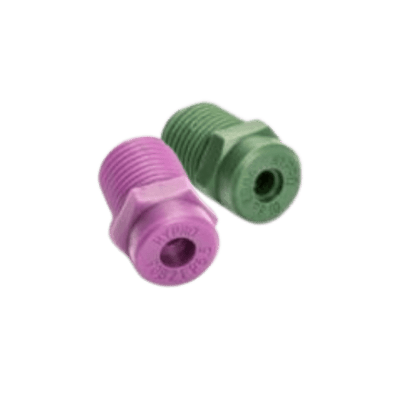
- Use an appropriate nozzle and controlled application technique.
- Monitor weather, drift, drying and runoff throughout the job.
- Record the product and application details for future reference.
Do not assume two products with similar descriptions have identical instructions. When choosing professional softwashing chemicals, match the product to the intended surface and use, including any relevant biocidal authorisation and label restrictions.
Never mix incompatible chemicals. In particular, sodium hypochlorite must not be mixed with acids or ammonia-containing products. Only use additives where compatibility is explicitly confirmed by the relevant manufacturer’s instructions.
Plan around contact time without leaving the process uncontrolled
Where the product instructions and risk assessment allow it, contact time can overlap with another controlled task. For example, a second operative might prepare the next exclusion zone while the first monitors the treated section.
That is different from applying a product and walking away. Someone must remain responsible for public access, changing conditions, vulnerable surfaces and the treatment itself.
5. Use a Repeatable On-Site Workflow
A standard workflow reduces decisions made under pressure. It should be consistent enough to prevent omissions, but flexible enough to reflect the site.
- Confirm the scope. Walk the site with the customer or responsible person and record existing defects.
- Check current conditions. Review weather, occupancy, access, drainage and changes since the survey.
- Establish controls. Put barriers, protection and runoff arrangements in place before cleaning.
- Check and test. Inspect equipment, verify application settings and complete the required test area.
- Work in planned sections. Choose a sequence that limits hose movement and prevents contamination of finished areas.
- Inspect as you progress. Resolve missed sections before moving equipment away.
- Complete the handover. Check surrounding areas, explain aftercare and record completion.
Where appropriate, working from higher areas towards lower ones can reduce repeat cleaning. However, drainage, chemical controls and surface compatibility take priority over any general sequencing rule.
On larger sites, agree where equipment can remain safely between shifts. Rebuilding the same setup every morning can consume substantial time, but security, public access and safe chemical storage must be resolved first.
6. Make Safety Documentation Useful on Site
Good safety planning improves productivity because it identifies obstacles before work begins. Generic paperwork that nobody reads offers little operational value.
Under UK requirements, contractors need suitable risk assessments and controls for their activities. Depending on the work, this includes COSHH assessments, work-at-height planning, equipment checks and protection of workers and others.
A safety data sheet supports a COSHH assessment; it does not replace one. The assessment must consider how the product is actually used, including application method, exposure, storage and foreseeable incidents.
SoftWash UK’s risk assessment and method statement pack for exterior cleaning can support a structured approach to documentation. Any template must be adapted to the site, task, equipment and substances involved.
Plan wastewater control before starting
Do not assume wash water can enter a nearby drain. Establish whether drainage serves surface water, foul sewerage or another system, and determine the necessary containment, collection and disposal arrangements.
Requirements vary with the discharge and UK jurisdiction. Seek guidance from the relevant environmental regulator and sewerage undertaker where necessary. Trade effluent consent may be required for discharge to a foul sewer; a drain cover alone does not establish a lawful disposal route.
For serious DIY users, the same practical lesson applies: a convenient drain is not permission to discharge chemicals or contaminated water.
7. Give Each Team Member a Clear Role
Two people do not automatically complete a job in half the time. If both repeatedly stop to find tools, move the same hose or decide what happens next, the extra labour may deliver little benefit.
On a suitable two-person job, responsibilities might be divided between:
- Lead operative: surface assessment, equipment settings, application and finish checks.
- Support operative: hose management, access control, supply monitoring and preparation of the next work section.
Both need suitable competence and a shared understanding of the method. Agree clear stop signals, particularly where machinery noise makes conversation difficult.
For lone workers, reliable communication, check-in arrangements and realistic task limits are more important than trying to reproduce a two-person workflow.
8. Measure Time Savings and Reduce Repeat Visits
Track the parts of the job separately: setup, protection, active cleaning, necessary waiting, pack-down and handover. This shows whether the real bottleneck is application speed or something less obvious.
For example, consider a hypothetical two-person team that removes 15 minutes of avoidable setup delay from each of four comparable jobs. That saves one elapsed hour, equivalent to two labour-hours. It is an illustration, not a promised result, but it shows why small repeatable improvements matter.
Record why delays happened. “Cleaning took longer” is less useful than “water supply was not checked” or “additional staining was outside the original scope”.
Before leaving, inspect edges, corners, adjacent glazing, doors and drainage points. Explain any expected weathering process and distinguish remaining staining from biological growth or permanent surface defects. A clear handover reduces unnecessary callbacks.
Common Time-Saving Myths
“Stronger chemicals always work faster”
Not reliably. Performance depends on the product, contamination, surface and conditions. Exceeding instructions can create damage and extra work rather than a better result.
“Skipping protection makes small jobs more profitable”
One damaged fitting, affected planting bed or contaminated vehicle can outweigh the time supposedly saved. Scale protection to the risk, not just the job value.
“The biggest machine is the most productive”
Productivity depends on the whole system, including supply, access, recovery, operator control and the surface. Oversized equipment can introduce new problems.
“Training means losing a working day”
Training takes time, but repeated mistakes also consume time. Better understanding of methods, equipment and safety can reduce avoidable trial and error.
If you want to explore structured learning before committing to a full programme, you can try selected lessons through the free SoftWash UK course preview. It is a useful way to assess the teaching style and professional approach before deciding on further training.
Frequently Asked Questions
What is the quickest way to save time on exterior cleaning jobs?
Start with better surveys and a standard setup checklist. Confirming surfaces, access, water supply and drainage before arrival often removes more wasted time than increasing cleaning speed.
Is softwashing faster than pressure washing?
It depends on the task. Softwashing may reduce mechanical cleaning on compatible surfaces affected by biological growth. Pressure washing may be more appropriate for certain robust surfaces with heavy dirt. Compare total job time, including protection, contact time, rinsing where required and wastewater management.
Can contractors carry out other work during treatment contact time?
Sometimes, provided the product instructions, risk assessment and site controls allow it. The treatment must remain appropriately monitored, and the second task must not compromise access control or create incompatible chemical exposure.
Which equipment upgrade should a small contractor buy first?
Address the measured bottleneck. Better hose management, suitable nozzles, reliable fittings or correctly specified application equipment may deliver more value than a larger machine. Check compatibility and maintenance requirements before buying.
How can facilities managers help contractors work more efficiently?
Provide accurate site information, approved working times, access arrangements, drainage information and a named contact. Coordinate occupants, deliveries and parked vehicles before the contractor arrives.
Does professional training help reduce time on site?
It can improve method selection, equipment use and planning, helping contractors avoid preventable errors. The benefit depends on applying that learning consistently; training does not replace site-specific assessment or practical competence.
Conclusion: Save Time by Making the Work More Predictable
Efficient contractors do not simply rush. They remove uncertainty, organise equipment, choose suitable methods and check quality before leaving. Safety controls and accurate documentation support that process rather than sitting apart from it.
Start with one recurring problem: late access, tangled hoses, inconsistent application or missed finishing details. Measure it, improve the process and check whether the change works across several jobs.
SoftWash UK supplies professional softwashing chemicals, equipment and training to support better-informed working practices. If you want to strengthen your methods, explore the SoftWash UK professional softwashing training course and use further guidance to build a safer, more consistent approach to every site.