The Biggest Driveway Cleaning Mistakes UK Contractors Must Avoid
The biggest driveway cleaning mistakes are using too much pressure, choosing the wrong chemical, failing to pre-treat stains, ignoring drainage and runoff, damaging jointing material, and leaving the surface without proper post-treatment. On block paving, concrete, resin bound, tarmac and natural stone, these mistakes can turn a straightforward clean into surface damage, customer complaints, rework and avoidable safety risks.
For UK exterior cleaning contractors, property maintenance teams, facilities managers and serious DIY users, driveway cleaning is not just about making paving look better on the day. A professional job should remove organic growth, lift staining where possible, manage weeds and algae, protect surrounding areas, and reduce how quickly the surface becomes slippery again.
This article explains the most common driveway cleaning mistakes we see in the industry, why they happen, how to avoid them, and how to build a safer, more reliable process for domestic and commercial driveway cleaning work.
Why Driveway Cleaning Goes Wrong So Often
Driveways seem simple, but they are rarely uniform. One site may contain block paving, concrete bays, asphalt repairs, clay pavers, sandstone edging, metal drainage channels, painted garage doors and planted borders all within a few square metres. Add in old oil spills, black algae, tyre marks, moss, weeds, poor drainage and customer expectations, and the job becomes more technical than it first appears.
The most common problems usually come from one of three things:
- Treating every driveway surface the same.
- Relying on pressure alone instead of using the right cleaning method.
- Failing to assess risk, drainage, staining and surface condition before starting.
A good contractor thinks like a surveyor before thinking like an operator. The site inspection often determines whether the job will be profitable, safe and successful.
Mistake 1: Using Excessive Pressure On The Wrong Surface
High-pressure cleaning has its place, especially on robust concrete and many block paved surfaces. The mistake is assuming that more pressure means a better clean. In practice, excessive pressure can scar concrete, remove the face of pavers, expose aggregate, damage pointing, strip jointing sand and drive dirty water into areas where it should not go.
On older block paving, aggressive turbo nozzles can leave permanent wand marks or create zebra striping. On natural stone, incorrect pressure can open the surface and make it hold dirt more readily afterwards. On resin bound surfaces, too much pressure or working too close can disturb the resin matrix.
Best Practice
- Test an inconspicuous area before committing to the method.
- Use the lowest effective pressure, not the highest available pressure.
- Keep a consistent working distance and angle.
- Use a flat surface cleaner where appropriate for even results.
- Avoid turbo nozzles on vulnerable, decorative or deteriorated surfaces.
Many jobs benefit from a combined approach. Understanding softwashing vs pressure washing helps contractors decide when to use water pressure, when to use chemistry, and when to use both in a controlled system.
Mistake 2: Skipping The Survey And Quote Assessment
A rushed quote is one of the easiest ways to create problems later. If you price a driveway by square metre alone, without considering staining, access, drainage, water supply, surface type and customer expectations, you may underquote or promise a result that cannot be achieved safely.
Key things to inspect before cleaning include:
- Surface type: block paving, concrete, tarmac, resin bound, porcelain, clay, sandstone, limestone or mixed materials.
- Surface condition: spalling, cracks, loose blocks, failed pointing, sunken areas or previous damage.
- Staining: oil, rust, tannin, algae, lichen, tyre marks, cement and paint.
- Drainage: where wash water will go and whether it could enter watercourses or sensitive areas.
- Nearby materials: timber, painted surfaces, metals, glass, plants and lawns.
- Public safety: footpaths, shared parking, commercial traffic and pedestrian routes.
For commercial clients and facilities managers, this survey stage is particularly important because it informs method statements, working hours, public exclusion zones, slip risk control and waste water management.
Mistake 3: Treating Oil Stains Like General Dirt
Oil stains are one of the biggest sources of customer disappointment in driveway cleaning. Many clients assume pressure washing will remove oil completely. It usually will not. Oil penetrates porous surfaces such as concrete and block paving, especially if it has been present for months or years.
Pressure washing untreated oil can spread the contamination, lighten the surface unevenly and leave a visible shadow. In some cases, it pushes residues deeper into the substrate.
Best Practice For Oil Staining
- Identify whether the stain is fresh, aged, surface-level or deeply absorbed.
- Explain to the customer that improvement is realistic, but complete removal is not always guaranteed.
- Use a suitable oil stain remover before pressure washing.
- Allow appropriate dwell time according to product instructions.
- Agitate where required, rinse carefully and repeat only if safe for the surface.
For professional work, a dedicated product such as Grenade Driveway Oil Stain Remover can be useful where oil, grease and hydrocarbon staining need targeted treatment before the main clean. Always check surface suitability and follow the safety data sheet and label guidance.
Mistake 4: Not Understanding When Softwashing Is Appropriate
Driveway cleaning is often thought of as pressure washing only, but many driveway problems are biological. Algae, moss, lichen and organic staining are living or once-living contaminants. If you only blast off what is visible, regrowth can appear quickly, especially on shaded, north-facing or damp sites.
Softwashing uses controlled chemical application to treat organic growth at the root cause. It can be used as a pre-treatment, a post-treatment or a primary cleaning method depending on the surface, contamination and safety considerations.
However, a major mistake is thinking softwashing means spraying strong chemicals everywhere. Professional softwashing is controlled, measured and risk assessed. It requires knowledge of dilution, dwell time, plant protection, rinsing, runoff control, compatibility and personal protective equipment.
Where Softwashing Can Help On Driveways
- Reducing green algae and slippery organic films.
- Helping to break down moss and lichen before mechanical cleaning.
- Reducing rapid biological regrowth after pressure washing.
- Cleaning delicate areas where high pressure may cause damage.
If you are unsure which products are used professionally, SoftWash UK explains the main categories of softwashing chemicals and how they fit into safe exterior cleaning systems.
Mistake 5: Poor Chemical Safety And Compliance
Chemicals can improve driveway cleaning results, but they also increase professional responsibility. Contractors should never treat chemical application casually. Poor practice can damage plants, discolour surfaces, harm surrounding materials, create slip hazards or breach environmental responsibilities.
Common chemical mistakes include:
- Mixing incompatible products.
- Applying chemicals without reading the SDS and label.
- Using excessive concentration rather than the correct dilution.
- Allowing runoff into ponds, watercourses or sensitive drainage.
- Failing to protect plants, metals, painted surfaces and public routes.
- Not carrying suitable PPE, spill control or clean water for rinsing.
UK contractors should work with proper risk assessment, COSHH awareness, documented method statements and site-specific controls. SoftWash UK supplies professional soft wash chemicals, but product choice is only one part of the job. Safe handling, correct storage, controlled application and responsible disposal matter just as much.
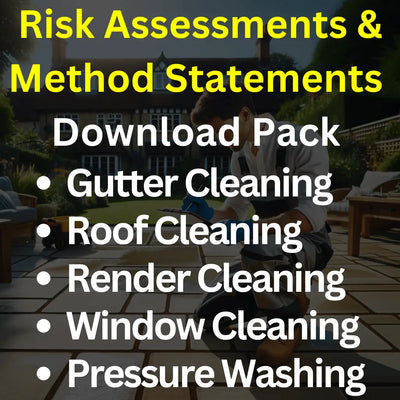
For businesses that want a more structured approach, a resource such as the Risk Assessment and Method Statement Pack for Exterior Cleaning can help standardise site documentation, especially where commercial clients require evidence of safe systems of work.
Mistake 6: Ignoring Drainage, Runoff And Environmental Controls
Driveway cleaning creates dirty water. Sometimes that water contains silt, hydrocarbons, moss, weeds, detergents, biocides or other residues. Letting everything flow wherever gravity takes it is not professional practice.
Before starting, identify where the water will travel. On domestic properties this may be a surface water drain, combined drain, gravel soakaway, flower bed, public pavement or road gully. On commercial sites, there may be interceptor systems, internal drainage rules or strict environmental requirements.
Practical Runoff Controls
- Block or divert flow away from sensitive drains where required.
- Use drain mats, booms or wet vac recovery where appropriate.
- Remove heavy debris before rinsing to reduce silt movement.
- Keep chemical application controlled and targeted.
- Do not allow contaminated runoff to enter watercourses.
Facilities managers should make runoff planning part of the job specification, not an afterthought. Contractors should be prepared to explain their water management plan before work starts.
Mistake 7: Damaging Block Paving Joints And Forgetting Re-Sanding
Block paving is one of the most common driveway surfaces in the UK. It is also one of the easiest to leave unfinished. Pressure washing removes moss, weeds and dirt, but it can also remove jointing sand. If those joints are left empty, blocks can move, weeds establish faster and the finished surface may look incomplete.
After cleaning block paving, allow the surface to dry fully before re-sanding with suitable kiln-dried sand. Brush the sand into the joints evenly and compact where required. Do not apply sand to wet joints, as it will clump and fail to settle properly.
Professional Tip
Build re-sanding into your quote and customer explanation. If it is optional, make that clear in writing. Many disputes happen because the customer expects a fully finished block paving clean, while the contractor priced only for washing.
Mistake 8: Cleaning Tarmac Too Aggressively
Tarmac and asphalt driveways need particular care. Aggressive pressure can break up the surface, remove fines, expose aggregate and accelerate deterioration. Older tarmac may already be brittle, oxidised or patched.
For tarmac, avoid close-range high pressure and aggressive rotary nozzles. Use careful rinsing, suitable treatments where appropriate, and clear customer communication. Oil staining on tarmac can be especially problematic because solvents and strong cleaners may affect the bitumen binder. Always test and check compatibility.
Mistake 9: Promising A “Like New” Result On Every Driveway
One of the biggest business mistakes is overpromising. Some driveways will clean dramatically. Others will improve but still show age, deep staining, acid marks, rust, oil shadows, efflorescence, wear patterns or previous pressure damage.
A professional cleaner should explain the difference between:
- Soiling that can be removed.
- Organic growth that can be treated.
- Staining that may improve but not disappear.
- Surface damage that cleaning cannot reverse.
Photographs taken before and after the job are useful for customer communication and record keeping. On commercial sites, they can also support condition reports and planned maintenance records.
Mistake 10: Choosing Equipment Based Only On Power
A powerful pressure washer does not automatically make you a better driveway cleaner. Productivity and finish depend on the complete setup: flow rate, pressure control, nozzle selection, surface cleaner size, chemical application equipment, hoses, water supply, recovery tools and operator technique.
For contractors building a professional system, good-quality soft washing equipment and pressure washing accessories should be selected around the type of work you do most often. A domestic driveway round, a school site, a petrol station forecourt and a commercial car park may all require different planning.
Comparison Table: Common Driveway Cleaning Mistakes And Better Practice
| Mistake | Likely Result | Better Professional Approach |
|---|---|---|
| Using maximum pressure on every surface | Etching, joint loss, surface damage and uneven cleaning | Test first and use the lowest effective pressure with suitable nozzles |
| Cleaning oil stains without pre-treatment | Stain spreads or remains visible after cleaning | Use a suitable oil stain remover and manage expectations |
| Ignoring drainage and runoff | Environmental risk, blocked drains and customer complaints | Plan water flow, protect drains and recover waste where needed |
| Blasting organic growth only | Fast regrowth and slippery surfaces returning quickly | Use appropriate softwashing treatment where suitable |
| Not re-sanding block paving | Loose blocks, weed growth and unfinished appearance | Allow full drying and re-sand joints correctly |
| Overpromising results | Disputes and disappointed customers | Explain limitations before starting and record pre-existing damage |
A Professional Step-By-Step Driveway Cleaning Process
The best process will vary by surface and site, but the following structure is a reliable starting point for contractors and maintenance professionals.
1. Survey The Driveway
Identify surface type, condition, staining, access, drainage, water supply, surrounding materials and safety risks. Take photographs before work starts.
2. Agree The Expected Result
Explain what can realistically be removed, what may only improve, and whether re-sanding, stain treatment or post-treatment is included.
3. Prepare The Area
Move vehicles, plan pedestrian control, protect doors and sensitive materials, remove loose debris, cover or pre-wet plants where needed, and set up drainage controls.
4. Pre-Treat Stains And Organic Growth
Apply targeted products for oil, algae, moss or lichen where appropriate. Follow label instructions, safety data sheets, dwell times and surface suitability guidance.
5. Clean Methodically
Use an appropriate pressure washer, surface cleaner, rinsing method or softwashing approach. Work in a logical pattern and avoid pushing dirty water over already cleaned areas.
6. Rinse And Inspect
Check edges, drainage channels, thresholds, garage doors, walls and public areas. Remove residues and make sure the surface is left safe.
7. Re-Sand Or Post-Treat Where Required
For block paving, allow the surface to dry and re-sand joints. Where suitable, apply a post-treatment to reduce organic regrowth. Contractors often ask how long does softwashing last; the answer depends on exposure, shade, moisture, surface porosity and maintenance frequency.
8. Hand Over Professionally
Show the customer the finished work, explain drying times and aftercare, and provide any relevant safety notes such as temporary slipperiness or avoiding traffic until re-sanding has settled.
Driveway Surface Types And Key Risks
| Surface Type | Main Risk | Cleaning Note |
|---|---|---|
| Block paving | Jointing sand loss and loose blocks | Clean evenly and re-sand once dry |
| Concrete | Etching, striping and exposed aggregate | Control pressure and avoid close nozzle work |
| Tarmac | Surface breakup and binder damage | Use very careful pressure and check chemical compatibility |
| Resin bound | Dislodging aggregate or damaging resin | Use manufacturer-safe methods and avoid aggressive cleaning |
| Natural stone | Surface erosion, staining and chemical sensitivity | Test first and identify the stone before treatment |
| Porcelain | Smearing and residue marks | Use suitable cleaners and thorough rinsing |
Myths About Driveway Cleaning
Myth: Pressure Washing Solves Every Driveway Cleaning Problem
Pressure washing removes surface dirt and growth, but it does not automatically treat root systems, deep oil staining, rust, efflorescence or chemical marks. Often, pressure is only one part of the system.
Myth: Stronger Chemical Always Means A Better Clean
Using stronger chemical than necessary increases risk without guaranteeing a better result. Correct dilution, dwell time, surface suitability and rinsing are more important than brute strength.
Myth: All Black Spots Are The Same
Black marks may be lichen, carbon staining, oil residue, tyre marks, metal staining or surface wear. Misidentifying the mark leads to the wrong treatment and poor results.
Myth: A Clean Driveway Does Not Need Maintenance
Shade, moisture, falling leaves, standing water and vehicle traffic all encourage contamination to return. A good maintenance plan keeps surfaces safer and reduces the need for aggressive cleaning later.
Training Reduces Costly Driveway Cleaning Mistakes
Many driveway cleaning mistakes happen because operators learn by trial and error on customers’ property. That is risky. Professional training helps contractors understand surface identification, softwashing principles, chemical safety, equipment setup, plant protection, quoting, documentation and responsible working methods.
SoftWash UK offers a full Soft Wash Training Course for contractors who want a structured route into professional softwashing and exterior cleaning best practice.
If you want to see how professional softwashing training is structured before committing to the full programme, you can try selected lessons from the SoftWash UK course for free. It is a useful way to preview the training and understand the standards, safety thinking and practical approach behind professional softwashing.
Frequently Asked Questions
What is the most common driveway cleaning mistake?
The most common mistake is using too much pressure without assessing the surface first. This can scar concrete, remove jointing sand from block paving, damage natural stone and create an uneven finish. A test patch and correct nozzle selection should always come before full cleaning.
Should I softwash or pressure wash a driveway?
It depends on the surface and contamination. Pressure washing is useful for removing heavy dirt and debris from robust surfaces. Softwashing is useful for treating organic growth such as algae, moss and lichen. Many professional driveway cleaning jobs use both methods in a controlled sequence.
Can oil stains be completely removed from a driveway?
Fresh oil stains are usually easier to improve than old, deeply absorbed stains. Complete removal is not always possible, especially on porous concrete and block paving. Use a dedicated oil stain treatment, allow suitable dwell time and manage customer expectations before starting.
Do block paving driveways need re-sanding after cleaning?
Yes, in most cases. Pressure washing often removes jointing sand from block paving. Once the surface is dry, kiln-dried sand should be brushed into the joints to stabilise the blocks and reduce weed growth.
Is driveway cleaning safe near plants and lawns?
It can be, but only with proper precautions. Pre-wetting, shielding, controlled application, careful rinsing and runoff management are all important when using cleaning chemicals. Never allow strong chemical solutions to pool around plants or enter sensitive areas.
How often should a driveway be professionally cleaned?
Many UK driveways benefit from cleaning every 12 to 24 months, depending on shade, drainage, tree cover, traffic and surface type. Commercial sites may need more frequent maintenance because of slip risk, presentation standards and higher vehicle use.
Conclusion: Better Driveway Cleaning Comes From Better Decisions
The biggest driveway cleaning mistakes are rarely caused by a lack of effort. They are caused by poor assessment, excessive pressure, wrong chemical choice, weak runoff control, skipped re-sanding, unrealistic promises and insufficient safety planning.
A professional driveway clean starts with understanding the surface, identifying the contamination and choosing the safest effective method. Pressure washing, softwashing, stain removal, re-sanding and maintenance planning all have a place when used correctly.
For contractors, property maintenance professionals and facilities managers, avoiding these mistakes protects surfaces, improves results, reduces complaints and supports safer working. SoftWash UK supports the industry with professional chemicals, softwashing equipment, training and educational resources to help raise standards across UK exterior cleaning.
To continue learning, explore the SoftWash UK Knowledge Centre, review suitable professional products for driveway and exterior cleaning, or consider structured training if you want to build a safer, more confident and more profitable cleaning process.