Can You Pressure Wash Roof Tiles?
Yes, you can pressure wash some roof tiles, but in most UK roof cleaning situations it is not the safest or most appropriate method. High-pressure washing can remove moss, algae and surface dirt quickly, but it can also damage roof tiles, disturb laps, force water beneath the roof covering, strip protective surface layers and create unnecessary risk when working at height.
For exterior cleaning contractors, facilities managers, property maintenance teams and serious DIY users, the better question is not simply “can I pressure wash roof tiles?” but “should I pressure wash this particular roof, and is there a safer method that will produce a longer-lasting result?” In many cases, controlled manual moss removal followed by a suitable biocidal treatment or softwashing process is a more responsible approach than aggressive pressure washing.
Pressure washing may have a place in very limited circumstances, using carefully controlled pressure, suitable equipment, correct access methods and a full risk assessment. However, it should never be treated as the default roof cleaning method. The type of tile, roof pitch, age of the roof, weathering, existing defects, drainage, access and biological growth all need to be assessed before deciding on a method.
Quick Answer: Is Pressure Washing Roof Tiles Recommended?
Pressure washing roof tiles is generally not recommended as a first-choice method, especially on older UK roofs, weathered concrete tiles, clay tiles, slate, fragile roof coverings or roofs with existing defects. A lower-impact cleaning method is usually safer and more sustainable.
In professional roof cleaning, the preferred workflow is often:
- Inspect the roof and identify tile type, defects, access risks and drainage issues.
- Remove heavy moss manually using appropriate roof-safe tools.
- Clear gutters, valleys and downpipes.
- Apply an appropriate biocidal or softwashing treatment where suitable.
- Allow weathering and treatment dwell time to continue cleaning the roof over time.
If you are unsure where to start, SoftWash UK’s Knowledge Centre includes detailed roof cleaning advice that explains the practical stages of cleaning a roof without relying solely on pressure.
Why Pressure Washing Roof Tiles Can Be Risky
A pressure washer is designed to remove contamination with force. On patios and block paving that may be acceptable when used correctly. On a roof, that force is applied to a weatherproofing system made up of overlapping tiles, fixings, underlay, battens, flashings, ridge details and gutters. Roofs are designed to shed rainwater downward, not to resist high-pressure water being driven sideways or upwards beneath tile laps.
Common risks of pressure washing roof tiles
- Surface damage: High pressure can remove the weathered outer surface of concrete tiles or damage coatings.
- Water ingress: Water can be forced under tiles, into laps, beneath flashings or into the roof space.
- Broken tiles: Foot traffic, ladders, roof ladders and pressure washer reaction force can crack fragile tiles.
- Dislodged pointing or mortar: Ridge tiles, verges and valleys may be weakened by pressure.
- Accelerated weathering: Aggressive cleaning can expose porous surfaces that re-soil more quickly.
- Blocked drainage: Dislodged moss can overwhelm gutters, gullies, soakaways and surface drains.
- Working at height hazards: Wet roof tiles, hoses and lance kickback can increase slip and fall risk.
Where roofs are already fragile, an aggressive wash can turn a cleaning job into a repair claim. SoftWash UK has separate guidance on roof tile damage, which is particularly useful for contractors who need to explain method choice to customers or facilities clients.
Roof Tile Types and Pressure Washing Suitability
Not all roof tiles behave the same. Before selecting a cleaning method, identify the roof covering and its condition. A modern concrete tile on a robust roof may tolerate careful low-pressure rinsing better than a brittle clay tile or natural slate roof. However, “tolerate” does not mean “best practice”.
| Roof covering | Pressure washing suitability | Professional best-practice note |
|---|---|---|
| Concrete roof tiles | Sometimes possible at controlled low pressure, but high pressure can erode the surface. | Manual moss removal plus treatment is often safer and gives a longer-lasting result. |
| Clay roof tiles | Usually poor suitability, especially on older or brittle clay tiles. | Avoid aggressive washing. Inspect carefully for cracks, spalling and historical repairs. |
| Natural slate | Generally unsuitable for pressure washing. | Slate can crack, delaminate or become displaced. Use specialist methods and access planning. |
| Old cement fibre tiles | Potentially high risk. | Do not proceed without identifying the material. Some older products may contain asbestos and need specialist assessment. |
| Coated or painted roof tiles | High risk of coating damage. | Check coating condition and manufacturer guidance. Avoid removing coatings with pressure. |
Pressure Washing Versus Softwashing Roof Tiles
Pressure washing and softwashing are often discussed as if they are interchangeable. They are not. Pressure washing relies mainly on mechanical force. Softwashing relies on controlled chemical action, low-pressure application and dwell time to treat organic contamination.
Roof contamination in the UK is usually biological. Moss, algae, lichen and biofilm thrive in damp, shaded environments, especially under trees, on north-facing elevations and on rough, porous tile surfaces. Understanding why growth appears helps you choose the right method. SoftWash UK’s guide to moss on roof tiles explains the conditions that encourage regrowth and why simply blasting the roof clean does not always solve the underlying problem.
| Method | Main cleaning action | Advantages | Limitations |
|---|---|---|---|
| High-pressure washing | Mechanical force | Fast visible removal of dirt and moss. | Higher risk of tile damage, water ingress, mess and short-lived results if no treatment follows. |
| Manual moss removal | Physical scraping or brushing | Controlled, less water use, suitable for many tiled roofs. | Labour-intensive and requires good access planning. |
| Softwashing or biocidal treatment | Chemical treatment of organic growth | Targets spores, algae and biofilm; results can continue improving over weeks and months. | Requires correct product choice, dilution, PPE, weather planning and compliance. |
| Low-pressure rinse | Controlled water flow | Useful for rinsing residues where appropriate. | Not the same as pressure washing and still needs care around laps and flashings. |
When Might Pressure Washing Be Acceptable?
There are limited circumstances where pressure washing may be considered by a competent contractor. Even then, it should be controlled, documented and justified by the roof survey.
Possible examples include:
- A relatively modern, sound concrete tiled roof with no visible defects.
- Low-pressure cleaning using appropriate fan jets rather than aggressive turbo nozzles.
- Cleaning from a scaffold, MEWP or safe access platform rather than standing directly on fragile tiles.
- Following the tile manufacturer’s recommendations where available.
- Using pressure only as part of a wider system, not as an uncontrolled blast-cleaning exercise.
Even in these situations, contractors should consider whether manual removal and treatment would achieve the objective with less risk. A facilities manager responsible for a school, care home, retail site or commercial estate will often prefer a method that reduces disruption, overspray, debris and potential roof defects.
When Should You Avoid Pressure Washing Roof Tiles?
Pressure washing should usually be avoided where there is any doubt about the roof’s condition, material or ability to resist water ingress.
Avoid pressure washing if you see:
- Cracked, slipped, loose or missing tiles.
- Damaged ridge tiles, verges, valleys or leadwork.
- Older clay tiles, slate or fragile roof coverings.
- Heavy moss sitting under tile laps.
- Evidence of leaks or damp in the loft space.
- Blocked gutters or poor drainage.
- Solar panels, roof lights, vents or delicate details close to the cleaning area.
- Unknown cementitious roof materials that may require asbestos consideration.
Lichen is another important consideration. It often bonds tightly to the surface and can leave marks even after cleaning. Trying to remove every lichen spot immediately with pressure can damage the tile surface. For more background, SoftWash UK explains the causes and behaviour of lichen on roof tiles in its Knowledge Centre.
Professional Roof Cleaning Best Practice: A Safer Step-by-Step Approach
The following process reflects a practical, lower-risk approach used by many professional exterior cleaning contractors. It is not a substitute for site-specific training, manufacturer guidance or a risk assessment, but it provides a reliable framework for planning roof cleaning work.
1. Carry out a roof survey
Inspect from ground level, loft space where appropriate, drone imagery, scaffold or safe access. Identify tile type, roof pitch, access constraints, fragile areas, nearby watercourses, conservatories, skylights, solar panels, downpipes and drainage routes.
Record existing defects before work starts. Photographs are valuable for customer communication and for protecting your business if pre-existing damage is later queried.
2. Decide whether moss should be removed first
Heavy moss should normally be removed before treatment. If thick moss is left in place, it can shield the tile surface and reduce treatment contact. It may also dislodge later in large clumps and block gutters. SoftWash UK’s article on roof moss removal gives further guidance on when scraping before treatment is appropriate.
3. Choose safe access and fall protection
Working at height is one of the biggest risks in roof cleaning. Do not rely on a ladder alone for roof work. Depending on the site, safe access may involve scaffold, a mobile elevated work platform, roof ladders, edge protection, harness systems or specialist access equipment.
Contractors should work in line with the Work at Height Regulations, carry out a suitable risk assessment and have an emergency plan. Serious DIY users should be realistic: if safe access cannot be achieved, the job should be passed to a competent professional.
4. Remove heavy moss with controlled methods
Use roof-safe scraping tools, brushes and collection methods that minimise tile damage. Work with the tile profile rather than against it. Avoid levering beneath laps, dragging tools across fragile edges or walking unnecessarily on the roof covering.
Collect debris where possible. Do not allow moss to simply wash into gutters and drains. On commercial sites, debris management is especially important because blocked drainage can cause internal leaks, slip hazards and maintenance call-outs.
5. Clear gutters, valleys and drainage routes
Before any wash-down or treatment, ensure gutters and downpipes are clear. Check gullies, water butts, soakaways and drainage channels. If chemical treatment will be used, assess where run-off may go and whether additional control measures are needed.
6. Apply a suitable treatment where appropriate
For organic growth control, professional softwashing chemicals or biocidal treatments may be used where suitable. The choice of product depends on the substrate, contamination, application method, dwell time, weather and site sensitivity.
SoftWash UK supplies professional soft wash chemicals for exterior cleaning contractors, including products designed for treating organic growth on roofs and external surfaces. For roof moss and organic staining, Clean Guard Pro roof moss killer and cleaner may be considered where it is appropriate for the surface and used in accordance with the product label, safety data and site risk assessment.
7. Use low-pressure application equipment
Softwashing is not high-pressure washing. It is typically carried out using controlled low-pressure delivery. This helps apply treatment evenly without forcing water beneath roof coverings.
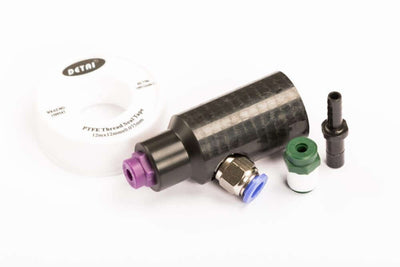
For contractors using pole-based systems, equipment such as a water fed pole softwash nozzle can help with controlled application from safer positions where the site layout allows. Equipment choice should always be matched to the chemical, surface, height and access plan.
8. Allow treatment and weathering to work
One of the most common misunderstandings in roof cleaning is expecting every mark to disappear on the day. With biocidal treatments, results often develop over time. Dead moss, algae and lichen residues can weather away gradually through rain and natural exposure.
This approach may look less dramatic than blasting a roof clean in one afternoon, but it is often kinder to the roof and can give longer-lasting control of biological regrowth.
Safety, Compliance and Environmental Best Practice
Roof cleaning combines several high-risk activities: working at height, handling chemicals, managing water run-off, protecting property and working near the public. A professional method statement is not paperwork for the sake of paperwork; it is what turns a risky job into a controlled job.
Key points for contractors and facilities managers
- Working at height: Plan access, fall prevention and rescue procedures before starting.
- COSHH: Assess chemical hazards, PPE, storage, transport, dilution and emergency actions.
- RAMS: Use site-specific risk assessments and method statements, not generic templates with no detail.
- Public protection: Set exclusion zones, signage and barriers where overspray or debris could affect others.
- Vegetation protection: Pre-wet, cover or divert run-off where suitable, depending on the product and site.
- Surface water drains: Prevent inappropriate discharge into drains, ponds, streams or sensitive areas.
- Weather: Avoid high winds, heavy rain, frost, extreme heat or conditions that increase spray drift and slip risk.
- Documentation: Keep product labels, SDS, training records and customer sign-off where relevant.
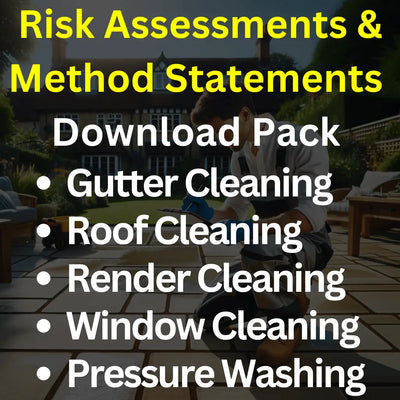
For contractors who want to strengthen their documentation, SoftWash UK’s Risk Assessment and Method Statement Pack for Exterior Cleaning can help create a more professional approach to planning and communicating safe systems of work.
Common Mistakes and Myths About Pressure Washing Roof Tiles
Myth 1: “If the roof looks clean straight away, it must be the best method”
Instant visual results can be misleading. A pressure washer may remove the visible moss but leave spores, algae and biofilm behind. If the root cause is not addressed, the roof can quickly begin to re-colonise.
Myth 2: “A turbo nozzle is faster, so it is more professional”
Turbo nozzles and aggressive jetting can be extremely damaging on roof tiles. Faster is not always better. A professional result is judged by safety, suitability, longevity and preservation of the roof, not just speed.
Myth 3: “All roof tiles are waterproof, so pressure won’t matter”
Roof coverings are water-shedding systems rather than sealed waterproof surfaces. Wind-driven rain is considered in roof design, but a pressure washer can drive water in directions and volumes the roof was not designed to handle.
Myth 4: “Chemicals are always more dangerous than pressure washing”
Poor chemical use is dangerous, but so is uncontrolled pressure washing at height. Professional softwashing uses appropriate products, correct dilution, PPE, COSHH assessment, controlled application and environmental protection. The safest method is the one properly assessed for the site.
Myth 5: “You can clean any roof from a ladder”
Roof cleaning from ladders alone is often unsafe and inefficient. Hoses, wet surfaces, uneven ground and overhead working introduce serious risk. Contractors should use proper access systems and avoid overreaching.
What Should Facilities Managers Ask Before Approving Roof Pressure Washing?
Facilities managers and property maintenance professionals should challenge method statements that simply say “pressure wash roof” without detail. A responsible contractor should be able to explain why the method is suitable and how risks will be controlled.
Useful questions include:
- What type of roof covering is installed and what condition is it in?
- Has the roof been inspected for cracked tiles, weak pointing and existing leaks?
- What pressure, nozzle type and application angle will be used?
- How will water ingress be prevented?
- How will moss debris be collected and disposed of?
- How will gutters, gullies and drainage be protected?
- What access system and fall protection will be used?
- What COSHH and environmental controls are in place if treatment is applied?
- Is there a safer alternative, such as manual moss removal and softwashing?
If the contractor cannot answer these questions clearly, the method may not be sufficiently planned.
Training Matters: Roof Cleaning Is Not Just Another Pressure Washing Job
Many pressure washing problems happen when contractors move from ground-level hard surface cleaning onto roofs without changing their method, equipment or risk controls. Roof cleaning requires a different mindset.
Professional training helps contractors understand chemical selection, application technique, surface compatibility, dilution, PPE, customer communication, legal duties and environmental protection. SoftWash UK offers a practical Soft Wash Training Course for contractors who want to improve their technical knowledge and avoid common mistakes when treating roofs and exterior surfaces.
Training is also valuable for facilities teams who need to specify roof cleaning work, review contractor proposals or build internal maintenance standards.
FAQ: Can You Pressure Wash Roof Tiles?
Can pressure washing damage concrete roof tiles?
Yes. High pressure can erode the surface of concrete roof tiles, remove weathered material, expose a more porous surface and increase the risk of future staining. It can also force water under laps or disturb weak roof details. Controlled low-pressure rinsing may be acceptable in some situations, but aggressive pressure washing should be avoided.
Is softwashing better than pressure washing a roof?
In many cases, yes. Softwashing or biocidal treatment is often better for treating moss, algae, lichen and biofilm because it targets organic contamination rather than simply blasting away visible growth. The best approach is often manual moss removal followed by a suitable treatment and natural weathering.
Should moss be scraped off before treating roof tiles?
Heavy moss should usually be removed before treatment so that the product can contact the tile surface properly. It also reduces the risk of dead moss later blocking gutters and drains. Light organic staining may not need the same level of physical removal, depending on the product and site conditions.
Can I pressure wash roof tiles myself?
Serious DIY users should be very cautious. The main risk is not only tile damage, but working at height with wet surfaces, hoses and pressure washer recoil. If you cannot access the roof safely, identify the roof material, control run-off and protect the property, it is better to use a competent professional.
Will pressure washing stop moss growing back?
No, not by itself. Pressure washing may remove visible moss, but it does not reliably treat spores and biofilm. Without a suitable post-treatment and improvements to drainage, shade or debris build-up where possible, moss and algae may return.
What pressure should be used to clean roof tiles?
There is no single safe pressure for all roof tiles. Suitability depends on tile type, age, condition, nozzle, distance, angle and access. As a rule, avoid aggressive high-pressure cleaning and turbo nozzles. If water is used, it should be controlled, low impact and justified by a roof-specific assessment.
Conclusion: Can You Pressure Wash Roof Tiles?
You can pressure wash some roof tiles, but that does not mean you should. For most UK roof cleaning work, high-pressure washing introduces unnecessary risk to the roof covering, the building and the person carrying out the work. It can damage tiles, force water into the roof structure and produce short-lived results if biological growth is not properly treated.
A more professional approach is to inspect the roof, remove heavy moss carefully, clear drainage, apply an appropriate treatment where suitable and allow time for the roof to weather clean. This method is often safer, more controlled and better aligned with responsible exterior cleaning practice.
For contractors, property maintenance professionals and facilities managers who want to improve roof cleaning standards, SoftWash UK provides professional softwashing chemicals, equipment, training and educational resources. Explore the SoftWash UK professional cleaning products, review the Softwashing Knowledge Hub, or consider structured training to build safer, more effective roof cleaning systems.