Can You Pressure Wash Roof Tiles?
Yes, you can pressure wash some roof tiles, but in most UK roof cleaning situations it is not the safest or most professional first choice. High-pressure washing can damage tiles, strip surface coatings, force water beneath laps and cause expensive leaks if it is used incorrectly. For many concrete, clay and older roof tiles, manual moss removal followed by a controlled biocidal softwash treatment is usually a safer and longer-lasting approach.
That does not mean pressure washing has no place at all. On certain sound concrete tiled roofs, a competent contractor using the right pressure, nozzle, access system and water control measures may clean effectively without immediate damage. The problem is that many roof tiles, fixings, membranes and flashings are not designed to withstand aggressive jet washing. The risk increases further on older roofs, brittle clay tiles, slate, asbestos-containing materials, weak mortar, solar panel installations and roofs with poor underlay.
For UK exterior cleaning contractors, facilities managers, property maintenance teams and serious DIY users, the better question is not simply “can I pressure wash roof tiles?” It is “should I pressure wash this roof, and is there a safer method that will give a better result?” This article explains when pressure washing may be possible, when it should be avoided, and how softwashing fits into responsible roof cleaning practice.
Pressure Washing Roof Tiles: The Short Answer
Pressure washing roof tiles is technically possible, but it carries significant risks if the roof is not properly assessed first. The safest answer is:
- Do not pressure wash fragile, old, damaged, loose or porous roof tiles.
- Never pressure wash asbestos-containing roofing materials.
- Avoid directing water upwards under tile laps, ridge tiles, flashings or vents.
- Use softwashing or biocidal treatment where the main problem is organic growth such as moss, algae, lichen or black staining.
- Only use pressure on roofs where a risk assessment confirms the structure, tile type and access method are suitable.
In professional practice, roof cleaning should begin with inspection, not with a pressure washer. A roof can look strong from the ground but still have cracked tiles, failed pointing, tired felt, blocked valleys or weak fixings. Once high-pressure water is introduced, those weak points become expensive call-backs.
Why Roof Tiles Are Commonly Pressure Washed
Most roof cleaning enquiries come from property owners who are concerned about heavy moss, blocked gutters, poor appearance or roof staining. In the UK, common roof contaminants include:
- Moss growth on north-facing elevations and shaded roof slopes
- Lichen on clay, concrete and slate surfaces
- Algae staining on damp or shaded roof areas
- Airborne dirt and atmospheric soiling
- Debris from trees, chimneys and birds
Pressure washing is attractive because it appears to provide an instant visual transformation. Moss is removed quickly, dirty water runs off, and the tiles often look brighter on the day. However, roof cleaning is not just about appearance. A professional result should protect the roof fabric, manage regrowth, control water safely, and avoid creating future problems.
Where the underlying issue is biological growth, pressure alone does not necessarily treat the root cause. It removes visible moss and dirt, but spores and organic residues can remain in pores, laps and surface texture. This is where softwashing becomes important, because it is designed to clean and treat organic contamination using controlled chemical application rather than relying solely on mechanical force.
What Can Go Wrong When Pressure Washing Roof Tiles?
Many roof damage problems are not obvious immediately. A roof may look cleaner after pressure washing, but the negative effects often appear later as leaks, tile erosion, recurring moss, internal staining or complaints from occupants. The risks vary depending on roof type, age and workmanship.
Tile Surface Damage
Concrete roof tiles often have a surface coating, cementitious finish or weathered outer layer. Excessive pressure can strip this surface, leaving tiles more porous and vulnerable to future staining. On older clay tiles, aggressive washing can remove the fired surface or break down already brittle material.
A common mistake is using the same machine setting that would be used on block paving or farm concrete. Roof tiles are not hardstanding. They are overlapping weathering components, not a sealed waterproof slab.
Water Ingress Under Tile Laps
Tiles are designed to shed rainwater downwards. A pressure washer can drive water sideways or upwards beneath laps, into nail holes, through vents and around flashings. If the roof membrane is old, torn or absent, water can reach the loft space quickly.
This is especially risky around:
- Ridge and hip tiles
- Valleys and leadwork
- Roof windows and skylights
- Chimney flashings
- Vent tiles and dry verge systems
- Solar panel brackets and cable entries
Broken Tiles and Foot Traffic Damage
Some damage blamed on pressure washing is actually caused by poor access and foot placement. Walking directly on unsupported tile edges, standing on brittle clay tiles, or dragging hoses across ridges can crack tiles and disturb fixings.
For contractors, this is why roof access planning is as important as cleaning method. Ladders, scaffold towers, MEWPs, roof ladders, edge protection and fall arrest systems must be selected according to the job, not improvised on arrival.
Damage to Mortar, Pointing and Verges
High-pressure water can remove weak ridge pointing, disturb hip mortar and expose already failing bedding. This is particularly common on older properties where moss has hidden defects for years. Cleaning may reveal deterioration, but aggressive pressure can accelerate it.
Warranties, Insurance and Manufacturer Guidance
Some tile manufacturers, roof coating providers and insurers discourage or restrict pressure washing. Facilities managers should check roof warranties, maintenance requirements and insurance conditions before authorising any cleaning method. A cheaper clean can become very expensive if it voids cover or causes water ingress in a commercial property.
When Might Pressure Washing Roof Tiles Be Acceptable?
Pressure washing may be acceptable on certain roofs when carried out by a competent person using a controlled method. It is most likely to be considered where:
- The tiles are modern, sound concrete tiles in good condition
- There is no evidence of cracks, delamination or spalling
- The underlay, flashings, valleys and gutters are in serviceable condition
- The roof pitch and access arrangements can be managed safely
- The operator can work from a stable system without unnecessary foot traffic
- Pressure, flow and nozzle selection can be controlled carefully
- Water is always directed down the roof slope, not beneath tile laps
Even then, many experienced contractors will choose a hybrid approach: manual moss removal, low-pressure rinsing where appropriate, and post-treatment with a suitable biocide to reduce regrowth. This tends to be more controlled than simply blasting the entire roof with high pressure.
When Should You Avoid Pressure Washing Roof Tiles?
There are many situations where pressure washing roof tiles should be avoided entirely. These include:
- Old, brittle or visibly damaged tiles
- Handmade clay tiles or heritage roof coverings
- Natural slate roofs, especially older slate with fragile fixings
- Any suspected asbestos cement roof sheets or tiles
- Roofs with obvious leaks, missing tiles or failed flashing
- Roofs with weak mortar, unstable ridges or loose verge systems
- Properties where water ingress would create high-value internal damage
- Roofs where safe access cannot be achieved
On listed buildings, churches, heritage assets, schools, hospitals and commercial sites, pressure washing should never be the default assumption. Specification, risk assessment and substrate suitability are essential.
Pressure Washing vs Softwashing Roof Tiles
Pressure washing uses mechanical force to remove dirt and growth. Softwashing uses a lower-pressure application of specialist cleaning or biocidal chemistry to treat organic growth, often after manual removal of moss. The two methods are different tools, and understanding the difference helps contractors choose the right process for the roof in front of them.
For a broader explanation, SoftWash UK has a useful Knowledge Centre guide on softwashing vs pressure washing, which explains how each method works and where each is best used.
| Method | How It Works | Best For | Main Risks |
|---|---|---|---|
| Pressure washing | Uses high-pressure water to physically remove moss, dirt and surface contamination | Robust surfaces where pressure can be safely controlled | Tile damage, water ingress, surface erosion and disturbed mortar |
| Manual moss removal | Uses scrapers, brushes or roof-safe tools to remove bulk moss with minimal water | Reducing heavy moss loading before treatment | Foot traffic damage and poor access if not planned properly |
| Softwashing | Uses controlled application of cleaning chemistry or biocide at low pressure | Algae, moss spores, lichen, black staining and longer-term organic control | Unsafe chemical use, poor dilution, run-off issues and lack of PPE if not trained |
Is Softwashing Better Than Pressure Washing for Roof Tiles?
For many roof tile cleaning projects, softwashing is better than pressure washing because it reduces reliance on aggressive force and treats the biological contamination that causes the staining and regrowth. It is particularly useful where the roof is structurally sound but pressure washing would be unnecessarily harsh.
That said, softwashing is not simply “spray and walk away” in all cases. Heavy moss usually needs to be removed first so the treatment can contact the tile surface effectively. The roof, drainage routes, surrounding planting, pets, people, vehicles and neighbouring properties all need to be considered before any chemical is applied.
SoftWash UK covers this topic in more depth in its Knowledge Centre article, Is Softwashing Better Than Pressure Washing. For roof work, the answer often depends on the roof condition, access method, contamination level and client expectation.
A Practical Roof Tile Cleaning Process
The following process reflects how a responsible UK exterior cleaning contractor might approach a tiled roof where organic growth is the main issue. It is not a substitute for training, manufacturer guidance or site-specific risk assessment, but it shows the level of planning expected on professional work.
1. Inspect the Roof Before Quoting
Do not quote solely from a few ground-level photographs if the job is complex. Use binoculars, drone imagery where appropriate, loft inspection information, or a safe visual inspection to assess:
- Tile type and approximate age
- Cracks, slipped tiles or missing sections
- Ridge, hip, valley and verge condition
- Gutter condition and downpipe routes
- Access options and fall risks
- Solar panels, roof lights, aerials and vents
- Nearby vegetation, ponds, cars and neighbouring boundaries
2. Decide Whether Pressure Is Appropriate
If the roof is fragile, old, poorly maintained or unsuitable for pressure, do not proceed with pressure washing. Consider manual moss removal followed by a professional softwash or biocidal treatment instead. If pressure is appropriate, document why, specify the pressure range and nozzle type, and plan water direction carefully.
3. Prepare Risk Assessment and Method Statement
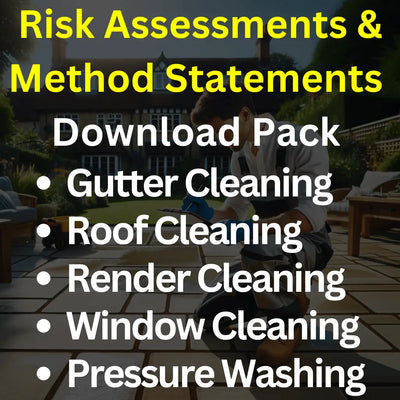
Roof cleaning involves work at height, water, chemicals, trip hazards, fragile surfaces and public protection. Contractors should work to suitable RAMS, COSHH assessments and safe systems of work. SoftWash UK supplies a Risk Assessment and Method Statement pack for exterior cleaning, which can help contractors build professional documentation for this type of work rather than starting from a blank page.
4. Remove Bulk Moss Carefully
Where there is heavy moss, remove the bulk material mechanically using suitable roof-safe tools. Work in a way that minimises pressure on tile edges and avoids disturbing laps. Bag and dispose of waste responsibly. Do not allow large amounts of moss to enter gutters and drains.
5. Protect the Site
Before applying any treatment, protect vulnerable areas. This may include pre-wetting plants, disconnecting or diverting downpipes, covering sensitive surfaces, moving vehicles, informing occupants and setting exclusion zones. On commercial and facilities sites, pedestrian control can be as important as cleaning performance.
6. Apply the Correct Treatment Safely
The correct treatment depends on the roof material, contamination and desired outcome. Contractors should understand the difference between cleaning agents, biocides and surfactants, and should follow product labels, SDS information and UK safety requirements. SoftWash UK’s guide to professional softwash chemicals is a useful starting point for understanding what different chemical types are used for.
For roof moss and organic growth control, products such as Clean Guard Pro may be relevant where a professional biocidal approach is suitable. Contractors should always follow product instructions, complete COSHH assessment, wear appropriate PPE and manage run-off responsibly.
7. Use Suitable Equipment
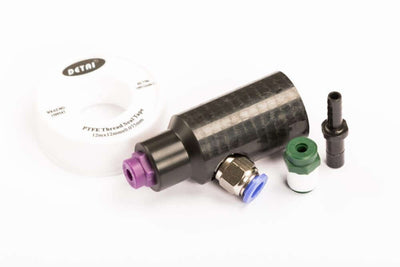
Professional roof cleaning often requires more than a pressure washer. Depending on the method, contractors may need low-pressure application equipment, water-fed pole nozzles, controlled dosing systems, roof ladders, fall protection, spray control accessories and rinse equipment. SoftWash UK supplies professional soft washing equipment designed for controlled application rather than aggressive jetting.
8. Manage Client Expectations
Softwashed roofs may continue to improve after treatment as dead organic growth weathers away. Lichen and black staining can take time to fade. This is different from the instant but potentially harsher visual result of pressure washing. A good contractor explains this before the job starts, not after the client asks why every mark has not vanished immediately.
9. Provide Aftercare Guidance
Advise the client on gutter clearance, tree overhang, roof ventilation and future maintenance intervals. The longevity of a roof softwash depends on shade, moisture, surrounding trees, roof pitch, tile porosity and local conditions. SoftWash UK has a helpful explanation of how long does softwashing last, which is useful when setting realistic expectations.
What Pressure Should Be Used on Roof Tiles?
There is no single safe pressure setting for all roof tiles. The correct answer depends on the tile material, age, condition, nozzle angle, distance from the surface, flow rate and operator skill. A machine capable of very high pressure can still be used gently by an experienced operator, while a smaller machine can still cause damage if used too close with the wrong nozzle.
As a practical rule, contractors should use the lowest effective pressure and avoid narrow, aggressive jets. Fan nozzles are generally less aggressive than pinpoint jets, but technique matters. Never aim water upwards into the roof covering. Never attempt to compensate for poor chemical knowledge or heavy moss loading by simply increasing pressure.
For serious DIY users, the key point is this: if you are unsure what pressure is safe, you should not pressure wash the roof. Roof leaks, falls and tile damage cost far more than professional assessment.
Safety and Compliance Notes for UK Roof Cleaning
Roof cleaning is not a simple extension of patio cleaning. It involves work at height and, where softwashing is used, chemical handling. Contractors and facilities teams must consider legal duties, staff competence and public safety.
Work at Height
Falls from height remain one of the most serious risks in exterior cleaning. Ladders may be suitable for short-duration access in some cases, but they are not automatically suitable for roof cleaning. Ask whether the task can be completed from the ground, a scaffold tower, roof ladder, MEWP or other safer system.
COSHH and Chemical Safety
Where cleaning chemicals or biocides are used, complete COSHH assessment and follow SDS guidance. Store, transport, dilute and apply products responsibly. Never mix chemicals unless the manufacturer’s instructions specifically permit it, and never use unlabelled containers on site.
For contractors building professional roof cleaning services, SoftWash UK offers a structured Soft Wash Training Course covering practical methods, safety thinking, chemical knowledge and professional standards. Training is particularly valuable when moving from pressure washing into controlled softwashing work.
Environmental Control
Plan where rinse water, debris and treatment run-off will go. Protect ponds, watercourses, lawns, planted borders and neighbouring properties. On commercial sites, check drainage plans and site rules before starting work. Responsible roof cleaning is as much about containment and control as it is about appearance.
Common Myths About Pressure Washing Roof Tiles
Myth 1: “If the Tiles Look Strong, They Can Be Pressure Washed”
Visual appearance from ground level is not enough. Tiles can be porous, cracked, delaminated or poorly fixed without obvious signs from below. Always inspect properly before choosing a method.
Myth 2: “Pressure Washing Removes Moss Permanently”
Pressure washing removes visible moss, but it does not necessarily treat spores or biological residue. Without a suitable post-treatment, regrowth can return quickly, especially on shaded roof slopes.
Myth 3: “Softwashing Means No Skill Is Needed”
Softwashing reduces reliance on pressure, but it still requires knowledge. Product selection, dilution, dwell time, weather conditions, PPE, plant protection and run-off control all matter. Poor chemical application can be just as unprofessional as reckless pressure washing.
Myth 4: “A Roof Clean Is Always Just Cosmetic”
Roof cleaning can be cosmetic, but it can also help reduce moss fall into gutters, improve rainwater flow and identify maintenance issues. However, cleaning is not a substitute for roof repair. Contractors should avoid implying that cleaning will fix leaks or structural defects.
Professional Decision Guide: Should You Pressure Wash This Roof?
| Roof Condition | Pressure Washing Suitability | Better Approach |
|---|---|---|
| Modern concrete tiles, sound condition, safe access available | Possibly suitable with controlled low pressure and careful technique | Manual moss removal, controlled rinse if required, then biocidal treatment |
| Old concrete tiles with surface erosion or cracking | High risk | Manual removal and low-pressure softwash treatment if substrate allows |
| Clay tiles or heritage roof covering | Generally unsuitable | Specialist assessment, conservation-sensitive cleaning and minimal intervention |
| Natural slate roof | Usually unsuitable due to fragile fixings and low water tolerance | Specialist roof contractor assessment and careful manual methods |
| Suspected asbestos cement roofing | Do not pressure wash | Seek competent asbestos advice and follow legal requirements |
| Commercial roof with high internal damage risk | Only after detailed specification and approval | Survey, RAMS, controlled method, planned drainage and stakeholder communication |
Want To Preview Professional Softwashing Training?
If this is an area you want to understand properly, you can start by accessing the free SoftWash UK course preview. It includes selected lessons from the full training course and is designed to help contractors see whether professional softwashing training is the right next step.
FAQ: Can You Pressure Wash Roof Tiles?
Can pressure washing roof tiles cause leaks?
Yes. Pressure washing can force water under tile laps, around flashings, into vents and through weak points in the roof covering. This is especially likely if the operator sprays upwards, uses excessive pressure or works on an older roof with tired underlay or existing defects.
Is it illegal to pressure wash roof tiles in the UK?
Pressure washing roof tiles is not generally illegal in itself, but contractors must comply with health and safety law, work at height requirements, COSHH where chemicals are used, environmental responsibilities and any site-specific rules. Pressure washing asbestos-containing materials can create serious legal and health risks and should not be carried out.
Is softwashing safer than pressure washing a roof?
In many cases, yes. Softwashing uses low-pressure application and suitable treatment chemistry to target organic growth rather than relying on high mechanical force. However, it still requires training, PPE, risk assessment, chemical knowledge and proper run-off management.
Will pressure washing remove lichen from roof tiles?
Pressure washing may remove some visible lichen, but it often requires aggressive force that can damage the tile surface. A suitable softwash or biocidal treatment is usually a better professional approach because it treats the organism and allows residues to weather away more gradually.
Can I pressure wash my own roof tiles?
Serious DIY users should be very cautious. The main risks are falls from height, tile damage, water ingress and lack of suitable equipment. If you cannot inspect the roof safely, control water direction, protect the site and work without walking on fragile tiles, it is better to use a competent professional.
How often should roof tiles be cleaned?
There is no fixed interval. Roof cleaning frequency depends on shade, tree cover, tile type, local climate, roof pitch and previous treatment. Many roofs benefit more from periodic inspection, gutter clearance and targeted treatment than frequent aggressive cleaning.
Conclusion: Should You Pressure Wash Roof Tiles?
You can pressure wash some roof tiles, but it should never be the automatic method. The professional approach is to assess the roof first, understand the tile type, identify defects, plan safe access and select the least damaging method that will achieve the required result.
For many UK roofs, especially those affected by moss, algae, lichen and black organic staining, manual moss removal followed by controlled softwashing or biocidal treatment is usually more appropriate than high-pressure cleaning. It reduces unnecessary force, supports longer-lasting results and helps protect the roof fabric when carried out correctly.
SoftWash UK supports contractors, property maintenance professionals and facilities teams with educational resources, professional soft wash chemicals, equipment and training for safer, more responsible exterior cleaning. If you are developing roof cleaning as a service, take time to build your technical knowledge before taking on complex work. Better assessment, safer methods and clear client communication are what separate professional roof cleaning from risky jet washing.