Understanding Softwash Ratios: A Practical Guide for UK Exterior Cleaning Professionals
Softwash ratios explain how much chemical, water and additive are mixed together to create a working solution for exterior cleaning. In practice, understanding softwash ratios means knowing the difference between product dilution, final active strength, application strength at the surface, and the ratio produced by your equipment. Getting this right affects cleaning performance, safety, cost control, plant protection, compliance and customer results.
For UK exterior cleaning contractors, facilities managers, property maintenance teams and serious DIY users, softwash ratios should never be guessed. The correct mix depends on the surface, contamination, chemical type, dwell time, weather, application method and the manufacturer’s instructions. A patio with heavy black spot, a render elevation with green algae, and a roof treated with a long-acting biocide may all need very different approaches.
This guide explains softwash ratios in practical terms, including how dilution ratios work, how to calculate sodium hypochlorite strength, how injector systems affect the finished mix, and how to avoid common mistakes that lead to poor results or unsafe working.
What Is a Softwash Ratio?
A softwash ratio is the relationship between the amount of cleaning product and the amount of water or other approved additive in a softwashing solution. Ratios are commonly written in formats such as 1:1, 1:4, 1:10 or 1:20.
For example:
- 1:1 means 1 part product to 1 part water, giving 2 parts total.
- 1:4 means 1 part product to 4 parts water, giving 5 parts total.
- 1:10 means 1 part product to 10 parts water, giving 11 parts total.
A common misunderstanding is to assume that a 1:4 ratio is the same as 4%. It is not. A 1:4 dilution is 1 part in 5 total parts, so the product makes up 20% of the final mixture. This distinction becomes very important when working with sodium hypochlorite, DDAC-based biocides, surfactants and other professional softwashing chemicals.
Why Softwash Ratios Matter
Correct ratios are not just a technical detail. They influence every part of the job.
- Cleaning performance: Too weak and the treatment may fail, requiring a return visit.
- Surface safety: Too strong and you risk damaging coatings, metals, timber, plants, fabrics or sensitive finishes.
- Cost control: Over-mixing wastes chemical and reduces profit.
- Compliance: Professional users must consider COSHH, product labels, safety data sheets and environmental controls.
- Customer confidence: Consistent results come from measured processes, not guesswork.
Experienced contractors tend to work from a decision-making process rather than a fixed “one mix fits all” approach. They assess the surface, identify the contamination, check access and drainage, consider weather conditions, then choose a suitable product and ratio.
Ratio, Percentage and Final Active Strength: What Is the Difference?
Softwashing discussions often become confusing because contractors use three different ways of describing a mix:
| Term | What It Means | Example |
|---|---|---|
| Ratio | The relationship between product and water | 1:4 means 1 part product to 4 parts water |
| Percentage of product in the mix | How much of the total liquid is the original product | 1:4 is 20% product in the final mixture |
| Final active strength | The actual strength of the active ingredient after dilution | 15% sodium hypochlorite diluted 1:4 gives around 3% available chlorine before degradation |
When using professional products such as sodium hypochlorite for soft washing, the final active strength is usually more important than the ratio alone. A 1:4 mix made from 10% sodium hypochlorite is not the same as a 1:4 mix made from 15% sodium hypochlorite.
How to Calculate Sodium Hypochlorite Softwash Strength
Sodium hypochlorite is frequently used in softwashing because it is effective against organic growth such as algae, mould, mildew, lichen and biofilm. However, it must be handled responsibly, diluted correctly and used only where suitable.
The simplest calculation is:
Starting strength × product proportion = approximate final strength
For example, if your sodium hypochlorite is 15% and you dilute it at 1:4:
- 1 part chemical + 4 parts water = 5 parts total
- 1 divided by 5 = 0.20
- 15% × 0.20 = 3%
So a 1:4 dilution of 15% sodium hypochlorite gives an approximate 3% working solution, assuming the product is fresh and has not degraded. In real-world use, sodium hypochlorite strength can reduce during storage, especially when exposed to heat, sunlight or time.
Common Softwash Dilution Examples
| Starting Sodium Hypochlorite Strength | Dilution Ratio | Product in Final Mix | Approximate Final Strength |
|---|---|---|---|
| 15% | 1:1 | 50% | 7.5% |
| 15% | 1:2 | 33.3% | 5% |
| 15% | 1:3 | 25% | 3.75% |
| 15% | 1:4 | 20% | 3% |
| 15% | 1:9 | 10% | 1.5% |
| 10% | 1:4 | 20% | 2% |
These figures are for understanding the maths, not a blanket recommendation. Always follow the product label, safety data sheet and site-specific risk assessment. Some surfaces tolerate stronger solutions than others, and some should not be treated with sodium hypochlorite at all.
Understanding Ratios for Different Softwashing Applications
There is no universal softwash ratio that suits every exterior cleaning job. The correct approach depends on what you are cleaning and what you are trying to remove.
Render and Painted Masonry
Render, K-Rend style finishes, painted masonry and exterior wall coatings are common softwashing targets. Green algae and atmospheric staining often respond well to controlled low-pressure application, but care is essential.
Practical considerations include:
- Testing a small, discreet area first.
- Checking for oxidised paint, poor adhesion, cracking or failed coatings.
- Using suitable dwell time rather than automatically increasing strength.
- Controlling runoff around plants, lawns, ponds and metalwork.
- Rinsing where required and avoiding overspray onto windows, vehicles and neighbouring property.
On lighter contamination, contractors often achieve better results by selecting the correct dwell time, applying evenly, and using a suitable surfactant rather than jumping straight to a strong mix. A product such as Clever Wash surfactant can help the softwash solution cling to vertical surfaces and spread more evenly, which may improve contact time and reduce waste when used according to instructions.
Roofs
Roof softwashing requires particular care because of height, access, overspray, drainage, fragile surfaces and environmental management. Ratios for roof work depend on whether the goal is an immediate clean, a post-scrape biocidal treatment, or a longer-term programme to control regrowth.
Roof work should always involve proper access planning, edge protection where required, fragile roof assessment and safe working at height procedures. Contractors should not rely on chemical strength to compensate for poor preparation or unsafe access.
Patios, Block Paving and Hard Surfaces
Hard surfaces such as concrete, natural stone, block paving and porcelain can vary significantly in how they react to cleaning chemicals. Organic staining, black spot, algae films and ingrained dirt often need different treatment approaches.
Before choosing a ratio, consider:
- The surface material and porosity.
- Whether the surface is sealed.
- Drainage routes and nearby planting.
- Risk of chemical tracking into lawns, gravel or borders.
- Whether mechanical cleaning is needed before or after softwashing.
Black spot and lichen are often more resistant than green algae. However, stronger is not always smarter. Good pre-wetting, suitable dwell time, agitation where appropriate and controlled rinsing can be more effective than excessive chemical strength.
Timber, Decking and Sensitive Materials
Timber can be easily damaged by unsuitable softwash ratios or inappropriate chemical selection. High-strength oxidising mixes can lighten, streak or damage timber fibres. Some softwashing jobs require specialist products rather than a standard sodium hypochlorite mix.
Always identify the material before treatment. If there is any doubt, test first, reduce concentration, and consider whether softwashing is the correct method at all.
Batch Mixing Versus Injection Systems
Softwash ratios are also affected by how the solution is delivered. The two common approaches are batch mixing and chemical injection.
| Method | How It Works | Advantages | Watch Points |
|---|---|---|---|
| Batch mixing | Chemical, water and approved additives are measured into a tank or container before application | Simple, predictable and easy to calculate | Requires careful labelling, safe handling and correct disposal of leftovers |
| Downstream or proportioning systems | Equipment meters chemical into the water flow during application | Can reduce manual mixing and make switching strengths easier | Actual draw rate must be tested; hose length, viscosity and flow can affect ratios |
| Injector systems | A calibrated injector doses chemical at a set proportion | Consistent dosing when correctly set up and maintained | Calibration, compatibility and maintenance are essential |
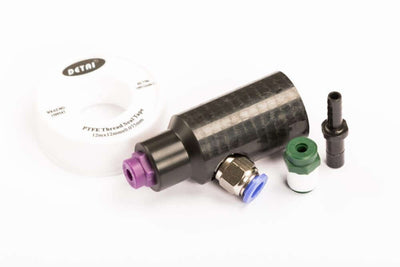
If you use proportioning equipment, do not assume that the setting on the dial always equals the exact chemical strength landing on the surface. Flow rate, pressure, hose diameter, chemical viscosity, nozzle size and equipment condition can all affect the actual draw rate. Professional systems such as the Clever Injector can support more controlled chemical application, but contractors should still understand the maths and verify output in real conditions.
Step-by-Step: How to Work Out a Softwash Ratio Safely
1. Identify the Surface
Start by confirming what you are cleaning. Render, brick, stone, concrete, timber, uPVC, painted metal and roof tiles all behave differently. Never assume that because one property responded well, the next one will do the same.
2. Identify the Contamination
Is the issue algae, lichen, mould, mildew, moss residue, traffic film, rust staining, oil, tannin or atmospheric staining? Softwashing is primarily used for organic growth. Non-organic stains may need different specialist products.
3. Read the Product Label and SDS
Before mixing anything, read the manufacturer’s instructions and safety data sheet. This should guide dilution, PPE, storage, first aid, compatibility and environmental precautions.
4. Decide on the Target Working Strength
Choose the weakest suitable working strength for the job. In professional softwashing, the aim is not to use the strongest possible mix; it is to use the most appropriate mix that works safely and efficiently.
5. Calculate the Dilution
Use the formula:
Desired final strength ÷ starting strength = proportion of chemical in the final mix
For example, if you want approximately 3% from a 15% product:
- 3 ÷ 15 = 0.20
- 0.20 = 20% of the final mix
- 20% product means 1 part product in 5 total parts
- That is a 1:4 ratio
6. Measure Accurately
Use clearly marked containers, calibrated tanks or metering equipment. Avoid casual “glugging” from drums. Inconsistent measuring leads to inconsistent results and can create safety issues.
7. Apply, Observe and Adjust Responsibly
Apply evenly, allow suitable dwell time, keep the surface wet where required, and monitor the reaction. If the result is poor, do not automatically increase chemical strength. Consider whether the issue is dwell time, application coverage, temperature, product age, contamination type or surface compatibility.
Practical Softwash Ratio Examples
The examples below are simplified to demonstrate calculation and decision-making. They are not site-specific instructions.
| Scenario | Likely Considerations | Ratio Thinking |
|---|---|---|
| Light green algae on north-facing render | Sensitive coating, vertical surface, plant protection required | Start with a controlled lower-strength approach, use dwell time and suitable surfactant rather than excessive strength |
| Heavy organic staining on concrete yard | Durable surface, drainage control needed, possible repeat application | May require a stronger working solution than render, but still needs runoff management and testing |
| Post-scrape roof treatment | Access, gutters, runoff, overspray, long-term regrowth control | Product selection may matter more than a high immediate-cleaning ratio |
| Timber decking with algae | Soft material, risk of bleaching and fibre damage | Use specialist judgement; avoid assuming standard SH ratios are suitable |
Common Softwash Ratio Mistakes
Confusing Ratio with Percentage
This is one of the most common errors. A 1:4 ratio is not 4%. It is 20% product in the final mix. If the product is 15% sodium hypochlorite, the final active strength is approximately 3% before degradation.
Ignoring Product Strength
Two drums labelled as sodium hypochlorite may not have the same strength. One may be 10%, another may be 14% to 15%, and older stock may have weakened. Ratio alone does not tell you the actual strength unless you know the starting concentration.
Using One Mix for Every Job
A fixed “house wash mix” or “roof mix” may sound simple, but it is rarely professional. Surfaces, weather, contamination and customer expectations vary. Good contractors adapt within safe, documented limits.
Overusing Chemical to Save Time
Increasing strength to reduce dwell time can create unnecessary risk. It may also cause streaking, metal staining, plant damage or premature failure of vulnerable coatings. Time saved on application can quickly be lost in complaints, repairs or rework.
Forgetting About Equipment Dilution
If you batch mix a solution and then run it through an injector or proportioner, the final strength may be much lower than expected. Always understand where dilution is happening in your system.
Adding Incompatible Chemicals
Never mix sodium hypochlorite with acids, ammonia-based products or unknown chemicals. Dangerous gases can be produced. Only use additives that are specifically suitable for the product and method, and always follow safety documentation.
Safety and Best Practice for Softwash Mixing
Softwashing chemicals can be effective when professionally managed, but they must be treated with respect. Safe working is not optional; it is part of being competent.
- Complete a site-specific risk assessment before starting work.
- Use appropriate PPE, including eye, skin and respiratory protection where required by the SDS and task.
- Store chemicals upright, labelled and secured.
- Keep incompatible products separate.
- Protect plants, ponds, pets, vehicles and neighbouring property.
- Control runoff and prevent pollution of drains or watercourses.
- Never decant chemicals into unlabelled containers.
- Keep spill control materials available.
- Train staff in emergency procedures and first aid actions.
For contractors who want a more structured approach to documentation, the Risk Assessment and Method Statement pack for exterior cleaning can help support safer planning and more professional site procedures. It does not replace competence, but it gives a useful framework for thinking through hazards and controls.
Weather, Dwell Time and Surface Conditions
Softwash ratios do not work in isolation. A mix that performs well on a mild, overcast day may behave differently in bright sun, high wind or near-freezing temperatures.
Temperature
Cold conditions can slow chemical reaction. Hot conditions can make solutions dry too quickly, reducing dwell time and increasing the risk of marks or residue.
Sunlight
Direct sunlight can accelerate drying and may contribute to uneven results on render or painted surfaces. Work in manageable sections and avoid letting product dry where the method requires wet dwell time.
Wind
Wind increases overspray risk. This is especially important around vehicles, gardens, pedestrians, neighbouring properties and public spaces.
Rain
Light moisture may help some surfaces stay wet, but rain can dilute or wash off product before it has worked. Heavy rain can also create runoff issues.
How Surfactants Affect Softwash Ratios
Surfactants are often misunderstood. A surfactant is not usually the main active cleaning chemical. Its job is to help the working solution wet the surface, cling to vertical areas and spread more evenly. In some cases, this improves dwell time and contact with organic growth.
However, more surfactant is not automatically better. Too much can cause excessive foaming, difficult rinsing, residue or poor equipment performance. Use the manufacturer’s recommended dosage and check compatibility with your chemical and application system.
Softwash Ratios for Facilities Managers and Property Maintenance Teams
Facilities managers and in-house maintenance teams often need repeatable processes rather than one-off contractor judgement. If your team is responsible for schools, care homes, commercial estates, housing stock or retail sites, ratio control should be part of your standard operating procedure.
A sensible system includes:
- Approved chemical list with SDS documents available.
- Written dilution charts for each product and task.
- Clear PPE requirements.
- Storage and handling procedures.
- Measured containers or dosing equipment.
- Operator training records.
- Incident and spill procedures.
- Environmental controls for runoff and drainage.
The SoftWash UK Knowledge Hub contains further educational resources for contractors and property professionals who want to improve their understanding of safe and responsible softwashing methods.
Training: The Best Way to Stop Guessing Ratios
Many softwash problems start because the operator understands the product name but not the method. Ratios are only one part of professional exterior cleaning. You also need to understand surface assessment, chemical behaviour, equipment setup, dwell time, rinsing decisions, runoff control, customer communication and compliance.
For contractors who want to build their knowledge before investing in full training, SoftWash UK offers a free course preview with selected lessons from the full training programme. It gives you a practical look at the teaching style, structure and professional approach used inside the course.
Softwash Ratio Myths
“Stronger Always Cleans Better”
Not always. Stronger mixes can create faster visible reactions, but they also increase risk. Many jobs benefit from better preparation, better contact time, more controlled application or a second light treatment rather than a heavy first application.
“If It Did Not Work, the Ratio Was Too Weak”
Possibly, but not necessarily. The product may have degraded. The surface may have dried too quickly. The contamination may not be organic. The solution may not have contacted the growth properly. The dwell time may have been too short.
“All Sodium Hypochlorite Is the Same”
No. Strength, freshness, storage conditions and supplier quality all matter. Professional contractors should buy from reputable suppliers, store products correctly and rotate stock.
“A Surfactant Makes Any Mix Safe”
A surfactant can improve wetting and cling, but it does not make an unsuitable chemical safe for a sensitive surface. The base chemical, concentration and surface compatibility still matter.
Frequently Asked Questions About Softwash Ratios
What does a 1:4 softwash ratio mean?
A 1:4 softwash ratio means 1 part product mixed with 4 parts water, giving 5 parts total. The product makes up 20% of the final mixture. If the starting product is 15% sodium hypochlorite, a 1:4 dilution gives an approximate 3% working strength before any degradation.
What is the best softwash ratio for render?
There is no single best ratio for all render. It depends on the render type, coating condition, level of algae, colour, weather, dwell time and manufacturer guidance. A professional should test first, use the weakest suitable working strength, protect surrounding areas and avoid treating unstable or damaged coatings without careful assessment.
How do I calculate softwash dilution?
To calculate dilution, divide the desired final active strength by the starting product strength. For example, to make approximately 3% from 15% sodium hypochlorite, calculate 3 ÷ 15 = 0.20. That means 20% of the final mix should be product, which equals a 1:4 ratio.
Can I mix stronger to reduce dwell time?
Increasing strength to reduce dwell time is not always safe or professional. It can increase the risk of surface damage, plant damage, metal staining, overspray issues and customer complaints. It is better to assess the surface, improve even application, manage drying and use suitable dwell time within safe limits.
Do injector systems change the softwash ratio?
Yes. Injector and proportioning systems can dilute chemical as it is applied. The final strength at the surface may be different from the solution in the container. Contractors should test the actual draw rate and understand how their equipment affects the final mix.
Should I add surfactant to every softwash mix?
Not necessarily. Surfactants are useful when improved wetting, cling or dwell time is needed, especially on vertical surfaces, but they should be used at the correct dosage and only when compatible with the chemical and surface. Too much surfactant can cause foaming, residue or rinsing issues.
Conclusion: Good Softwash Ratios Come from Good Judgement
Understanding softwash ratios is essential for consistent, safe and profitable exterior cleaning. The key is to think beyond simple numbers. A ratio tells you how much product and water are mixed, but professional results depend on final active strength, surface suitability, chemical condition, equipment setup, dwell time, weather and safe working practice.
For UK contractors, facilities managers and serious DIY users, the best approach is measured, documented and cautious. Use the weakest suitable mix, test before full application, follow safety data sheets, protect the surrounding environment and invest in proper education before taking on higher-risk work.
SoftWash UK supplies professional softwashing chemicals, equipment and training resources for people who want to work safely and achieve reliable results. If you are refining your softwash process, improving staff knowledge or building a professional exterior cleaning service, explore SoftWash UK’s range of educational resources, compliant documentation and specialist products to support better decision-making on site.