How to Apply Softwash Chemicals Efficiently: A Practical Guide for UK Contractors and Property Professionals
Applying softwash chemicals efficiently comes down to using the right chemical for the surface, applying it at the correct strength, controlling dwell time, reducing waste, protecting surrounding areas and working safely. The most efficient softwashing jobs are not the ones where the strongest mix is used; they are the ones where the contractor understands the surface, the contamination, the weather conditions and the application method.
For UK exterior cleaning contractors, facilities managers, property maintenance teams and serious DIY users, efficient chemical application can improve cleaning results, reduce chemical consumption, protect surfaces and help demonstrate professional standards. Whether you are treating render, roofs, cladding, paving, driveways, timber or commercial façades, the principles remain the same: assess first, choose the correct product, apply evenly, allow the chemistry to work, and manage safety throughout.
This guide explains how to apply softwash chemicals efficiently in real-world UK conditions, including equipment choice, surfactants, biocide treatments, safety considerations, common mistakes and best-practice workflows.
What Does Efficient Softwash Chemical Application Really Mean?
Efficiency in softwashing is not simply about speed. A fast job that requires a return visit, damages plants, leaves streaking or overuses chemical is not efficient. True efficiency means achieving the required clean or treatment outcome with the least unnecessary labour, water, chemical and risk.
In practical terms, efficient softwash application means:
- Correctly identifying the soiling, staining or biological growth before applying chemicals.
- Selecting the most suitable softwashing chemical rather than using a one-product-fits-all approach.
- Using appropriate dilution, dwell time and coverage rates.
- Applying the solution evenly without flooding the surface.
- Using surfactants where they improve cling, wetting and contact time.
- Working in suitable weather conditions.
- Protecting plants, metals, glass, watercourses and sensitive finishes.
- Following product labels, Safety Data Sheets and site-specific risk assessments.
SoftWash UK supplies professional soft wash chemicals, soft washing equipment and training resources designed to help operators apply products safely, consistently and responsibly.
Start with a Proper Site Assessment
The most important step in efficient chemical application happens before you open a drum or switch on a pump. A site assessment helps you decide whether softwashing is appropriate, which product to use and how to control risks.
Check the Surface Type
Different surfaces respond differently to softwash chemistry. Painted render, K-rend, monocouche render, slate, concrete, sandstone, UPVC, coated metal cladding and timber all have different sensitivities.
Before full application, check:
- Whether the surface is porous or sealed.
- Whether coatings are chalking, oxidised, flaking or poorly adhered.
- Whether there are delicate details such as lead flashing, zinc, copper, bronze, aluminium or powder-coated finishes.
- Whether the surface has previously been treated, sealed or painted.
- Whether a test patch is required.
Identify the Contamination
Softwashing is often associated with green algae, black organic growth, lichen, mould and biofilm, but not every mark is biological. Rust staining, oil stains, tannin marks, lead staining and efflorescence usually require different chemistry.
| Problem | Likely Cause | Typical Approach |
|---|---|---|
| Green staining on render or patios | Algae and biofilm | Softwash solution or biocide treatment depending on desired result |
| Black spots on paving | Lichen colonisation | Targeted softwash process with suitable dwell time and possible repeat treatment |
| Orange/brown marks | Rust or iron staining | Specialist rust remover such as Rust X Pro Rust Stain Remover |
| Dark oil patch on driveway | Oil or hydrocarbon contamination | Degreasing treatment such as Grenade Driveway Oil Stain Remover |
| Grey weathered timber | UV degradation and tannins | Timber brightening product such as Wood X Pro Wood Brightener |
Correct diagnosis prevents wasted chemical, failed results and avoidable surface damage.
Choose the Right Softwash Chemical for the Job
Efficient application depends heavily on product selection. Contractors sometimes waste time and money because they try to solve every exterior cleaning problem with the same chemical. Professional softwashing is more precise than that.
Sodium Hypochlorite-Based Softwash Solutions
Sodium hypochlorite is commonly used in softwashing where rapid removal of organic staining is required. It can be effective on algae, mould, mildew and certain organic staining when used correctly. However, it must be handled responsibly, diluted according to the job requirements and used with appropriate safety controls.
SoftWash UK supplies Sodium Hypochlorite for Soft Washing 14% to 15% for professional users who understand safe handling, dilution, storage and application. Always refer to the current product label and Safety Data Sheet before use.
Biocide Treatments
Biocidal treatments are commonly used for longer-term control of biological growth. They are particularly useful where the goal is to treat the surface and allow weathering to continue the cleaning process over time, rather than achieving an immediate bright clean on the day.
For example, Soft Wash Pro 50 DDAC is a professional-grade biocide used where a DDAC-based treatment is suitable. Biocides must be used in accordance with UK rules, label instructions and environmental controls.
Surfactants and Why They Improve Efficiency
A surfactant helps softwash solution wet the surface more evenly, cling to vertical areas and remain in contact for longer. This can improve efficiency because the chemical does not run off as quickly, especially on render, cladding, fascias and roofs.
Clever Wash Surfactant is designed to improve softwash performance by helping the solution stay where it is needed. Used correctly, a surfactant can reduce missed patches, improve dwell time and reduce the temptation to over-apply chemical.
Specialist Stain Removers
Some stains need targeted chemistry. Using a standard softwash mix on rust, oil or lead staining can be inefficient and may make the job harder. For example, lead staining around roofs and façades may require a dedicated product such as Lead X Pro Ready To Use Lead Stain Remover.
The efficient approach is to match the product to the stain, test carefully and follow the correct process rather than increasing strength unnecessarily.
Select the Best Application Method
The right equipment helps control flow, coverage and operator fatigue. Over-application is one of the most common causes of wasted chemical. Under-application causes patchy results and repeat work. Your aim is controlled, even coverage.
| Application Method | Best For | Efficiency Notes |
|---|---|---|
| Pump-up sprayer | Small areas, spot treatments, test patches | Low cost but slower; inconsistent pressure can affect coverage |
| 12V softwash pump system | Residential render, patios, roofs, commercial elevations | Good control and reach when paired with suitable hose and nozzles |
| Water-fed pole softwash nozzle | Controlled application at height from the ground | Useful for façades, fascias and awkward areas when access is limited |
| Proportioning or injector system | Consistent dilution and larger sites | Can reduce mixing errors and improve repeatability |
| Foaming application | Vertical surfaces and visual tracking | Can improve cling and make coverage easier to see |
For contractors who regularly apply different strengths or biocides, proportioning systems such as the Clever Injector Dosatron can help improve consistency and reduce manual mixing errors. For controlled application through a pole system, a Water Fed Pole Softwash Nozzle can be useful on suitable jobs.
Step-by-Step: How to Apply Softwash Chemicals Efficiently
The following process is a practical framework used by professional exterior cleaners. Always adapt it to the site, product instructions, local conditions and your risk assessment.
1. Plan the Job and Check the Weather
Weather affects softwash performance. Strong wind increases drift risk. Heavy rain can dilute or wash away chemical before it has worked. Hot sun can dry the solution too quickly, reducing dwell time and increasing the risk of streaking.
Ideal conditions are usually mild, overcast and calm. If the surface is extremely hot, cool it with water where appropriate before application.
2. Prepare Risk Assessments, Method Statements and Documentation
Professional contractors should have site-specific risk assessments and method statements. These should cover chemical handling, PPE, access, working at height, public protection, water management, plant protection and emergency procedures.
SoftWash UK’s Risk Assessment and Method Statement Pack for Exterior Cleaning can help businesses structure their documentation and improve professional standards. For deeper compliance learning, the HSE Soft Washing Full Collection is also a useful reference for contractors who want to strengthen their safety systems.
3. Protect Surrounding Areas
Before application, protect anything that may be affected by overspray, run-off or contact with cleaning solution.
- Pre-wet plants, lawns and planted borders.
- Move garden furniture, vehicles, planters and loose items.
- Protect sensitive metals such as copper, brass, zinc and untreated aluminium.
- Check nearby ponds, drains and watercourses.
- Advise occupants to keep windows and doors closed.
- Control public access using barriers or signage where necessary.
Plant protection is not a quick afterthought. On professional jobs, a dedicated person may be assigned to wet, monitor and rinse vegetation during the work.
4. Mix or Dose According to the Product Instructions
Follow the manufacturer’s label and Safety Data Sheet. Do not guess. Use clean measuring equipment and label containers clearly. If using an injector or proportioning system, calibrate it and confirm the output rather than assuming the setting is accurate.
Never mix sodium hypochlorite with acids, ammonia or unknown chemicals. Dangerous gases can be produced. Keep chemicals in compatible containers and store them safely away from heat, sunlight and incompatible substances.
5. Apply from the Bottom Up on Vertical Surfaces Where Appropriate
On render, cladding and façades, applying from the bottom upwards can help reduce streaking by keeping the lower area wet as the upper area is treated. Work in manageable sections so the chemical does not dry before it has had time to act.
For roofs and sloped surfaces, plan the application route carefully to avoid walking on treated areas and to control run-off. Access should be selected based on safety, not convenience.
6. Apply Evenly, Not Excessively
The surface should be wetted with the solution, not flooded. Heavy run-off wastes chemical and increases risk. Efficient operators aim for consistent coverage using the right nozzle pattern, pressure and walking pace.
Practical tips include:
- Use a fan pattern for broad even coverage on larger areas.
- Use a more targeted pattern for edges, corners and details.
- Overlap passes slightly to avoid striping.
- Keep the nozzle at a consistent distance where possible.
- Use a surfactant when cling and visual tracking are helpful.
7. Allow Correct Dwell Time
Dwell time is the period the chemical remains wet and active on the surface. Too little dwell time may lead to poor results. Too much dwell time, especially if the solution dries, can increase the risk of patching or surface issues.
Monitor the surface. If the solution is drying too quickly, you may need to re-wet lightly, work in smaller sections or adjust the timing. Do not leave chemical unattended on sensitive surfaces.
8. Agitate Where Needed
Softwashing is low-pressure cleaning, but it does not always mean no mechanical action. Light brushing can improve results on textured render, heavily soiled details, roof edges, paving joints and stubborn biofilm.
Agitation helps the chemical contact the contamination more effectively, which can reduce the need for stronger mixes or repeat applications.
9. Rinse, Neutralise or Leave to Weather as Required
Some softwash processes require rinsing after dwell. Others, especially certain biocide treatments, are designed to be left on the surface to continue working. Follow product-specific instructions.
Where rinsing is required, rinse thoroughly but responsibly. Manage run-off, protect planting and avoid forcing water behind cladding, vents, roof laps or weak building details.
10. Inspect, Record and Advise the Client
After the treatment, inspect the surface from multiple angles. Some biological staining may continue to fade over days or weeks depending on the product used and weather exposure.
For commercial clients and facilities managers, provide clear aftercare advice and records of chemicals used. This improves trust and helps demonstrate professional practice.
How to Improve Chemical Coverage and Reduce Waste
Small adjustments can make a major difference to profitability and results. Contractors who consistently over-apply chemical often do so because they lack confidence in coverage, dwell time or dilution.
Use the Correct Nozzle
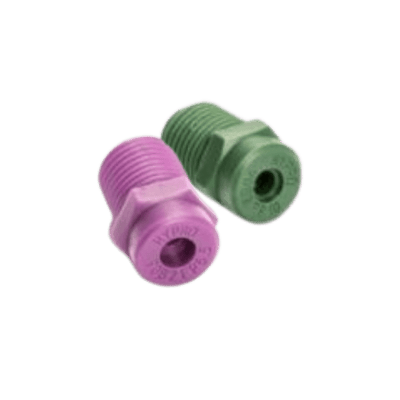
Nozzle choice affects droplet size, spray pattern and chemical consumption. A nozzle that produces too much flow may flood the surface. A nozzle that is too fine may increase drift risk in breezy conditions.
Work in Logical Sections
Divide the surface into sections based on access, sun exposure and drying time. This avoids one area drying while another is still being treated. On large elevations, plan around expansion joints, downpipes, windows or architectural breaks.
Use Surfactant for Vertical and Hydrophobic Surfaces
Render, painted finishes and some roof surfaces can shed water quickly. A surfactant improves contact time and makes the application easier to see. This can prevent both missed areas and unnecessary re-application.
Keep Equipment Maintained
Blocked filters, worn pump seals, damaged hoses and poor electrical connections all reduce efficiency. Rinse equipment after use according to the manufacturer’s guidance. Keep spare nozzles, seals and connectors in the van.
Safety and Best Practice for Softwash Chemical Application
Softwash chemicals can be highly effective, but they must be respected. Professional results depend on safe handling, proper training and responsible site management.
Personal Protective Equipment
PPE should be selected based on the product Safety Data Sheet and the site risk assessment. This may include chemical-resistant gloves, eye protection, face protection, coveralls, suitable footwear and respiratory protection where required.
Public and Occupant Protection
On domestic sites, explain the process to the customer before starting. On commercial sites, coordinate with facilities managers to control access, signage and timing. Avoid application near open windows, air intakes, food preparation areas or busy entrances unless properly controlled.
Environmental Controls
Prevent uncontrolled discharge to ponds, streams and surface water drains. Be especially careful near planted borders, wildlife areas and drainage channels. Pre-wetting and post-rinsing vegetation is a key part of safe practice, but it is not a substitute for proper run-off control.
Training and Competence
Training helps operators understand chemical behaviour, application techniques, safety controls and surface compatibility. The Soft Wash Training Course from SoftWash UK is relevant for contractors who want to reduce mistakes, improve confidence and apply chemicals professionally. Ongoing learning through resources such as the Softwashing Knowledge Hub can also support better decision-making on site.
Common Mistakes When Applying Softwash Chemicals
Using Too Strong a Mix
A stronger mix is not always faster or better. It can increase risk to plants, surfaces, metals, clothing and the operator. Efficient cleaning is about the weakest effective approach for the task, used correctly.
Ignoring Dwell Time
Some users spray and rinse too quickly, blaming the product when the real problem is insufficient contact time. Others leave chemical to dry on hot surfaces. Both approaches reduce control and consistency.
Applying in Windy Conditions
Wind drift can carry droplets onto vehicles, neighbouring properties, plants and pedestrians. If conditions are unsuitable, pause or reschedule. Professionalism includes knowing when not to spray.
Failing to Test Patch
A small test area can reveal surface sensitivity, staining behaviour or coating problems before the whole elevation is treated. This is especially important on older render, painted surfaces, natural stone and heritage properties.
Using Softwash Chemicals on the Wrong Stain
Rust, oil, lead staining and tannin marks need specialist products. Misidentifying the stain wastes time and can leave the customer disappointed.
Myths About Applying Softwash Chemicals
Myth: More Chemical Means a Better Clean
In reality, over-application often causes run-off, waste and higher risk. Correct coverage, dwell time and product choice are more important than volume.
Myth: Softwashing Means No Rinsing Ever
Some treatments are left to work over time, while others require rinsing. The correct approach depends on the product, surface and desired outcome.
Myth: All Green Growth Needs Pressure Washing First
On many surfaces, pressure washing can be unnecessary or damaging. Softwashing can treat biological growth at low pressure, but heavy deposits, moss build-up or debris may still need safe physical removal before chemical treatment.
Myth: Anyone Can Apply Softwash Chemicals Without Training
Softwashing involves chemistry, risk assessment, environmental controls and surface knowledge. Training is especially important for contractors working at scale or on commercial sites.
Efficient Application by Surface Type
| Surface | Application Advice | Key Caution |
|---|---|---|
| Render and painted façades | Use controlled low-pressure application, surfactant for cling and manageable sections | Test for weak coatings, oxidation and staining sensitivity |
| Roof tiles | Remove heavy moss safely before treatment where required; apply with run-off control | Working at height and fragile roofs require proper planning |
| Block paving and concrete | Apply evenly, allow suitable dwell and consider agitation for lichen or ingrained biofilm | Protect lawns, borders and drainage points |
| Cladding | Use even coverage and avoid driving water behind joints or fixings | Check coatings, oxidisation and nearby metals |
| Timber | Use timber-appropriate products and avoid aggressive chemicals unless specified | Soft, weathered or stained timber can react unpredictably |
Facilities Managers: What to Expect from a Professional Softwash Contractor
If you are responsible for a commercial property, school, housing block, retail unit or industrial site, efficient chemical application should be part of a controlled cleaning process rather than an informal spray-and-go service.
A competent contractor should be able to provide:
- A clear method statement and risk assessment.
- Product information and Safety Data Sheets where relevant.
- Evidence of insurance and competence.
- A plan for access, public safety and working hours.
- Environmental controls for run-off and overspray.
- Realistic expectations about immediate versus gradual results.
This is particularly important where cleaning takes place around staff, tenants, customers, vehicles, public footpaths or sensitive landscaping.
Frequently Asked Questions
What is the most efficient way to apply softwash chemicals?
The most efficient method is to assess the surface, select the correct chemical, apply it evenly at the recommended strength, allow proper dwell time and control run-off. Using a suitable softwash pump, nozzle and surfactant can improve coverage and reduce waste.
Should softwash chemicals be applied with a pressure washer?
Softwash chemicals are normally applied at low pressure using dedicated softwash equipment, sprayers, pumps, injectors or pole systems. High pressure is not usually needed for chemical application and can increase drift, surface damage and water ingress risks.
How long should softwash chemicals dwell on a surface?
Dwell time depends on the product, surface, contamination and weather conditions. Always follow the product label and Safety Data Sheet. The surface should generally remain wet long enough for the chemistry to work, but it should not be allowed to dry uncontrolled on sensitive areas.
Do I need a surfactant for softwashing?
A surfactant is not always essential, but it is often useful on vertical, smooth or water-shedding surfaces. It helps the solution cling, improves wetting and makes coverage easier to see, which can improve efficiency and consistency.
Can I use one softwash chemical for every exterior cleaning job?
No. Biological growth, rust, oil, tannins, lead staining and mineral deposits require different approaches. Efficient softwashing means choosing the correct product for the specific problem rather than relying on one chemical for every stain.
Is training necessary for applying softwash chemicals?
Training is strongly recommended for contractors and anyone applying chemicals regularly. It helps improve safety, surface knowledge, chemical handling, documentation and professional results. It is particularly important for commercial work and higher-risk sites.
Conclusion: Efficient Softwash Application Is About Control, Not Just Chemistry
Applying softwash chemicals efficiently is a skill built on assessment, product knowledge, correct equipment, safe working practices and experience. The best results come from using the right chemical at the right strength, applying it evenly, allowing appropriate dwell time and protecting the surrounding environment.
For UK contractors and property professionals, efficiency also means working legally, safely and professionally. Good documentation, suitable PPE, client communication, plant protection and proper training all reduce the risk of costly mistakes.
If you want to improve your softwashing results, explore professional softwash chemicals, application tools and soft washing equipment from SoftWash UK. For contractors looking to build confidence and competence, the Soft Wash Training Course and the Softwashing Knowledge Hub provide practical education to support safer, more consistent chemical application.
To learn more, visit SoftWash UK for professional products, equipment, training and industry guidance designed for responsible exterior cleaning.