Understanding Chemical Delivery Systems for Exterior Cleaning and Softwashing
Chemical delivery systems are the equipment and methods used to dilute, meter, transport and apply cleaning chemicals to exterior surfaces. In softwashing and property maintenance, the right delivery system helps contractors apply the correct chemical strength safely, consistently and efficiently, whether cleaning render, roofs, cladding, block paving, stone, timber, industrial yards or commercial facades.
For UK exterior cleaning contractors, facilities managers and serious DIY users, understanding chemical delivery is not just about buying a pump or injector. It affects cleaning results, surface safety, chemical cost, operator exposure, compliance, waste control and the overall professionalism of the job. A poorly chosen system can under-apply the solution, over-strengthen the mix, damage plants, stain surfaces, breach site procedures or leave organic growth untreated.
This guide explains the main chemical delivery systems used in softwashing and exterior cleaning, how they work, where each system performs best, and what to consider before investing in equipment. It is written from a practical site-based perspective, with safety and UK best practice at the centre.
What Is a Chemical Delivery System?
A chemical delivery system is the complete set-up used to get a cleaning product from storage or a mixing container onto the surface at the intended working strength. It normally includes some combination of:
- A water source or pre-mixed solution tank
- Chemical container, drum or dosing reservoir
- Pump, injector, proportioner or sprayer
- Hoses and reels
- Nozzles, lances, water-fed poles or applicators
- Valves, filters, strainers and non-return protection
- Personal protective equipment and site safety controls
In simple terms, chemical delivery answers four important questions:
- How is the chemical diluted?
- How is it moved to the surface?
- How accurately is it applied?
- How safely is the operator, property and environment protected?
For softwashing, this usually involves applying biocidal washes, sodium hypochlorite-based cleaning solutions, surfactants, degreasers, rust removers, wood brighteners or specialist stain removers at controlled strengths. Contractors can explore suitable professional products through the SoftWash UK soft wash chemicals range, but the product is only one part of the job. Delivery method matters just as much.
Why Chemical Delivery Matters on Real Jobs
On paper, chemical dilution can look straightforward. On site, variables quickly appear. Hose length, pump flow, nozzle size, surface porosity, wind, access height, temperature, dwell time and organic loading all affect performance.
For example, applying a biocide to a lightly colonised rendered elevation is very different from treating a moss-heavy tiled roof or oil contamination on a commercial yard. One job may require low-pressure even coverage at height. Another may need controlled spot application, careful runoff management and staged treatment. The delivery system must match the task.
Good chemical delivery helps you:
- Apply consistent dilution across the surface
- Reduce chemical waste and overspray
- Improve dwell time and cleaning efficiency
- Protect sensitive materials and surrounding areas
- Work more productively on larger sites
- Demonstrate a professional method to clients and facilities teams
- Support COSHH, RAMS and site-specific safety procedures
Poor chemical delivery can cause:
- Patchy cleaning results or premature regrowth
- Excessive chemical consumption
- Surface damage from over-application
- Higher operator exposure
- Drift onto vehicles, plants, windows or pedestrians
- Inaccurate quoting because application rates are unknown
- Non-compliance with site safety expectations
The Main Types of Chemical Delivery Systems
There is no single best system for every exterior cleaning job. The most suitable choice depends on the chemical, surface, access, scale of work and required control. Below are the most common systems used by UK contractors.
| System Type | How It Works | Best For | Main Limitations |
|---|---|---|---|
| Batch mixing | Chemical and water are pre-mixed in a tank or container before application. | Controlled softwash mixes, roof treatments, render cleaning, planned work. | Requires careful measuring, labelling and responsible storage. |
| Dedicated softwash pump | A chemical-compatible pump transfers pre-mixed solution through hose and nozzle. | Professional softwashing, roofs, large elevations, long hose runs. | Needs maintenance, flushing and correct material compatibility. |
| Injector or proportioner | Water flow draws or meters chemical into the line at a set ratio. | Consistent dosing, larger sites, repeatable treatments, biocide application. | Requires understanding of draw rates, water pressure and calibration. |
| Downstream injector | Chemical is drawn into the flow after the pump, usually on pressure washing systems. | Low-strength detergent application and some wash-down tasks. | Often limited chemical strength and can be affected by hose/nozzle set-up. |
| Manual sprayer | Chemical is applied using a pump-up or battery sprayer. | Small areas, spot treatment, detail work, stain removers. | Slow on larger areas and inconsistent if not used carefully. |
| Water-fed pole delivery | Chemical or rinse water is applied through a pole and specialist nozzle. | Controlled work at height, cladding, facades, awkward access areas. | Needs suitable flow control and operator skill to avoid overspray. |
Batch Mixing: Simple, Controlled and Widely Used
Batch mixing means creating a known volume of ready-to-use solution before application. For example, a contractor may mix a set amount of water, sodium hypochlorite and surfactant in a chemical-resistant tank, then apply it with a softwash pump.
This method is popular because it gives good control over the starting solution. If your calculations are correct and the mix is well managed, you know what is in the tank. That makes it useful for softwashing render, roofs, tarmac edges, block paving and many planned maintenance tasks.
Practical advantages of batch mixing
- Easy to understand and teach to staff
- Good control over working strength
- Useful when water supply is limited or inconsistent
- Works well with dedicated softwash pumps
- Suitable for adding surfactants where appropriate
Best-practice notes
- Always measure chemicals accurately; do not guess by eye.
- Label containers clearly with contents, dilution and date.
- Mix only what is reasonably needed for the job.
- Use chemical-compatible tanks, hoses, seals and fittings.
- Keep incompatible chemicals separate at all times.
- Never mix acids with sodium hypochlorite or hypochlorite-based solutions.
Batch mixing is only as safe as the process behind it. Contractors should be working from proper COSHH information, safety data sheets and site-specific risk assessments. SoftWash UK provides professional documentation resources such as the Risk Assessment and Method Statement pack for exterior cleaning, which can help businesses organise safe working procedures rather than relying on informal habits.
Dedicated Softwash Pumps
A dedicated softwash pump is designed to move cleaning solution at low pressure and suitable flow. Unlike high-pressure washing, softwashing relies on chemical action and correct dwell time rather than aggressive force. The pump must be compatible with the chemistry being used and powerful enough to deliver the solution through the required hose length and nozzle.
Contractors typically use dedicated pumps for roof cleaning treatments, render cleaning, wall cleaning, commercial facades, schools, warehouses and large domestic properties. A professional set-up might include a tank, pump, battery or power supply, hose reel, chemical-resistant hose, trigger gun, lance and a selection of nozzles.
What to check when choosing a softwash pump
- Chemical compatibility of pump head, seals and valves
- Flow rate for the size of surfaces you typically clean
- Pressure output suitable for low-pressure application
- Ability to handle your expected hose length
- Ease of flushing and maintenance
- Availability of replacement parts
- Secure mounting in a van, trailer or trolley system
If you are building or upgrading a system, the SoftWash UK soft washing equipment range is a useful place to compare delivery components designed for professional exterior cleaning rather than adapting unsuitable general-purpose kit.
Injectors and Proportioners
Injectors and proportioners dose chemical into a water stream. They are useful where consistent dilution is needed across repeated tasks, especially when treating large areas or when different operators need to work to the same method.
A proportioning system can reduce the need for large volumes of pre-mixed chemical, provided the operator understands the equipment. The key is calibration. The setting on the injector is only part of the story; actual delivered concentration can be influenced by water pressure, flow rate, hose length, viscosity of the product, suction hose set-up and nozzle restriction.
Where proportioning systems are useful
- Large commercial sites where repeatability matters
- Facilities maintenance contracts
- Biocide treatments over broad areas
- Operators who need to switch between rinse and chemical application
- Situations where reducing stored pre-mixed solution is beneficial
For contractors looking at controlled dosing, equipment such as the Clever Injector Dosatron can help with accurate chemical proportioning when used correctly and maintained properly. For biocide-specific dosing requirements, a dedicated option such as the Dosatron biocide injector may be appropriate depending on the work type and chemical being applied.
Calibration is essential
One of the most common mistakes is assuming an injector is delivering the concentration shown on the dial. In practice, you should test the draw rate under your real working conditions. That means using the same hose length, water supply, nozzle and chemical viscosity you expect to use on site.
A simple calibration check involves measuring how much chemical is drawn from a container while a known volume of water passes through the system. This gives a realistic ratio and helps avoid under-treatment or over-application.
Downstream Injection on Pressure Washing Systems
Downstream injection is commonly found on pressure washing machines. The injector draws chemical into the water flow after the pump, usually when a low-pressure nozzle is fitted. This can be effective for applying detergents, traffic film removers and some low-strength cleaning solutions.
However, downstream injectors have limitations for professional softwashing. They may not draw strong enough solution for certain tasks, and draw rates vary significantly depending on nozzle choice, hose length and injector quality. They are useful tools, but they should not be treated as a universal softwash solution.
Good uses for downstream injection
- Applying detergent before rinsing hard surfaces
- Pre-treating light soiling on cladding or external walls
- Vehicle and plant cleaning where appropriate chemicals are used
- Lower-risk wash-down tasks where precise high-strength dosing is not required
Limitations to be aware of
- Reduced effectiveness over long pressure hose runs
- Limited chemical strength at the surface
- Possible incompatibility with some chemicals
- Difficulty achieving repeatable application rates without testing
Manual and Battery Sprayers
Manual pump-up sprayers and battery sprayers still have a place in professional exterior cleaning. They are not ideal for large roofs or big commercial elevations, but they are very useful for detail work and controlled application.
Typical uses include spot-treating rust marks, applying wood brightener to features, treating small areas of algae, applying degreaser to an oil patch, or working in areas where a larger hose system would create unnecessary risk.
Practical advice for sprayers
- Use separate sprayers for incompatible chemical types.
- Clearly label each sprayer.
- Choose seals and components compatible with the product.
- Depressurise before opening.
- Rinse thoroughly after use.
- Do not use domestic garden sprayers for aggressive professional chemicals unless the manufacturer confirms compatibility.
Water-Fed Pole Chemical Application
Water-fed pole systems are familiar to window cleaners, but chemical delivery through poles needs extra care. Working at height from the ground can reduce ladder use, but it also increases the importance of controlling overspray, runoff and even coverage.
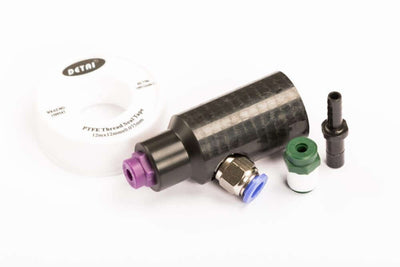
For facades, cladding, signs, soffits and awkward elevations, a specialist attachment such as a water fed pole softwash nozzle can help improve application control compared with makeshift fittings. The aim is not to blast the surface, but to lay down the solution evenly at the correct rate.
Site considerations
- Check wind direction before applying chemical at height.
- Protect pedestrians, vehicles and neighbouring properties.
- Pre-wet and protect sensitive plants where relevant.
- Control access below the working area.
- Avoid electrical hazards, signage lighting and open vents.
- Rinse or neutralise according to the chemical manufacturer’s instructions and site requirements.
How to Choose the Right Chemical Delivery System
The best delivery method depends on the job, not just the contractor’s preference. A compact domestic render clean may only need a small softwash set-up and controlled pump. A large school roof treatment may require a tank-fed system, long hose capability, careful exclusion zones and detailed RAMS. A facilities manager arranging periodic cladding cleaning may need a repeatable system with clear documentation and trained operators.
Step-by-step selection process
- Identify the surface. Note whether it is render, concrete, stone, roof tile, timber, metal, cladding, tarmac, uPVC or painted coating.
- Identify the contamination. Organic growth, moss, lichen, algae, black staining, oil, rust and general soiling all require different approaches.
- Check chemical suitability. Review the product label, safety data sheet and manufacturer guidance.
- Decide the required working strength. Work from approved guidance, not guesswork or social media recipes.
- Assess access and environment. Consider height, wind, drainage, public access, plants, watercourses, vents and neighbouring property.
- Choose the delivery system. Select batch mixing, injection, dedicated pump, sprayer or pole application based on control and scale.
- Test and calibrate. Confirm flow, draw rate and application pattern before treating the full area.
- Document the method. Include PPE, exclusion zones, spill response, rinsing, waste handling and emergency procedures.
- Monitor dwell time. Keep the surface wet for the required period where appropriate, but avoid uncontrolled runoff.
- Review the result. Record what worked, chemical use, job duration and any changes needed for future quoting.
Understanding Dilution, Draw Rate and Application Strength
Many cleaning problems come from misunderstanding dilution. A chemical mixed at one strength in the tank may not be the same strength reaching the surface if it passes through an injector or is further diluted by water flow.
Key terms contractors should understand
- Concentrate: The product as supplied before dilution.
- Working solution: The diluted product intended for application.
- Draw rate: The rate at which an injector pulls chemical into the water stream.
- Application rate: The volume applied to a known surface area.
- Dwell time: The time the chemical remains active on the surface.
- Runoff: Chemical solution leaving the target area, which must be controlled responsibly.
For example, if an injector draws one litre of chemical for every nine litres of water, it is producing a 10% chemical feed from that draw container. But if the chemical in the draw container is already diluted, the final active strength will be lower. This is why experienced contractors test their systems and keep records instead of relying on assumptions.
Safety, Compliance and Best Practice
Chemical delivery systems must be used within a safe working framework. In the UK, contractors should consider COSHH, PPE, environmental risk, manual handling, working at height, public protection and site-specific rules. Facilities managers should also expect contractors to provide clear RAMS and product safety information before work begins.
Essential safety controls
- Carry out a site-specific risk assessment before work starts.
- Read and understand product labels and safety data sheets.
- Wear suitable PPE, including eye, hand, skin and respiratory protection where required.
- Use compatible containers, fittings, hose and pumps.
- Prevent backflow into potable water supplies.
- Keep incompatible chemicals apart, especially acids and hypochlorite products.
- Protect plants, ponds, watercourses and sensitive surfaces.
- Set up exclusion zones where there is public or staff access.
- Have spill response materials and clean water available.
- Flush equipment after use according to manufacturer guidance.
Professional training is particularly valuable because many chemical delivery mistakes are not obvious until something goes wrong. If you want to see how professional softwashing training is structured before committing to the full programme, you can try selected lessons from the SoftWash UK course for free. It is a useful way to preview the training and understand the standards, safety thinking and practical approach behind professional softwashing.
Common Mistakes and Myths About Chemical Delivery
Myth 1: “More chemical always cleans better”
Stronger is not automatically better. Correct strength, dwell time, coverage and surface compatibility matter more. Over-strength application can damage surfaces, increase risk, waste money and create unnecessary environmental burden.
Myth 2: “If the injector is set correctly, the job is calibrated”
The dial or setting is only a starting point. Real-world draw rates are affected by water pressure, hose length, nozzle size and chemical viscosity. Always test the system under working conditions.
Myth 3: “Any pump will do”
Many pumps are not designed for softwashing chemicals. Incompatible seals, fittings or pump heads can fail quickly, leak or create unsafe conditions. Chemical compatibility should be checked before purchase.
Myth 4: “Softwashing means no rinsing is ever needed”
Some treatments are left to weather naturally; others require rinsing or controlled wash-down. The correct approach depends on the chemical, surface, manufacturer guidance, client expectation and environmental risk.
Myth 5: “Manual sprayers are unprofessional”
Manual and battery sprayers are useful for detail work when used correctly. The issue is not the tool itself, but whether it is suitable for the area, chemical and required level of control.
Maintenance of Chemical Delivery Equipment
Even good equipment performs poorly if it is not maintained. Chemical residues can crystallise, seals can degrade, filters can block and nozzles can wear. A small blockage in a strainer or nozzle can change the spray pattern enough to affect the result on a visible render elevation.
Basic maintenance checklist
- Flush pumps, hoses and lances after chemical use.
- Inspect hoses for swelling, cracking or leaks.
- Check filters and strainers regularly.
- Replace worn nozzles to maintain consistent spray patterns.
- Lubricate or service parts only as recommended by the manufacturer.
- Store equipment away from frost and direct sunlight where possible.
- Keep chemical containers sealed and labelled.
- Record faults and repairs, especially in multi-operator businesses.
A maintenance routine is not just about prolonging equipment life. It helps avoid uncontrolled leaks, inconsistent application and downtime on paid work.
Applications by Job Type
Render and exterior walls
Render cleaning often needs even low-pressure application and close control over overspray. Batch mixing with a softwash pump or a calibrated dosing system can work well. Always test a small area, check for failing paint or blown render, and manage windows, vents, plants and neighbouring surfaces.
Roof treatments
Roof work introduces access, runoff and working-at-height risks. Chemical delivery must be controlled and planned carefully. Long hose runs, accurate nozzles and clear communication between operators are important. Never allow chemical handling to distract from fall prevention and site safety.
Commercial cladding and facades
Facilities sites often require method statements, timed access, pedestrian control and predictable results. Proportioning systems can be useful, but only if tested and documented. Water-fed pole application can reduce access equipment requirements on some buildings, but wind and overspray risks must be assessed.
Hard surfaces and yards
Driveways, loading bays and service yards may involve detergents, degreasers or specialist stain removers. Downstream injection, sprayers and pressure washing systems may all have a role. Drainage and watercourse protection are especially important on commercial sites.
FAQ: Chemical Delivery Systems
What is the best chemical delivery system for softwashing?
The best system depends on the surface, chemical, access and size of the job. Many professional contractors use a dedicated softwash pump for pre-mixed solutions, while injectors or proportioners are useful where repeatable dosing is needed. Small spot treatments may be better handled with a controlled sprayer.
Do I need a proportioner or can I batch mix?
Batch mixing is often sufficient and gives clear control over the solution in the tank. A proportioner can improve efficiency and consistency on repeat work, but it must be calibrated and maintained. Contractors should choose based on job type, operator skill and the need for repeatable dosing.
Can I apply softwash chemicals through a pressure washer?
Some detergents and low-strength solutions can be applied using downstream injection, but pressure washers are not always suitable for professional softwashing. The draw rate may be too low or inconsistent for certain treatments. Always check chemical compatibility, required strength and equipment limitations.
How do I know what strength is reaching the surface?
You need to calculate the dilution and test your delivery system. For injectors, measure how much chemical is drawn while a known volume of water passes through. For batch mixing, confirm the initial mix and avoid unintended dilution. Keep records so you can repeat successful methods.
What safety documents should exterior cleaning contractors have?
Contractors should have relevant safety data sheets, COSHH assessments, risk assessments, method statements, PPE guidance and emergency procedures. Requirements vary by job, but commercial sites and facilities managers will usually expect clear written documentation before work begins.
Should chemical delivery equipment be flushed after every job?
Yes, in most cases. Flushing helps prevent chemical residue, blocked nozzles, damaged seals and cross-contamination between products. Follow the equipment and chemical manufacturer’s guidance, and never flush incompatible chemical residues together.
Conclusion: Chemical Delivery Is a Core Professional Skill
Understanding chemical delivery systems is essential for safe, consistent and profitable exterior cleaning. The equipment you choose determines how accurately you dilute, apply and control cleaning chemistry. It also affects operator safety, surface protection, compliance, environmental management and the quality of the finished result.
For most UK contractors, the right approach is not one single system but a practical combination: batch mixing for controlled softwash applications, dedicated pumps for professional coverage, calibrated injectors for repeatable dosing, sprayers for detail work and specialist nozzles for access-sensitive areas.
If you are developing your softwashing set-up, upgrading equipment or standardising methods across a team, SoftWash UK can support you with professional chemicals, delivery equipment, training and educational resources. Start by reviewing suitable equipment, check your chemical compatibility, improve your documentation and invest time in learning the method properly. A well-understood chemical delivery system makes exterior cleaning safer, more predictable and more professional.